

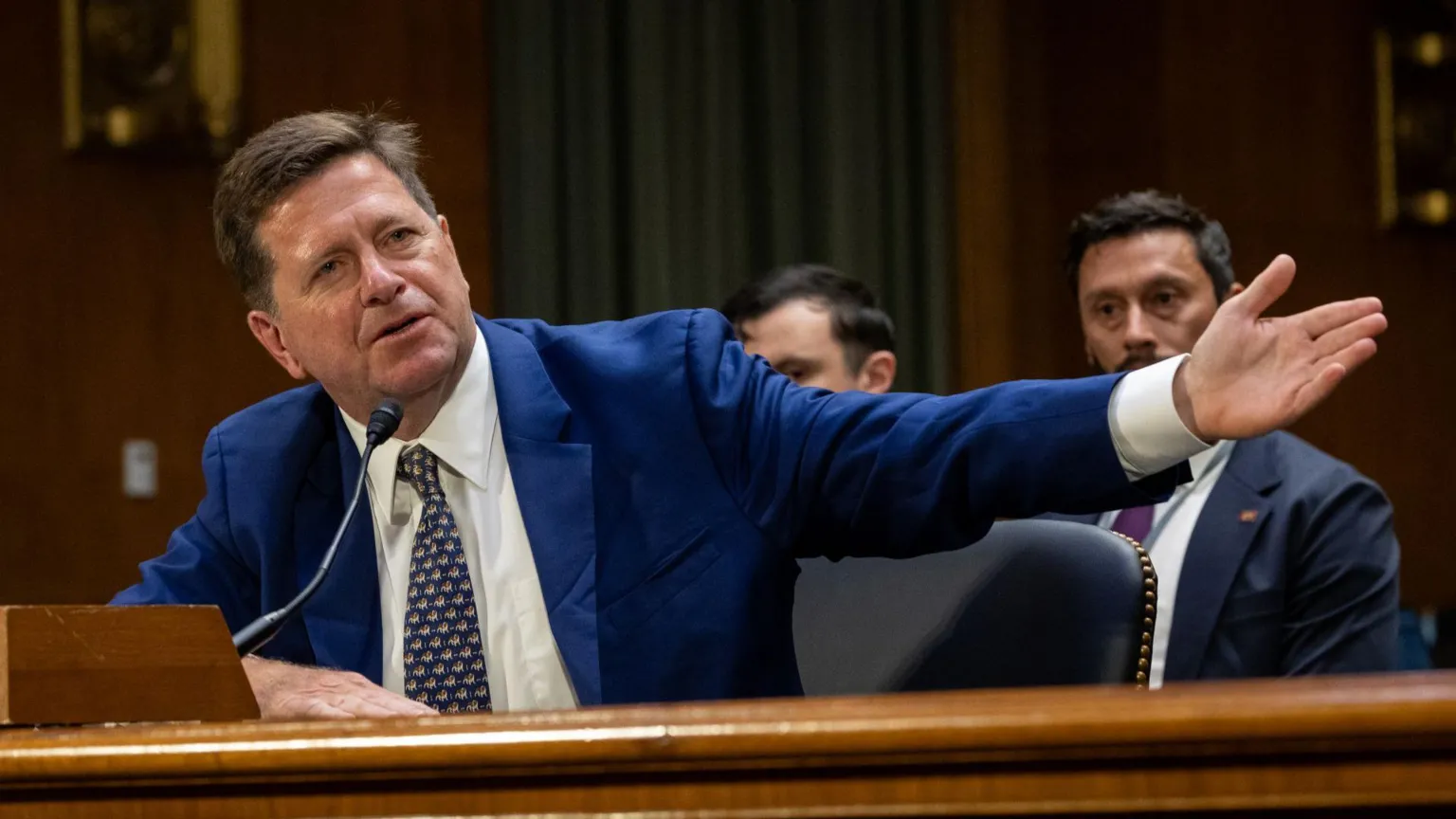
American Senate confirmed Jay Clayton as Director of National Intelligence Tuesday, installing a seasoned regulator and prosecutor after lawmakers rejected an earlier Trump choice that alarmed lawmakers on both sides of the aisle.
The vote, 51 to 47, elevates Clayton from his role as U.S. attorney for the Southern District of New York, where he oversaw high-profile prosecutions, to lead an intelligence community that has been operating without stable leadership.
He replaces acting DNI Bill Pulte, a Trump loyalist whose brief tenure drew bipartisan concern because of his lack of intelligence experience and his use of a separate federal role to target political opponents.
“Jay is outstanding in every way, and will do a spectacular job as Director!” President Donald Trump wrote on Truth Social after the vote.
Clayton, a former securities regulator and federal prosecutor, was tapped by Mr. Trump after Mr. Pulte’s initial appointment in early June prompted alarm in Congress. In his prior role as a federal housing regulator, Mr. Pulte referred several of the president’s critics for possible prosecution and announced deep staffing cuts, actions that heightened bipartisan unease about politicization of intelligence and enforcement agencies.
Those concerns shadowed Clayton’s confirmation process. Democrats initially described him as a conventional choice, but questions intensified at his hearing earlier this month, where senators pressed him about his willingness to resist political pressure.
Asked repeatedly whether President Joe Biden won the 2020 election, Clayton said Mr. Biden had been “certified” as the winner and added, “I’m not an election denier.”
Senate Intelligence Committee Vice Chair Mark Warner, a Virginia Democrat, said he left the hearing with “serious reservations about whether [Clayton] would be willing to stand up to political pressure,” urging the new director to prove critics wrong so the intelligence community could regain steadier leadership.
Clayton’s confirmation could influence stalled negotiations in Congress over reauthorizing Section 702 of the Foreign Intelligence Surveillance Act, which permits the government to collect the communications of foreign targets overseas without individualized warrants.
President Trump has pressed for a long-term renewal of the authority. Senate Majority Leader John Thune, a Republican, expressed hope that the confirmation would spur lawmakers to “stop blocking reauthorisation of the Foreign Intelligence Surveillance Act.”
Clayton’s first scheduled appearance before the Senate Intelligence Committee on June 17 was abruptly postponed after Mr. Trump criticized lawmakers over delays on FISA.
Senators moved quickly in recent days to advance his nomination, reflecting Republican urgency to restore permanent leadership at the Office of the Director of National Intelligence.
