

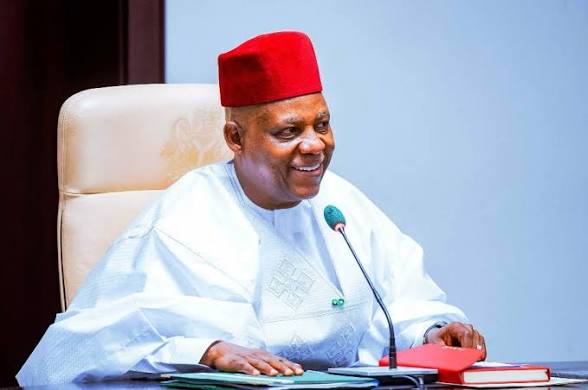
Vice President Kashim Shettima on Thursday declared that Nigeria remains steadfast in promoting human rights and implementing international humanitarian law, even as the country grapples with insurgency, terrorism, and displacement.
Speaking at the opening of the 2026 High-Level International Humanitarian Law Dialogue in Abuja, Shettima emphasized President Bola Tinubu’s administration’s multifaceted strategy against insecurity, blending military action with non-kinetic measures like legal reforms.

“Insecurity remains the greatest threat to peace and development,” he said.
He said the government’s prioritizes comprehensive responses to human rights issues.
Vice President Shettima noted recent step was President Tinubu’s assent to domesticate the African Union Kampala Convention, creating a framework to protect internally displaced persons — a population strained by persistent violence.
“Our shared humanity is under immense strain,” he added, framing the dialogue as a call to reaffirm humanitarian law’s core principles: protecting civilians, ensuring humane treatment, and preserving dignity in conflict.
The Vice President said, the Federal Govenment has pursued proactive measures including military training on humanitarian law, child protection protocols, integration into school curricula, accountability for sexual violence, arms control, and displacement support.
“Humanitarian law must be lived, not merely legislated,” he stressed, crediting partners like the United Nations, International Committee of the Red Cross, and International Criminal Court for aligning local efforts with global standards.
Earlier, Attorney General Lateef Fagbemi noted judicial investments in humane prisons, law enforcement training, and translating humanitarian treaties into local languages for conflict zones.
Solicitor General Beatrice Jeddy-Agba, in her welcome address, called the event a “vital checkpoint” for embedding rule of law in security operations, pledging continued adherence to the Geneva Conventions.
The gathering included representatives from international organizations, reflecting Nigeria’s push for collaborative compliance amid evolving asymmetric warfare.
