

The United Nations Food and Agriculture Organization (FAO) has unveiled a bold three-year rescue plan in what it said is to urgently arrest a deepening food crisis that could engulf 34.7 million Nigerians in acute hunger by mid-2026—including over 5.4 million malnourished children.
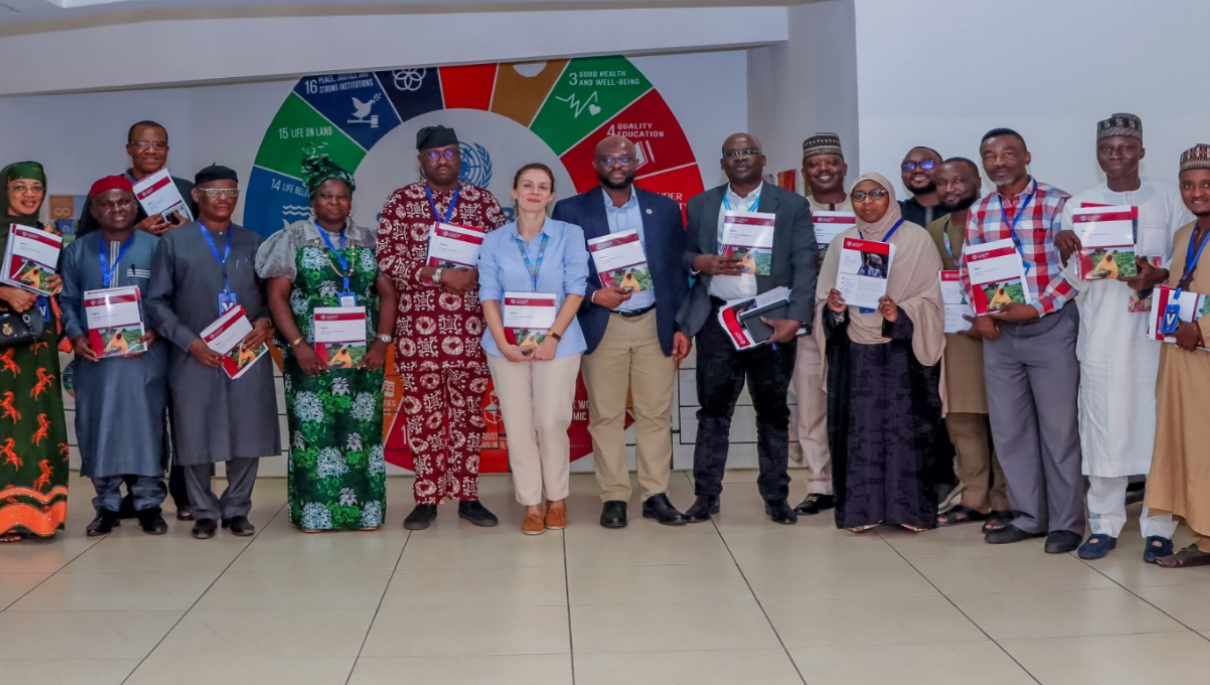
FAO launched in Abuja from 11-16 February, the Emergency and Resilience Plan (ERP) 2026-2028 demands $347m (£270m) to aid 12.6 million people across the nation’s ‘battered’ north-east, north-west and north-central regions.

According to David Tsokar Communication specialist of the FAO hardest hit are States such as Borno, Adamawa, Yobe, Sokoto, Kaduna and Plateau, and Benue where conflict, climate disasters and economic turmoil have shattered rural livelihoods.
NewsQuest reports that the strategy fuses immediate agricultural lifelines—seeds, tools and market access for farmers, herders and fishers—with long-term resilience building, from climate-adapted farming to peace initiatives and job creation for women and youth.
It also aims to wean communities off aid dependency and revive local food systems.
This Nigeria push forms part of FAO’s $2.5bn Global Emergency and Resilience Appeal, rolled out last December to shield 100 million people in 54 countries from famine’s grip.
At the Abuja event, FAO Representative in Nigeria and to ECOWAS, Dr Hussein Gadain drove home the stakes: “Agriculture is not only a livelihood; it is a life-saving intervention.
“When we support farmers, pastoralists, fishers and agro-processors with timely inputs, services and market access, we protect food production, reduce dependency on food aid, stabilise local markets and create employment, especially for women and youth.”
Senior Emergency and Rehabilitation Officer Dunja Dujanovic highlighted the plan’s timeliness amid shrinking humanitarian aid: “It offers solutions which aim to not only address immediate needs but decrease those needs over time.”
Pre-launch consultations in Maiduguri involved the Ministry of Agriculture, donors and Borno state officials, underscoring the need for homegrown, coordinated responses aligned with government goals.
As violence, floods and soaring costs displace millions—particularly in the insurgency-ravaged north-east—the ERP charts a shift from crisis firefighting to recovery.
FAO insists success hinges on partnerships and funding: donors must step up to deliver relief today and food security tomorrow.
