

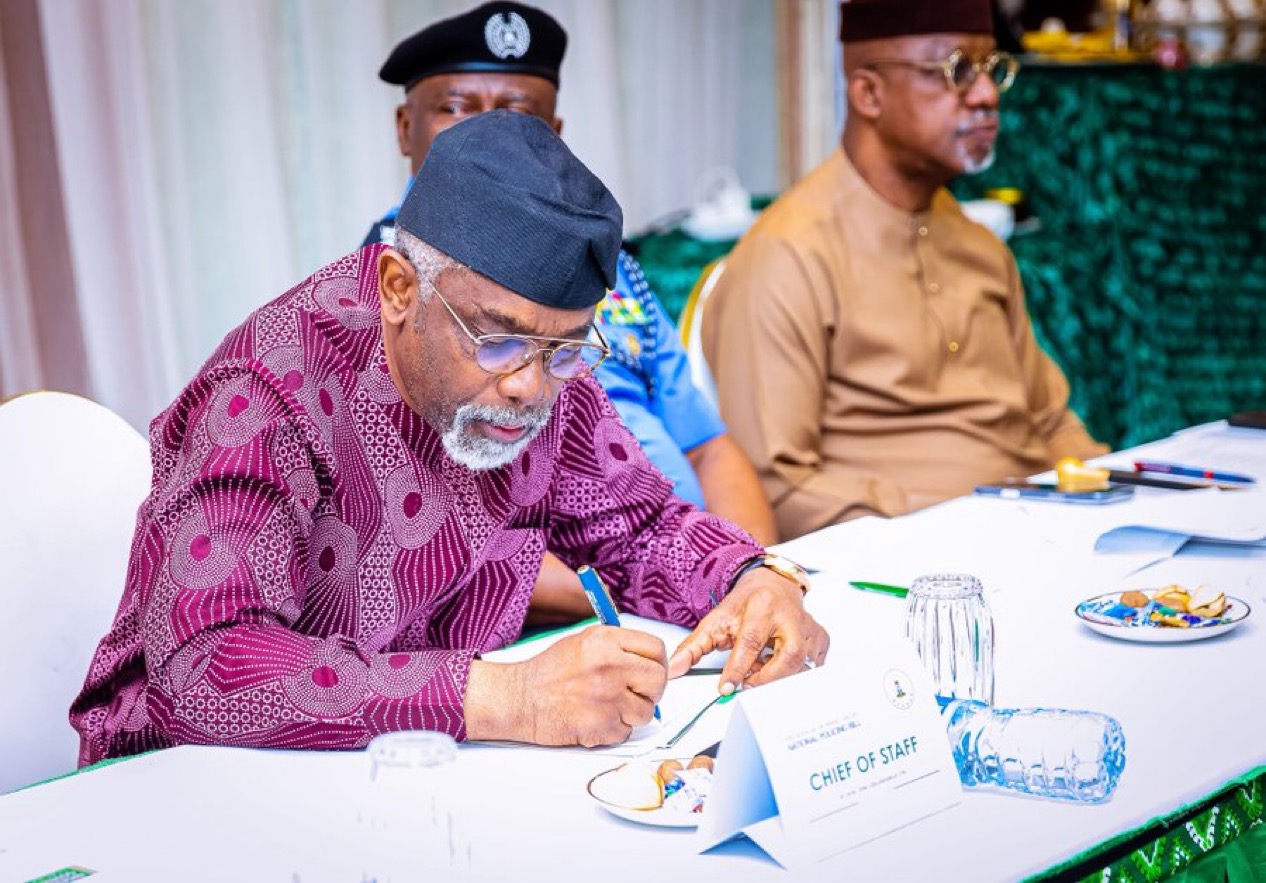
The Presidential Working Group on the National Policing Bill has expressed satisfaction with the approval of the Constitution (Sixth Alteration) Bill, 2026, by 24 of the nation’s 36 State Houses of Assembly ‘the minimum’ required under Section 9 of the 1999 Constitution.
Chief of Staff to the President Femi Gbajabiamila and chairman of the working group commended the state assemblies for what he described as decisive action on a reform of national importance, and also praised the National Assembly for passing the amendment in both chambers.
NewsQuest reports that with the State’s endorsement, Nigeria moves closer to dismantling its decades-old centralized policing system paving the way for the establishment of a dual policing structure.
The amendment would create state police services alongside the Federal Police Service, ending the current unitary policing model.
The bill was transmitted to the states on September 16 after passage by the Senate on June 24 and the House of Representatives on July 23.
Under Nigeria’s constitutional-amendment process, the measure can now be returned to the National Assembly for transmission to President Bola Tinubu for assent.
According to Gbajabiamila who wrote on his X handle (formerly Twitter), the approval from the States provides the constitutional foundation for the draft National Policing Bill, 2026, which is intended to operationalize the new framework.
He said the draft bills are undergoing legislative drafting review and validation at the Federal Ministry of Justice.
The Working Group said it expects them to be returned on or before October 30, after which it will give them final consideration before presenting them to the President.
The amendment provides for a decentralized policing architecture comprising a Federal Police Service and State Police Services.
Under the proposed arrangement, state forces would handle domestic public safety within their territories, while the federal force would retain its national responsibilities.
State police would be barred from exercising powers outside their states except where specifically authorized by an Act of the National Assembly.
The Working Group has urged stakeholders to support a smooth transition to the dual policing system, saying it was designed to make Nigerians safer.
Even after presidential assent, individual States are expected to enact enabling laws and meet national requirements before establishing and operating their own police services.
The development marks a major shift in the country’s security governance, though the final constitutional process remains subject to the National Assembly’s formal reconciliation and certification of the State resolutions.
