

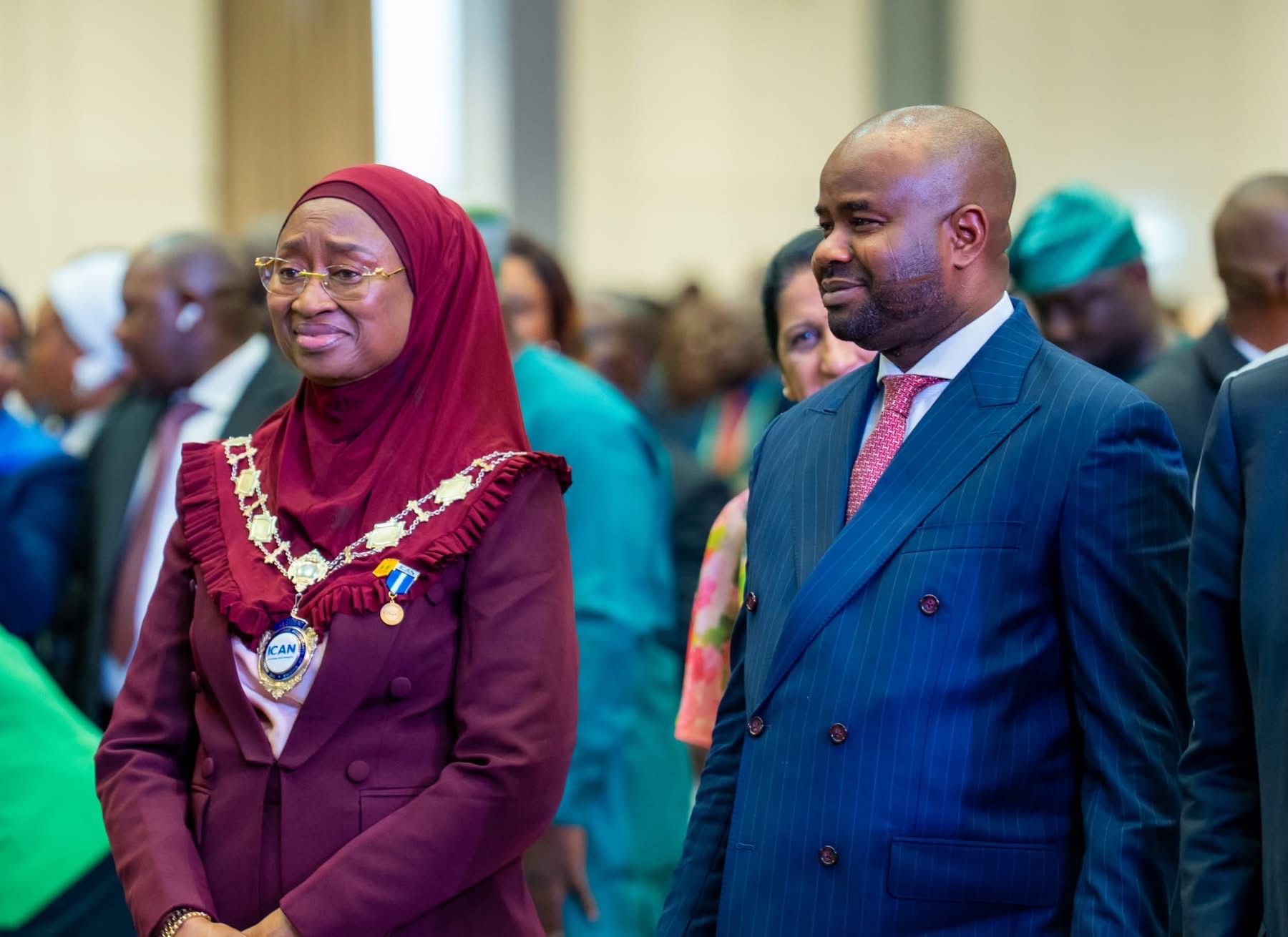
The Executive Chairman of the Nigeria Revenue Service (NRS) Dr. Zacch Adedeji has said that the country’s economic progress must be measured not only by rising revenue and growth statistics, but by stronger institutions, more competitive businesses and renewed public confidence.
Adedeji stated this in Abuja while addressing delegates at the opening of the Institute of Chartered Accountants of Nigeria’s 56th Annual Accountants’ Conference.
He said that the accounting profession has a central role in translating fiscal reform into durable national development.
The conference is themed “Beyond Numbers: Strengthening the Economy, Securing the Nation.”
“National progress cannot be reduced to revenue figures, budgets or gross-domestic-product data,” Adedeji said.
“It must be reflected in effective institutions, competitive enterprises and citizens’ confidence in the future.”
Adedeji, a fellow of ICAN, said the service’s collections rose from 21.6 trillion naira to more than 28 trillion naira in 2025, citing the increase as evidence of the revenue authority’s contribution to Nigeria’s economic transformation.
He described the gains as a foundation for financing development rather than an end in themselves.
NewsQuest reports that Adedeji’s remarks come as Nigeria implements the most sweeping reform of the nation’s tax framework in years.
President Bola Tinubu signed four tax-reform laws in June 2025, including measures that replaced the Federal Inland Revenue Service with the Nigeria Revenue Service and created a more autonomous, performance-driven revenue agency.
Adedeji said the new laws are intended to produce a simpler, fairer and more efficient tax system.
The ultimate objective, he argued, is not merely higher collections, but an environment in which businesses can grow, employment expands and government has greater capacity to fund public services and infrastructure.
He called on accountants to respond to technological change—particularly artificial intelligence—by pairing innovation with integrity, transparency and accountability.
Adedeji also urged ICAN to deepen its involvement in economic policy, ethical leadership and national transformation, arguing that public-resource management should assess outcomes as rigorously as it tracks expenditure.
The NRS chairman pledged closer cooperation with the institute on taxpayer education, professional development, policy engagement and voluntary compliance under the new tax framework.
He then declared the conference open, congratulating ICAN’s leadership and urging members to act as active drivers of economic reform.
The conference underscores the growing political and institutional weight of Nigeria’s accounting profession as the country seeks to broaden its tax base, improve compliance and restore confidence in public finance.
