

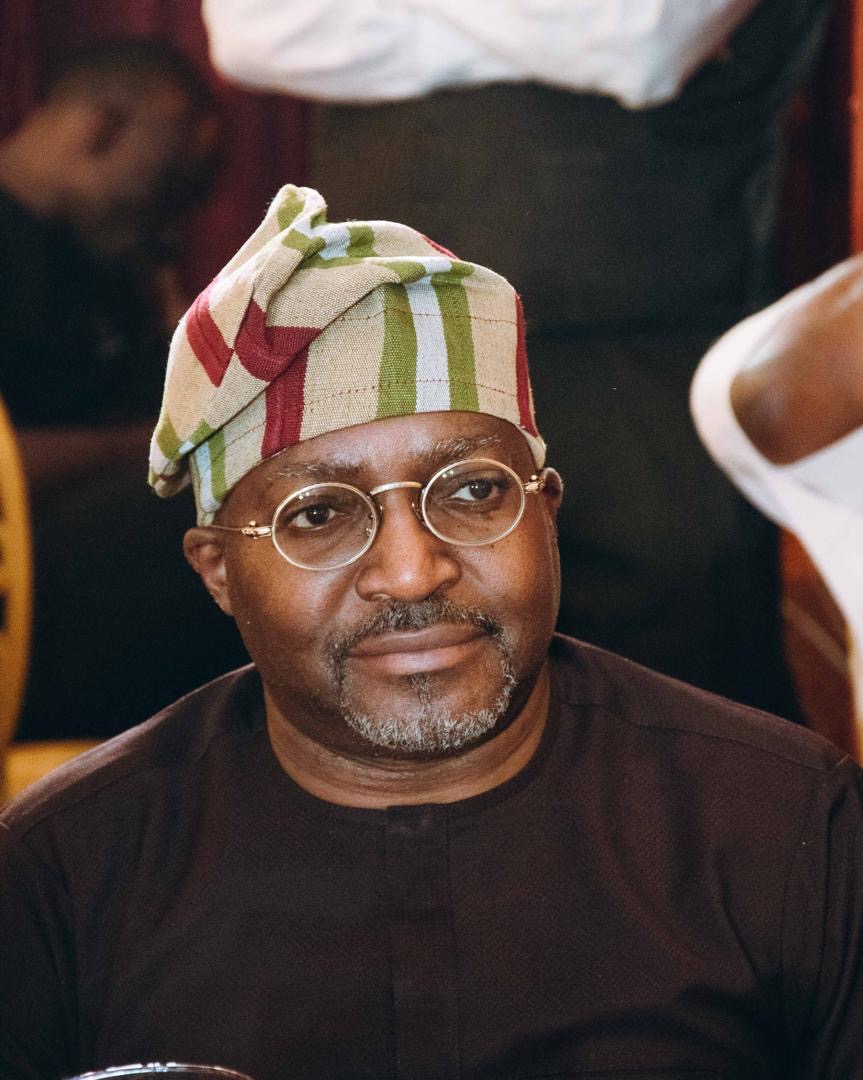
By Ademola Oshodi
The international environment is placing a heavier responsibility on Nigeria. Regional security cooperation has weakened, competition for energy finance and technology has intensified, and humanitarian funding is contracting even as domestic needs increase. Three developments this week show why Nigeria must combine leadership with discipline, strengthening its capacity to act without assuming obligations it cannot sustain.
On 14 July, the United Nations Security Council reviewed the political and security situation in West Africa and the Sahel. The following day, Nigeria’s Permanent Representation to the UN convened a discussion on energy access and just transitions during the UN High-Level Political Forum in New York. In Abuja, the Federal Government and the United Nations also began a transition towards stronger Nigerian leadership of humanitarian planning and coordination. These events occurred in different policy areas, but they point to the same reality: Nigeria is being required to carry greater responsibility as external support becomes less predictable.
The Security Council discussion exposed the urgency of the regional security challenge. Terrorist and criminal networks are becoming more sophisticated and increasingly able to operate across borders, even as dialogue slowly resumes between ECOWAS member states and the Alliance of Sahel States after a prolonged period of strained relations. Nigeria is directly exposed to both trends. The threat is particularly acute in the Central Sahel and northern Nigeria, where armed groups are using drones, encrypted communications and cryptocurrencies while strengthening links with transnational organised crime. No national security strategy can contain a threat that crosses borders, exploits poorly governed spaces and benefits from fractured regional cooperation.
The reopening of the Kamba border crossing between Nigeria and Niger on 9 February was cited at the Security Council as evidence that renewed dialogue is producing practical results. The crossing restores an important commercial route, but its significance goes beyond trade. The political rupture between both governments could not erase the geographic, commercial and security ties between their people. Nigeria and Niger share border communities, trade routes and exposure to armed groups, making practical cooperation unavoidable even while political differences remain unresolved.
The administration’s effort to reopen channels with Niger reflects the balance Nigeria must maintain across the region. We must defend constitutional government without allowing political disagreements to disable the security and commercial cooperation demanded by geography. Cutting off practical engagement with the Sahel states would weaken border security and disrupt legitimate trade. Abandoning democratic principles in the name of security would equally damage the regional order Nigeria has spent decades helping to sustain.
The credible course is structured engagement. Reopened borders must be supported by stronger intelligence sharing, coordinated patrols, customs cooperation and joint action against arms trafficking and terrorist financing. Nigeria’s leadership will depend on whether it can restore functional cooperation while remaining clear about the political divisions that continue to shape the region.
The second development placed energy firmly within foreign policy. At the UN High-Level Political Forum, Nigeria’s Permanent Representation, working with the UNDP Independent Evaluation Office and Germany’s Institute for Development Evaluation, convened a discussion on energy access and just transitions in Africa. The session addressed off-grid energy, affordability, infrastructure, investment, industrial decarbonisation and green jobs, all of which place the energy transition firmly within foreign policy. Transition is now a contest over finance, technology, critical minerals, supply chains and where future industries and jobs will be located. Countries that control investment and processing capacity will capture most of the value, while those that continue to export raw materials and import finished technologies risk reproducing the same dependency under a greener label.
Nigeria should reject any climate framework that treats electricity access and industrialisation as secondary concerns. Our participation in the energy transition must produce affordable finance, technology transfer, domestic processing and reliable power. A transition that lowers global emissions while African factories remain without dependable electricity, developing countries accumulate expensive debt, and manufacturing and employment remain concentrated elsewhere cannot be considered just.
The New York discussion was useful because it placed these concerns before international institutions and development partners. Its significance, however, will depend on what follows. Nigeria needs bankable projects, stronger transmission and distribution systems, decentralised energy solutions and partnerships that can power farms, workshops, hospitals and factories. Diplomatic access creates an opportunity, but national institutions must be prepared to convert that access into investment and infrastructure.
The third development concerns humanitarian responsibility. At a Nigeria-UN joint workshop in Abuja, discussions began on transferring greater responsibility for humanitarian planning, coordination and financing to Nigerian institutions. Nigeria also intends to lead the preparation of its 2027 humanitarian plan with technical support from the UN system. This transition is taking place as donor funding contracts while humanitarian needs rise. The United Nations has warned that nearly 35 million Nigerians could face hunger in 2026, even as humanitarian agencies are being forced to respond with fewer resources. Nigeria should assume greater leadership of its humanitarian response, but that transition must be phased, financed and tied to clear institutional benchmarks.
National ownership cannot become a diplomatic expression for the withdrawal of international assistance before domestic systems are ready. Nigeria can only take effective control of humanitarian response through predictable funding, reliable data, efficient procurement, stronger coordination between federal and state authorities, and clear accountability for delivering assistance to affected communities. International partners should not transfer responsibilities faster than national institutions can absorb them.
Taken together, these developments show that external partnerships remain necessary, but they cannot substitute indefinitely for Nigerian and African capacity. Nigeria also cannot finance every regional security need, development project or humanitarian obligation alone. Its foreign policy must therefore build coalitions that share costs, preserve cooperation across political divides and ensure that international partnerships strengthen domestic institutions rather than replace them.
Nigeria cannot depend indefinitely on external actors to secure its neighbourhood, finance its development or respond to emergencies within its borders. neither can it absorb these responsibilities alone. The goal is to organise effective regional cooperation, negotiate partnerships that expand national capability and ensure that greater responsibility is matched by adequate resources.
In the present international environment, Nigeria’s leadership will depend on whether it can build coalitions that protect its interests, strengthen its institutions and deliver results without exhausting its capacity.
Oshodi is Senior Special Assistant to President Tinubu on Foreign Relations and Protocol
