

Minister of Education, Dr Tunji Alausa, has expressed confidence that President Bola Tinubu will secure victory in the 2027 presidential election on the strength of his administration’s performance.
The Minister has cited the President’s several reform actions and achievements across key sectors of the economy as a strong basis.
The Minister expressed deep confidence in Tinubu’s leadership, stating that the administration’s reforms and investments in education and human capital will be central to its rating ahead of the 2027 general election.
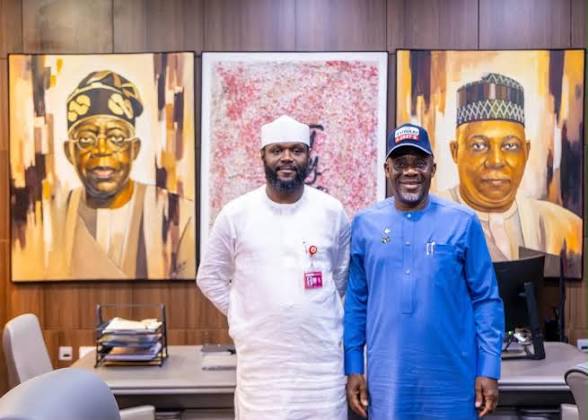
In a statement signed by the Special Adviser on Media and Communications, Ikharo Attah, the minister said during a visit to the City Boy Movement in Abuja on Wednesday that the administration’s education agenda is evidence that its economic reforms are producing long-term benefits, despite the near-term hardship they have imposed.
“President Tinubu makes promises he intends to fulfil,” Alausa said during the visit.
“His decisions are not just about today; they are about the future of our children and grandchildren,” the minister added.
At the center of the minister’s argument is the Nigerian Education Loan Fund (NELFUND), a government-backed scheme intended to reduce financial barriers to tertiary education.
The program provides loans for tuition, institutional charges and upkeep, with repayment tied to beneficiaries’ future income.
Alausa said the initiative reflects the administration’s view that a student’s prospects should not be determined by family income.
The minister stated that the program has expanded beyond conventional universities into technical and vocational training, pointing to the administration’s renewed emphasis on skills development.
He also said the administration is giving fresh priority to Technical and Vocational Education and Training (TVET), noting that more than 250,000 Nigerians are currently receiving training through roughly 1,200 centers nationwide, in trades ranging from solar-panel installation and garment production to carpentry, construction and animal husbandry.
The minister further stated that the TVET program offers tuition-free training, monthly stipends and, for selected participants, startup support.
He commended the City Boy Movement for engaging voters across age, ethnic and class lines, and urged its members to explain government programs in their communities.
He also cautioned Nigerians against what he described as misinformation and divisive rhetoric, arguing that the administration’s investments in education, healthcare and infrastructure should be judged alongside the difficult fiscal decisions taken to fund them.
“Developing a skilled workforce is essential to Nigeria’s economic transformation,” Alausa said, adding that education must deliver practical competencies rather than certificates alone.
The education minister also pointed to ongoing efforts to expand nursing education and professional training, saying that producing more skilled workers is key to strengthening critical sectors and building the nation’s human capital.
The minister also highlighted efforts to tackle infrastructure and accommodation gaps in tertiary institutions, noting that inadequate student housing remains a major challenge in higher education.
He said improving infrastructure in schools is necessary to enhance students’ living and learning conditions, expand access and support quality education delivery.
The minister’s argument reflects a broader strategy by Tinubu allies to shift the 2027 conversation from immediate economic pain toward measurable investments in young people and productive capacity.
He also cited emerging opportunities in business-process outsourcing and the growth of Nigeria’s service sector, expressing optimism that a more skilled workforce would help attract foreign investment and create jobs for young people.
