

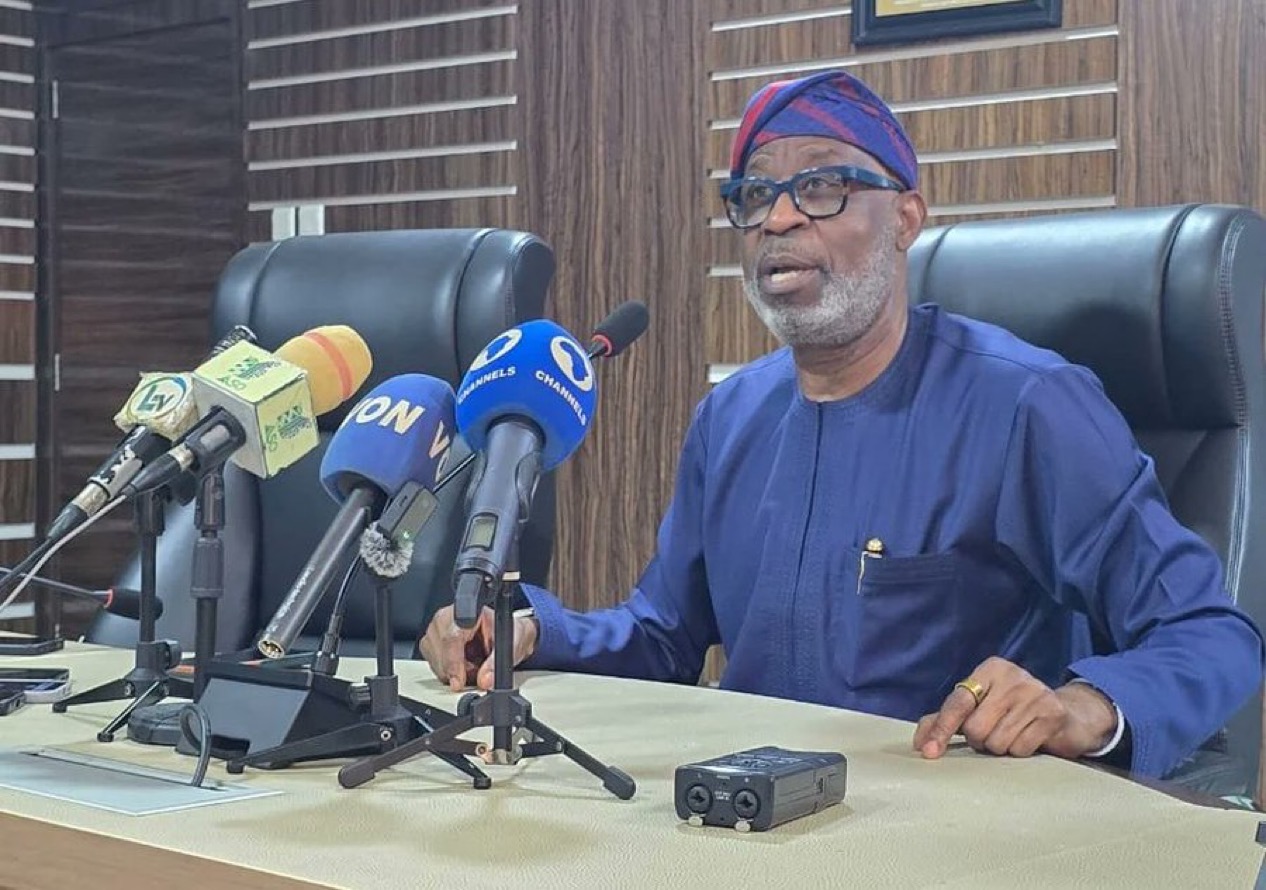
President Bola Tinubu deliberately shouldered a politically fraught decision to eliminate the nation’s long-standing fuel subsidy, Minister of Solid Minerals Development Dele Alake
said Wednesday, insisting the move was necessary to reset the country’s finances and free resources for investment.
Alake, who serves as Director of Strategic Communications for President Tinubu’s 2027 campaign, told members of the All Progressives Congress press corps that previous administrations had repeatedly postponed subsidy removal to avoid electoral fallout.
“The only thing lacking was the courage to take those decisions,” he said, adding that the policy chiefly enriched fuel cartels and wealthy Nigerians while starving government coffers.
Tinubu announced the end of the subsidy on his inauguration day, May 29, 2023, fulfilling a campaign pledge that immediately pushed up prices across the economy and prompted protests among prominent opposition figures and social media analysis.
Minister Alake described the move as a painful but necessary “reset,” saying there was never an ideal moment for politically costly reforms.
“There is no shortcut to genuine reforms,” he said, arguing that prior governments “kept digging” for short-term political gain instead of accepting hard choices.
“Somebody came and decided to swallow the bitter pill, to take the bullets on behalf of Nigerians.”
The Minister portrayed the subsidy as a drain on public finances that left states and the federal government unable to meet payrolls and invest in infrastructure.
He described how subsidized fuel was bought cheaply and smuggled across borders for profit, disproportionately benefiting a narrow elite.
“When the fuel subsidy was removed, did you think that they would fold their arms? No. They will fight back,” he said.
Alake urged patience as the economy adjusts, saying reforms require planning, resource mobilisation and time before results become visible.
He asserted the Tinubu administration’s policy changes are beginning to deliver benefits, despite short-term hardship.
The policy has become a central issue in the run-up to the 2027 presidential campaign.
Former Vice President Atiku Abubakar, who had also pledged subsidy removal in 2023, now promises to restore subsidies if elected, citing hardship for ordinary Nigerians.
Other leading candidates—including Peter Obi of the Labour-aligned Nigeria Democratic Congress and Seyi Makinde of the Allied Peoples Movement say they would keep the subsidy removal in place but improve sector management to make fuel more affordable.
