

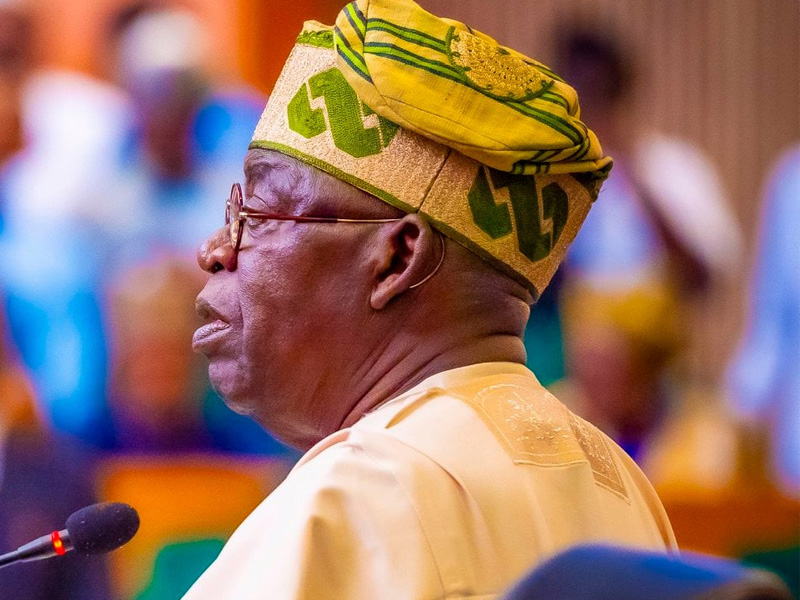
President Bola Tinubu on Friday inaugurated an 11-member committee to pave the way for a new Grid Asset Management Company (GAMCO), aiming to tackle chronic transmission bottlenecks and stranded power generation in the electricity sector.
The decision follows the Federal Executive Council (FEC) approval this week for GAMCO’s creation.
The company, fully owned by the government through the Ministry of Finance Incorporated, seeks to optimize underused assets, mobilize private capital and deliver reliable electricity to boost industrial hubs like Lagos and Ogun States.
Chief of Staff to the President Femi Gbajabiamila, presided over the inauguration and described GAMCO as a “revolutionary step” to modernize grid management and transmission.
“This committee is critical to realizing President Tinubu’s vision for the power sector,” he said, urging members to align with that mandate.
Chaired by Gbajabiamila, the panel includes the attorney general, Ministers of power, finance, works, communications, science and technology, aviation, and state for petroleum, as well as the Nigeria Revenue Service Executive Chairman and energy expert Professor Yemi Oke.
Dr. John Chidiebere Ezeamama, permanent secretary in the Cabinet Affairs Office, serves as secretary.
The committee’s tasks are sweeping: reviewing laws and policies under the 2025 Electricity Reform Laws; assessing asset ownership for Niger Delta Power Holding Company and National Integrated Power Project plants like Omotosho (513 MW capacity), Olorunsogo (754 MW) and Ihovbor (508 MW); evaluating overlaps with regulators like the Nigerian Electricity Regulatory Commission; and analyzing fiscal risks, including subsidies and market liquidity.
It will also recommend any needed legislative changes.
GAMCO’s pilot targets the Benin-Lagos transmission corridor, a vital artery for power to Nigeria’s commercial heartland.
The company aims to recover at least 1,600 MW within 18 to 24 months by optimizing the three plants—now hampered by evacuation constraints—and building a new 330 kV+ double-circuit line. Concessions for the plants would come from the Niger Delta Power Holding Company, with transmission rights from the Transmission Company of Nigeria.
NewsQuest reports that the country’s power sector has long suffered from inefficiencies, with billions invested in generation assets yielding far less output due to grid failures.
