

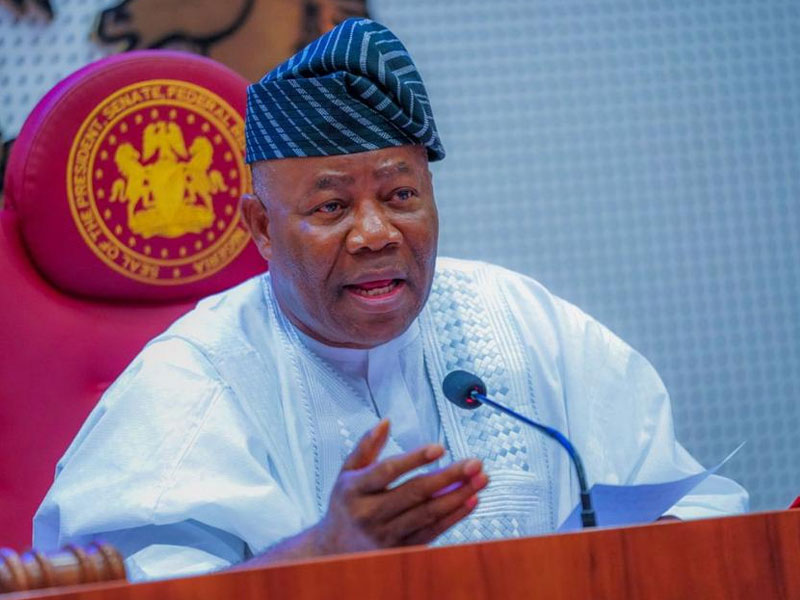
Senators reconvened and adjourned quickly again on Tuesday for another two weeks after extending the implementation of the capital component of the 2025 budget till December 31, 2026.
The lawmakers, who proceeded on their annual recess on July 23, reconvened on Tuesday only to adjourn to October 13 again.
However, before the adjournment, they extended the implementation of the capital component of the 2025 to December 31.
The step, the Senate explained, was taken to give room for the execution of ongoing projects already captured in the budget.
Tuesday’s extension, which was done after an executive session presided over by the Senate President, Godswill Akpabio, was the 4th since December, last year.
The budget was first extended to March 31, 2026, then June 30 and later September 30.
On Tuesday, the lawmakers granted another extension to December 31, 2026.
The country budgeted a total of N54.99trillion in 2025.
The signed budget included ₦3.65 trn for statutory transfers, ₦14.32 trn for debt servicing, ₦13.64 trn for recurrent expenditure, and about ₦23.96trn.
Aside from the 2025 budget, which the capital has now been extended, the country is also implementing the 2026 budget of ₦68.32trn.
The development came as Akpabio expressed concern over the state of the nation on Tuesday, citing insecurity, kidnapping, flooding and the rising cost of living as some of the challenges confronting Nigerians.
Akpabio addressed senators as they reconvened, saying that while the Senate had been away from plenary, “the life of Nigeria did not cease.”
He said Nigerians continued to work, raise their families and pursue their aspirations while also confronting fears arising from insecurity, economic hardship and other difficulties.
The Senate President said the performance of the National Assembly should ultimately be measured by its impact on the lives of citizens, including safer communities, improved livelihoods and a stronger country.
He recalled the anguish of families whose relatives had been abducted by armed men in different parts of the country during the recess, as well as the plight of communities affected by violence.
“During our recess, families have waited in anguish for their loved ones taken by armed men in Malumfashi, in Adogo, in Mosque and elsewhere in our country. Communities have lived beneath the shadow of violence”, Akpabio stated.
The Senate President also expressed sympathy with victims of flooding, noting that many had lost their homes, farms and livelihoods to rising waters.
He said the Senate would use legislation, appropriation and oversight to support efforts to improve security, protect vulnerable communities and secure the release of captives.
“So long as a single Nigerian languishes in captivity, a part of Nigeria is itself captive, and this chamber cannot call itself free of the burden,” Akpabio added, urging security agencies to pursue the rescue of victims and protection of communities with renewed vigour.
On the flood situation, he said early warnings must translate into adequate preparation, protection and timely relief, stressing that the loss of farmers’ harvests also threatened national food security.
He also acknowledged the burden of the high cost of living on Nigerians, saying lawmakers must examine economic figures and reforms while remaining conscious of how the situation affects ordinary citizens, including families struggling to afford meals and graduates searching for jobs.
He called on his colleagues to resume their legislative responsibilities despite political campaigns ahead, saying Nigeria’s challenges required patriotism, courage and steadfastness.
“Let us work for the safety of our people, the strength of our institutions, and a better chance in life for every child of this Republic,” he said, assuring Nigerians that the country would overcome its difficulties through collective commitment and purposeful action.
