

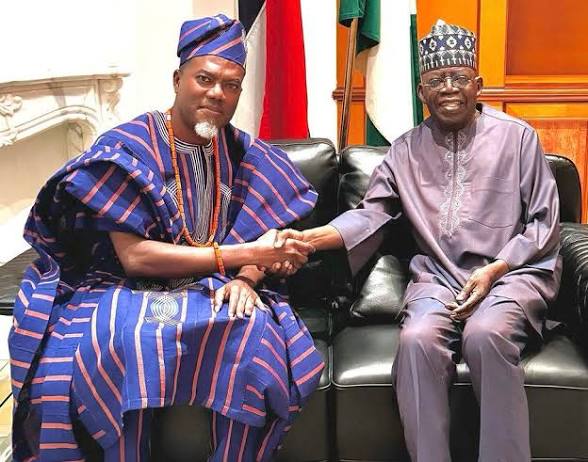
Reno Omokri, Nigeria’s Ambassador-designate to Mexico, said records the US Federal Bureau of Investigation holds on President Bola Tinubu do not amount to evidence of criminality, and warned that disclosure would reveal sensitive biometric and personal information.
Speaking on the City Boy Movement podcast alongside presidential aide Otega Ogra and other journalists, Omokri drew a distinction between routine FBI files and criminal records, saying the former can arise from ordinary interactions with US authorities, including visa applications.
“There is no criminal FBI record against President Bola Tinubu,” he said. “A record is just a record.
There’s a difference between a record and a criminal record.”
Omokri argued that an FBI file often contains more than names or case notes, and would typically include biometric data such as fingerprints and eye scans, as well as details that could touch on blood group or family and financial information.
“Who, here, will want that information out?” he asked.
His remarks come as a US court weighs requests for FBI records relating to President Tinubu from 1992 to 1993.
The requests, brought under the Freedom of Information Act by Aaron Greenspan, founder of legal‑data site PlainSite, seek the “entire FBI file” on the President and interview records tied to an early‑1990s Chicago heroin investigation.
Greenspan filed a total of 12 FOIA requests with six federal agencies.
President Tinubu has asked a US district court to reject a motion seeking disclosure, arguing the documents are protected by US privacy law.
The FBI and Drug Enforcement Administration have defended redactions and withholdings in previously released materials; the FBI successfully sought permission to file an ex parte in‑camera declaration explaining why certain information should remain sealed, the court docket shows.
The litigation follows earlier developments in the matter. In April 2025, US District Judge Beryl Howell ruled that the FBI and DEA had not demonstrated a sufficient privacy interest to withhold the fact that President Tinubu had been the subject of a criminal investigation, and ordered the agencies to search for and process non‑exempt records.
The CIA, by contrast, sustained a Glomar response—neither confirming nor denying the existence of records.
