

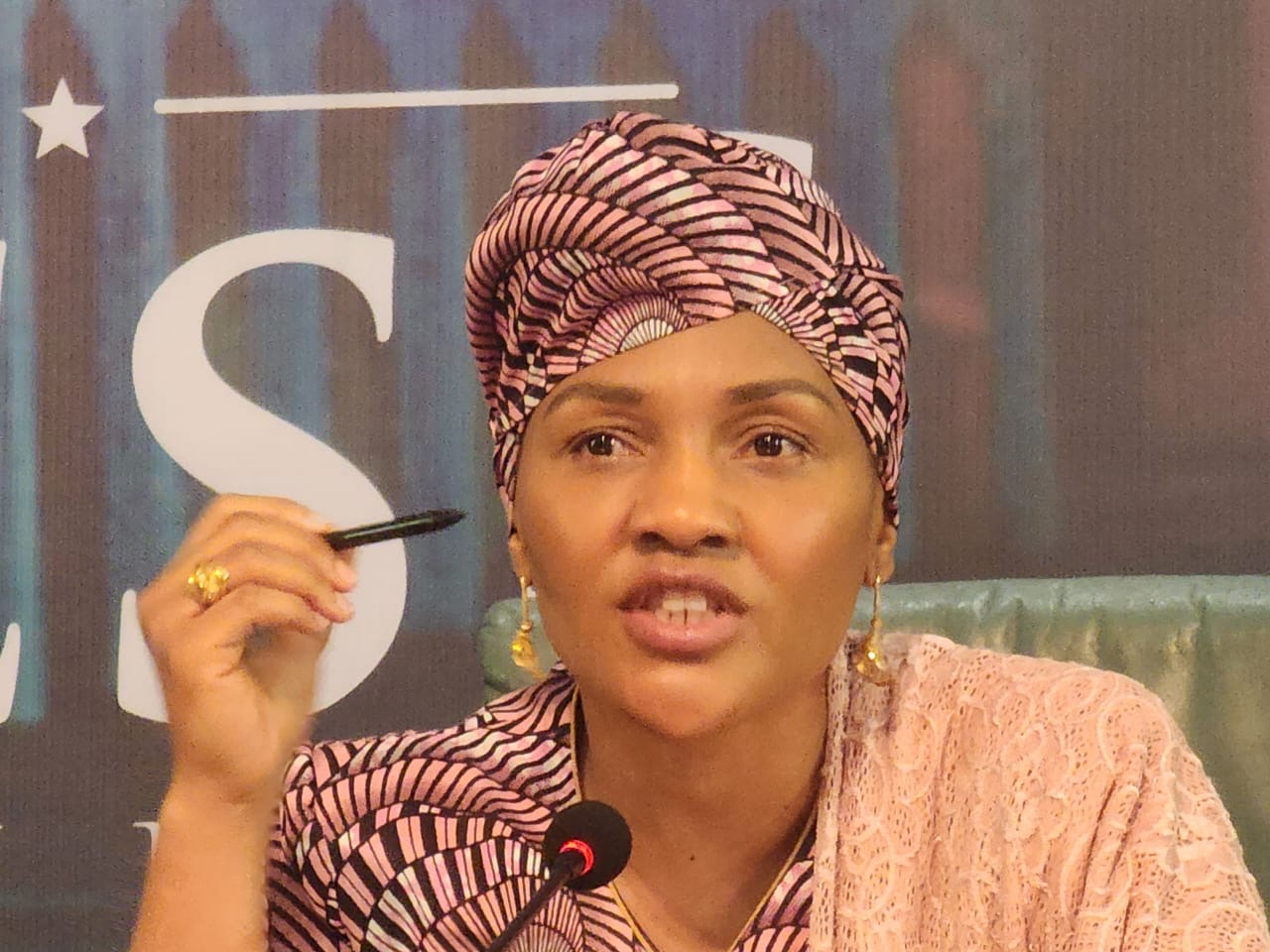
The Presidential Enabling Business Environment Council (PEBEC) said Tuesday it is intensifying efforts to cut the average time cargo sits at Nigerian ports from about 21 days to seven.
The council told State House Correspondents at a press briefing at the Presidential Villa, Abuja that the target is to lower logistics costs and boost the nation’s competitiveness.
PEBEC Director‑General Princess Zahra Audu said prolonged clearance times are a major constraint on trade, particularly when compared with neighbours such as Ghana and the Republic of Benin.
“We were tasked to bring down our cargo dwell time from 21 days to seven days,” she said.
Audu said the council has coordinated a series of reforms, including joint inspections of vessels and cargo and the substitution of physical inspections with scanner‑based checks.
The changes, she said, are designed to ensure agencies clear ships and containers more quickly and reduce vessel turnaround time.
PEBEC established a committee in the Office of the Vice President in April to coordinate ministries, departments and agencies working along the ports corridor, Audu said.
The council also plans to equip truck drivers with body cameras to document extortion and operational abuses, and to roll out a broader sensitisation programme for truckers and freight forwarders in September or October.
A central pillar of the drive is the National Single Window, a digital platform intended to unite agencies and simplify documentation for imports and exports.
“The National Single Window is streamlining all the agencies and placing them on one mainstream software infrastructure,” Audu said.
PEBEC said it has made repeated visits to port areas in January, March and July to ensure illegal checkpoints in the Apapa and Tin Can Island corridors have been removed and stay cleared.
“We no longer have illegal checkpoints within the ports corridor in Apapa and Tin Can. We intend to sustain this,”
Audu said, adding that monitoring visits will continue through at least the next three years.
The council has also expanded engagement with the private sector through ReportGov, a platform that links businesses to 69 business‑facing federal agencies.
Relaunched in June 2025, ReportGov has evolved from a complaints channel into a government‑wide grievance and accountability tool intended to deliver responses within 72 hours.
Physical kiosks have been installed at major airports and at Apapa and Tin Can seaports, the Director General said.
PEBEC said it has grouped the 69 agencies into clusters to reduce duplication and speed responses. One early outcome, Audu noted, is a Memorandum of Understanding between the Standards Organisation of Nigeria and the National Agency for Food and Drug Administration and Control, which should reduce repeated certification requirements for industry.
At the subnational level, PEBEC has activated ease‑of‑doing‑business councils to coordinate federal and state reforms, accelerate digital service delivery and help establish one‑stop business centres.
Audu said the council is working with the World Bank’s State Action on Business Enabling Reforms Programme (SABA) to help states access a roughly $750 million facility.
“It’s a loan, and as such we need to prepare the states so the loan is implemented for the right purpose,” she said.
Audu added that small‑claims courts have been established in every state to give micro, small and medium enterprises quicker, lower‑cost dispute resolution, and that PEBEC is promoting alternative dispute resolution and specialised commercial courts to shorten the time needed to resolve business disputes.
The council said it will continue to tackle barriers such as limited access to finance, overlapping agency roles and inter‑agency conflicts, while developing digital one‑stop shops and launching an “Enable Her” programme to help informal businesses formalise.
