

The private sector in Nigeria expanded at the fastest pace in more than four years in September, driven by a sharp increase in customer demand and new orders that pushed companies to ramp up production and hiring, according to the latest Stanbic IBTC Bank Purchasing Managers’ Index (PMI) report.
The headline PMI rose to 56.4 in September from 54.3 in August, marking the strongest reading since February 2022 and signaling a broad-based improvement across the economy’s non-oil segments.
Readings above 50 indicate expansion, while those below 50 point to contraction.
New orders increased for an eighth consecutive month in September, posting the strongest growth rate since February 2022 as firms cited improving customer demand and the introduction of new products.
According to the report, the rise in orders fed through to output, which also expanded at the fastest pace in more than four years, with all four monitored sectors—agriculture, manufacturing, wholesale and retail, and services—recording growth.
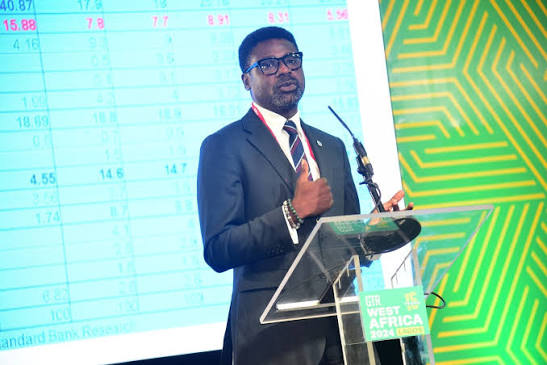
Head of Equity Research for West Africa at Stanbic IBTC Bank Muyiwa Oni said “Overall business conditions improved significantly in September, with the headline PMI rising to a level not seen since February 2022, thereby ensuring a better third quarter for business activities relative to the second quarter of the year”.
He said to meet rising workloads, companies increased purchasing activity at the fastest rate since February 2022, in some cases stocking up on inputs in anticipation of stronger demand in the months ahead.
That led to the quickest accumulation of inventories since late 2021, the report said.
Vendor performance also improved for a third straight month, with suppliers delivering goods more quickly, the report also stated.
Firms attributed faster deliveries in part to more prompt payments to suppliers, which helped ease bottlenecks in the supply chain.
According to the report, unemployment rose for a 16th consecutive month as businesses added staff to cope with higher order books, but the pace of job creation remained modest.
Many of the new hires were on a temporary basis to complete specific projects, rather than reflecting a broad-based, permanent expansion of payrolls.
The expansion in capacity helped firms keep up with workloads, with backlogs of work falling for a second month, albeit only slightly.
The PMI report also indicates that despite the upbeat activity data, inflationary pressures remained pronounced.
Input cost inflation accelerated to a three-month high in September, driven by higher prices for fuel, animal feed, foodstuffs and other raw materials. Staff costs also rose more quickly than in previous months.
In response, companies pushed through higher selling prices, with the rate of increase in output prices reaching its fastest pace in three months. More than a quarter of firms surveyed reported raising prices during the month.
Even as costs climbed, business confidence improved.
Firms were more optimistic about the 12-month outlook than in prior months, citing plans to expand operations, open new branches, start exporting, win new customers and build up stock levels.
Oni said the September PMI performance was consistent with an estimated 4.56% expansion in Nigeria’s economy in the third quarter of 2026, pointing to a strengthening non-oil sector as a key growth driver.
The Stanbic IBTC Nigeria PMI is compiled by S&P Global from monthly surveys of about 400 private-sector companies across agriculture, mining, manufacturing, construction, wholesale, retail and services.
