

The Federal Government is targeting 7% annual gross domestic product growth to combat poverty and surpass its 3% population growth rate, Finance Minister and coordinating Minister of the Economy Wale Edun said Monday.
Nigeria also needs about $14 billion in yearly infrastructure investment to close a persistent funding gap, Edun told official at Islamic Development Bank (IsDB) in Lagos.

He outlined a shift from economic stabilization to growth, emphasizing private capital over public financing and innovative tools instead of traditional debt.
“We are moving from stabilisation to growth, from reliance on public financing to private capital mobilisation, and from traditional borrowing to innovative financing instruments,” Minister Edun said.
Priority sectors include energy, transport, agriculture, and digital infrastructure to lift productivity. In a nation with a youthful population, Edun stressed digital tools for innovation and global edge.
He designated 2026 as the year of social development, aiming to integrate 10 million Nigerians into the economy via skills training, financing, and jobs—while bolstering micro, small, and medium enterprises for production and market access.
Financing plans feature expanded Sukuk bonds, deeper domestic capital markets, and public-asset securitization to lure investors.
De-risking projects and easing business hurdles remain key, Minister Edun said, as Nigeria eyes a $1 trillion economy and regional leadership under the IsDB umbrella.
The 2026-2028 Nigeria-IsDB framework focuses on infrastructure, social spending, novel finance, and cooperation.
IsDB’s Anasse Aissami, director-general of country programs, pledged scaled-up aid over the next five years—surpassing 25 years of prior work—in agriculture, energy, transport, health, and education.
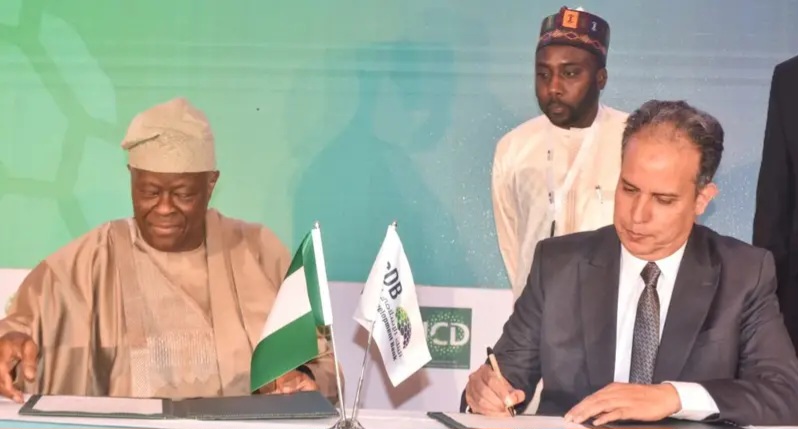
The event included a memorandum-of-understanding signing, business pitches, a news conference, and panels, drawing government officials, executives, financiers, chambers of commerce, and global partners.
