

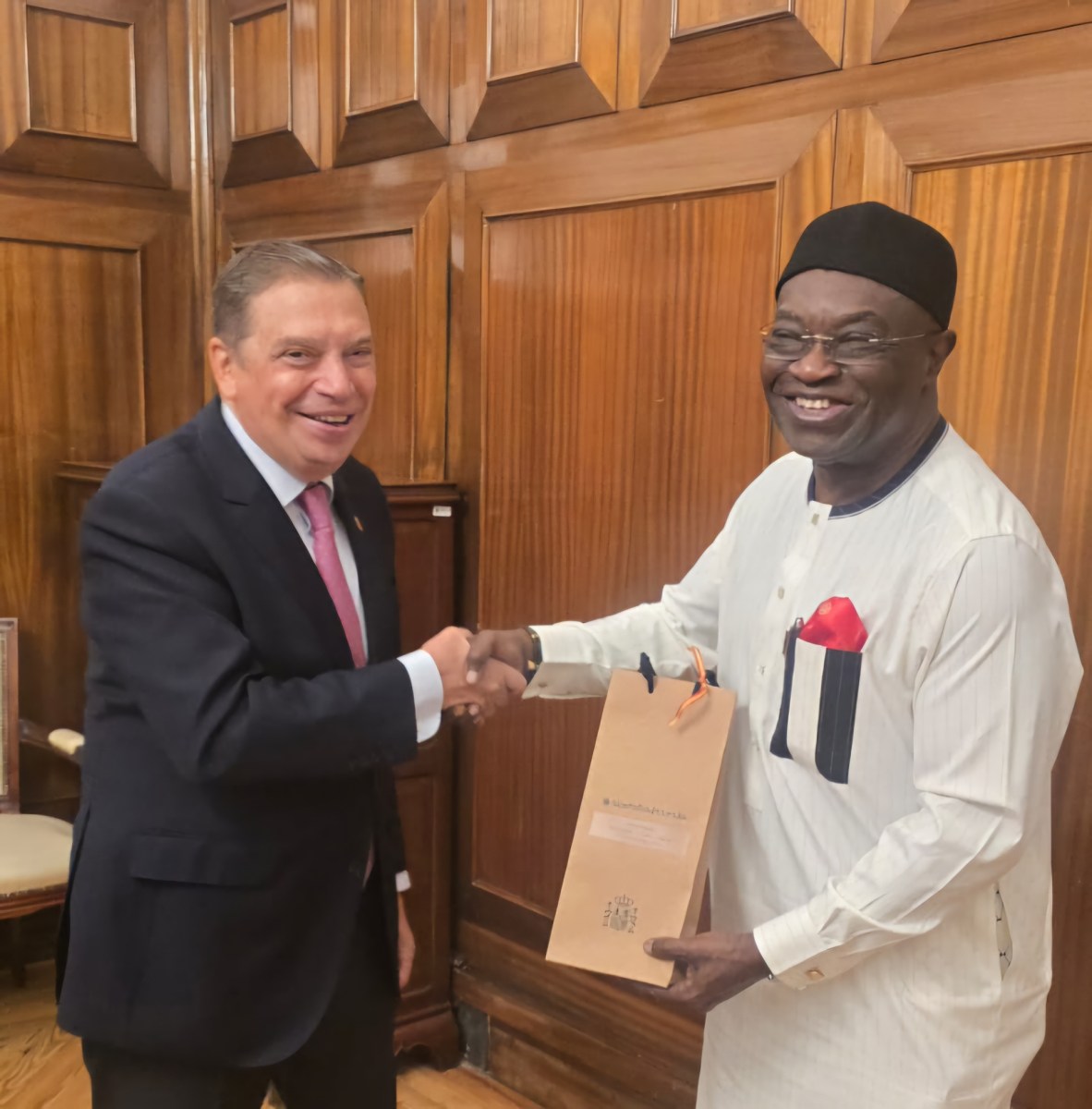
Nigeria and Spain have agreed to expand cooperation in agriculture, focusing on technology transfer, investment promotion and joint efforts in food production, livestock development and post-harvest preservation.
The understanding was reached during a meeting in Madrid between Nigeria’s Ambassador to Spain, Okezie Ikpeazu, and Spain’s Minister of Agriculture, Fisheries and Food, Luis Planas Puchades, at the Palacio de Fomento.
Planas congratulated Ambassador Ikpeazu on his appointment and on presenting his Letters of Credence to King Felipe VI, saying the ambassador’s arrival would help strengthen bilateral relations, especially in agro-food production, animal health and irrigation.
He pointed to Spain’s experience in crop-disease prevention and the development of high-yielding, improved seedlings as key drivers of large-scale food and livestock output.
The minister noted that Nigeria’s extensive arable land offered significant scope to expand food production and build out agricultural value chains.
He added that Spain’s ability to produce more food than it imports has been underpinned by improved seedlings, food-preservation policies and consumption strategies.
According to Planas, innovative technologies helped cut food losses in Spain by 20% in 2025, with further preventive measures now being rolled out.
Ambassador Ikpeazu said boosting agricultural production is a priority for President Bola Tinubu’s administration, given Nigeria’s large youth population and the employment potential across the agricultural value chain.
He argued that fuller use of the sector would strengthen food security, create jobs and help address irregular migration from Africa.
Ikpeazu praised Spain’s advances in improved seedling production, livestock development and food preservation, and said Nigeria was ready to collaborate to raise productivity.
He identified weak preservation facilities and transport networks as major contributors to food losses in Nigeria, stressing the need for joint action to tackle those bottlenecks.
As an example of successful Spanish investment, he cited GB Foods’ operations in Kebbi and Ogun states, where the introduction of improved tomato seedlings lifted yields from about 10 tonnes to more than 60 tonnes per hectare.
The ambassador also expressed Nigeria’s interest in expanding animal production for domestic use and export, and said the country was seeking Spanish partnership in that area.
Both sides agreed to promote closer collaboration, technology transfer and investment, and committed to facilitating proposals from relevant government agencies and private-sector stakeholders to deepen economic ties.
The discussions build on earlier efforts this month to broaden Nigeria–Spain cooperation across trade, energy, infrastructure, agriculture, education, culture, tourism and security.
