

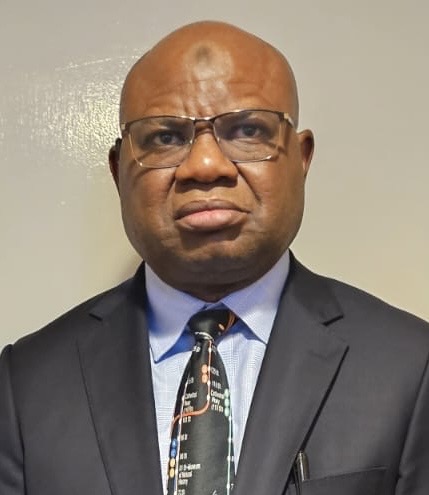
By Taiwo Olayinka Azeez Anjorin
When political ambition begins to overshadow national responsibility
As Nigeria gradually approaches the 2027 general elections, the conduct, public statements and political dispositions of those aspiring to occupy the highest office in the land deserve serious scrutiny.
The Nigerian presidency is not merely a political prize to be won through popularity, public demonstrations, political rhetoric or the ability to mobilise supporters. It is a constitutional responsibility requiring maturity, restraint, patriotism, respect for democratic institutions and an unwavering commitment to national unity.
Recent developments involving two prominent presidential aspirants, Peter Obi and Omoyele Sowore, present an opportunity for Nigerians to reflect on the relationship between political opposition, patriotism and responsible leadership.
Although the two incidents are different in character, they raise a common question: What standards of conduct should Nigerians expect from individuals seeking the mandate to govern a country as complex and diverse as Nigeria?
Peter Obi and the national anthem controversy
At a Nigeria Democratic Congress (NDC) town hall meeting in Lagos on November 12, 2026, Peter Obi and some party supporters declined to participate initially in the recital of Nigeria’s restored national anthem, Nigeria, We Hail Thee. The gathering subsequently sang the former anthem, Arise, O Compatriots.
The incident generated public debate about national identity, patriotism and the responsibilities of political leaders.
It is important to recognise that the restoration of the former independence-era anthem was itself a legitimate subject of public debate. Nigerians have every right to question the timing, legislative process, cost and national priorities surrounding that decision.
However, there is a fundamental distinction between disagreeing with a government policy and demonstrating respect for national symbols.
A national anthem should represent the collective identity of citizens, irrespective of their political affiliations or disagreements with the administration in power.
The National Anthem Act 2024 recognises the officially adopted anthem as a national symbol and requires respect for its dignity.
The NDC subsequently maintained that both versions of the anthem were sung at the event. That clarification is relevant and should be acknowledged. Nevertheless, the initial public reaction raises a broader question about the political symbolism of using national ceremonies to communicate disagreement with government decisions.
A presidential aspirant should be able to distinguish between personal political convictions and the national responsibilities associated with the office he seeks.
Nigeria belongs to all of us. Its national symbols should not become instruments of partisan competition.
Omoyele Sowore and the politics of confrontation
The second development concerns Omoyele Sowore, another presidential aspirant whose political activism has consistently challenged successive Nigerian administrations.
Sowore has called for nationwide mobilisation, including demonstrations and lawful strikes, beginning November 23, 2026, to protest political violence and demand accountability from the Tinubu administration.
There is nothing inherently undemocratic about peaceful protests, strikes or civil disobedience. Indeed, these are recognised instruments of civic participation, provided they remain within the applicable constitutional and legal framework.
A responsible opposition is indispensable to democracy. Governments must be challenged when they abuse power, fail to protect citizens or neglect their constitutional responsibilities.
However, political activism must also recognise that the ultimate objective of democratic opposition should be to strengthen the country, not create a permanent atmosphere of institutional hostility.
There is a difference between challenging the conduct of public institutions and encouraging public contempt for the institutions themselves.
The police, judiciary, legislature, electoral commission and other constitutional bodies must remain accountable. But their shortcomings should be addressed through lawful, constructive and sustainable democratic engagement.
A presidential aspirant must demonstrate not only the ability to mobilise citizens against perceived injustice but also the capacity to build consensus, manage disagreement and strengthen institutions when entrusted with power.
The question is not whether Sowore has the right to mobilise Nigerians. He does. The question is how such mobilisation contributes to democratic accountability, national stability and the protection of ordinary citizens.
The fundamental contradiction in Nigerian politics
One of Nigeria’s greatest political challenges is the tendency to confuse opposition with governance and political popularity with leadership capacity.
Some politicians believe that the more aggressively they criticise the government, the more qualified they become to replace it. Others assume that public enthusiasm, social media influence and emotional identification with political movements are sufficient indicators of presidential readiness. These assumptions deserve closer examination.
The ability to criticise a government does not automatically translate into the ability to govern a nation. Equally, the ability to mobilise protesters does not necessarily demonstrate the capacity to manage a complex economy, coordinate national security, protect constitutional institutions or unite citizens across ethnic, religious and political divisions.
Nigeria requires more than political personalities who can command public attention. It needs leaders who understand the difficult responsibilities of national administration.
We must begin to evaluate presidential aspirants beyond their speeches, political affiliations, personal popularity and the size of their followership.
What are their institutional reform proposals? How will they address insecurity? What practical economic policies will reduce poverty and unemployment? How will they strengthen the judiciary, improve public accountability and protect democratic freedoms? Most importantly, how will they unite Nigerians who disagree with them?
Patriotism must be bigger than political loyalty
Patriotism is not demonstrated merely by singing a national anthem, displaying the Nigerian flag or declaring love for the country.Neither is it established simply by opposing an unpopular government.
True patriotism is reflected in a consistent commitment to the country’s collective interests, constitutional order, national security, democratic freedoms and the welfare of its citizens.
A patriot can criticise the government. A patriot can organise peaceful demonstrations. A patriot can challenge unjust policies and demand institutional reforms.
But patriotism must also involve responsibility, restraint and an understanding that Nigeria is bigger than any individual or political movement.
The same standard must apply to every political actor, whether in government or opposition.
We cannot condemn intolerance when it comes from one political camp and celebrate it when it benefits another. We cannot demand respect for democratic institutions only when their decisions favour our preferred candidates.
And we cannot claim to be building a democratic society while encouraging political conduct that weakens public confidence in the constitutional framework.
Nigeria needs institution builders, not permanent political combatants
Our country is confronting serious national challenges. Insecurity continues to threaten lives and livelihoods. Economic hardship places enormous pressure on households. Youth unemployment, inadequate infrastructure, corruption and declining public confidence in government remain pressing concerns.
These challenges require thoughtful leadership, not merely political confrontation. Nigeria needs an opposition that can scrutinise government policies, expose wrongdoing, propose credible alternatives and hold public officials accountable.
It equally needs an administration that respects criticism, protects civil liberties and understands that political power is held in trust for the people.
The opposition must be prepared to govern, just as those in government must be prepared to leave office peacefully when the electorate decides otherwise. That is the essence of constitutional democracy.
The presidency should not be regarded as a reward for political struggle or an opportunity to settle political scores. It is a national assignment requiring exceptional responsibility.
A message to Nigerian voters
As we approach the 2027 elections, Nigerians must resist the temptation to judge presidential aspirants solely by political popularity, emotional appeal, ethnic or religious identity, revolutionary language or their capacity to criticise the incumbent administration.
We should demand evidence of leadership preparation, policy understanding, constitutional literacy, institutional respect and the ability to govern a pluralistic society.
Peter Obi, Omoyele Sowore, Bola Ahmed Tinubu and every other political aspirant should be subjected to the same standards of public scrutiny.
No candidate should be above criticism, and no political affiliation should provide immunity from accountability.
Our loyalty must ultimately be to Nigeria, not to individual politicians.
Nigeria is bigger than Peter Obi. Nigeria is bigger than Omoyele Sowore. Nigeria is bigger than Bola Ahmed Tinubu. Nigeria is bigger than every political party and movement.
The country’s future cannot be sacrificed on the altar of personal ambition, political grievances or partisan loyalty.
We need leaders who can disagree without destroying relationships, protest without undermining democratic order, criticise without encouraging institutional collapse, and govern without treating political opponents as enemies.
The real measure of presidential leadership is not simply the ability to challenge those in power. It is the ability to demonstrate, even before assuming office, the maturity, discipline, patriotism and constitutional responsibility required to govern everyone.
The question Nigerians must ask every presidential aspirant is simple: Are you seeking the presidency to serve Nigeria, or are you seeking Nigeria’s presidency to serve your political ambition?
The answer should be demonstrated through conduct, character, policies and a genuine commitment to the Nigerian people.
God bless the Federal Republic of Nigeria.
Anjorin is a public commentator and writes from New York, United States of America.
