

By Jacob EDI
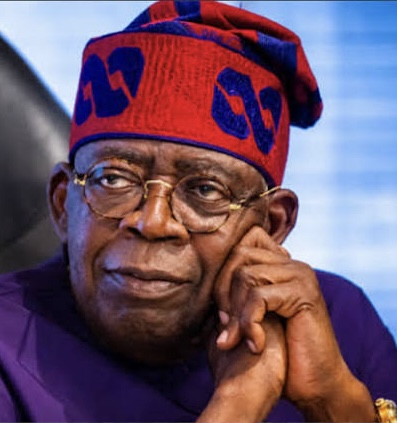
As the countdown to the 2027 general elections gathers momentum, it has become necessary to interrogate the political circumstances that shaped the emergence of President Bola Ahmed Tinubu, the dynamics that have defined his administration and, particularly, the shifting political calculations within the northern establishment.
When Tinubu chose Kashim Shettima as his running mate ahead of the 2023 presidential election, sections of the northern political establishment were remarkably enthusiastic in defending the controversial Muslim-Muslim ticket.
Arguments about political expediency, electoral calculations and the right of political parties to determine their leadership combinations were deployed with considerable force. Some northern voices insisted that the arrangement was not a religious statement but a pragmatic political decision necessary for securing electoral victory.
Tinubu was consequently celebrated in certain northern circles as a courageous politician who understood the country’s political arithmetic and was prepared to make difficult decisions.
What, then, has changed?
Is the growing opposition to Tinubu among sections of the northern establishment principally a consequence of economic hardship, inadequate development and the government’s inability to contain insurgency, kidnapping and terrorism? Or is there a deeper disagreement about access to power, controlling the levers of power and the distribution of national opportunities?
These are legitimate questions, particularly for North Central Nigeria and the wider Middle Belt, whose political interests have frequently been subsumed under the larger ambitions of the northern establishment.
For the Middle Belt, the Tinubu presidency presents an interesting political proposition. Consider the strategic appointments. Nigeria’s Chief of Army Staff, Lieutenant General Waidi Shaibu, is from Kogi State.
The Chairman of the Independent National Electoral Commission, Professor Joash Amupitan, also comes from Kogi, while the Minister of Information and National Orientation, Mohammed Idris, is from Niger State. These appointments place North Central indigenes in important national institutions responsible for military leadership, electoral administration and information management.
Beyond appointments, the administration’s infrastructural footprint is equally noteworthy. The Federal University of Applied Sciences, Kachia, in Southern Kaduna, represents a significant institutional intervention. The establishment of the North Central Development Commission is perhaps even more consequential. For the first time, the region has a dedicated federal development institution with a mandate covering infrastructure, agriculture, industrialisation, education, healthcare and economic integration.
Across Benue, the ongoing Buruku-Logo Bridge, Wurukum Overhead Bridge and Makurdi-Gboko Road address longstanding transportation challenges.
In Kogi, the reconstruction of the Abuja-Lokoja highway is particularly significant. Kogi is a strategic transportation gateway connecting Abuja with the entire southern part of the country. Its road infrastructure is therefore a national economic necessity, not merely a state concern.
Niger State is benefiting from major highway interventions, including the Lambata-Bida-Mokwa-Kontagora corridor. In Kwara, federal road projects along major commercial routes are important to regional transportation and trade.
Nasarawa and Plateau are positioned along the strategic Akwanga-Jos-Bauchi-Gombe-Maiduguri Superhighway. Nasarawa has also attracted industrial investment through the Diamond New Energy lithium processing facility, signalling the potential for mineral processing and local value addition.
Even the Federal Capital Territory, where Minister Nyesom Wike holds sway, has witnessed significant developments including road expansion, bridges, housing initiatives in addition to the administration’s development portfolio.
These projects are at different stages of implementation. Their completion, quality and eventual economic impact must be assessed objectively. But they provide a basis for evaluating the administration’s development record across the region.
The Middle Belt must also assess these developments against the eight-year administration of the late President Muhammadu Buhari. Despite having a Christian Vice President, the region did not enjoy what many communities considered commensurate institutional presence, strategic appointments and development opportunities.
What, therefore, did religious balancing alone deliver?
The lesson is that sharing the same faith with the occupant of the presidency does not automatically guarantee political inclusion. Political relationships must ultimately be measured by tangible outcomes.
This is where the philosophy of the Northern Nigeria Minorities Group (NNMG) becomes relevant. Established to advance the interests of more than 200 ethnic minority communities across the 19 northern states and the FCT, NNMG advocates inclusion, equity, political participation and social justice. Its fundamental proposition is that political participation must translate into political relevance. Votes must count, but so must communities. Electoral support must produce appointments, infrastructure, institutional presence and meaningful participation in governance.
The North is not a homogeneous political constituency. Its ethnic minorities have distinct histories, identities, interests and aspirations. Their political future cannot permanently be determined by dominant establishments that do not necessarily share their immediate concerns.
Indeed, North Central Nigeria and ethnic minorities across the wider North constitute an important electoral constituency ahead of 2027.
Their voting strength, geographical spread and political choices will contribute significantly to the arithmetic of the presidential election. No serious presidential contender can afford to take these communities for granted.
The region must therefore interrogate its political relationships through the lenses of personal interest, group interest and national interest. What does a political alliance deliver to our communities? Who provides stronger guarantees for security, infrastructure, economic opportunity and equitable representation?
What are the alternatives offering?
At least, Tinubu, we know. It will be unfair to assess his records through the narrow prism of religious identity.
The Muslim-Muslim ticket was defended as political expediency in 2023. It should not suddenly become evidence of a religious agenda simply because political interests have shifted. Equally, its original defence does not absolve the administration of responsibility for protecting Christians, Muslims and other religious communities.
For North Central, therefore, the 2027 conversation should be less about religious solidarity and more about the dividends of democracy. Which administration has expanded our institutional presence? Which has provided strategic appointments?
Which has invested in roads, bridges, hospitals, universities and economic opportunities? And what guarantees exist for sustaining these gains while addressing outstanding challenges?
The argument for a second Tinubu term among those who favour continuity must rest on this record, not religious sentiment. Equally, those who favour a change of government must demonstrate how their alternatives would better address the region’s development and security concerns.
Ultimately, the Middle Belt must neither surrender its political independence to the northern establishment nor allow religious sentiments to determine its political destiny.
Our votes are instruments of negotiation, representation and development. They must translate into influence, opportunity and measurable dividends of democracy.
That is the politics of relevance, and that is the conversation North Central must have before 2027.
JacobEDI is a public affairs commentator and strategist and writes from Abuja.
