

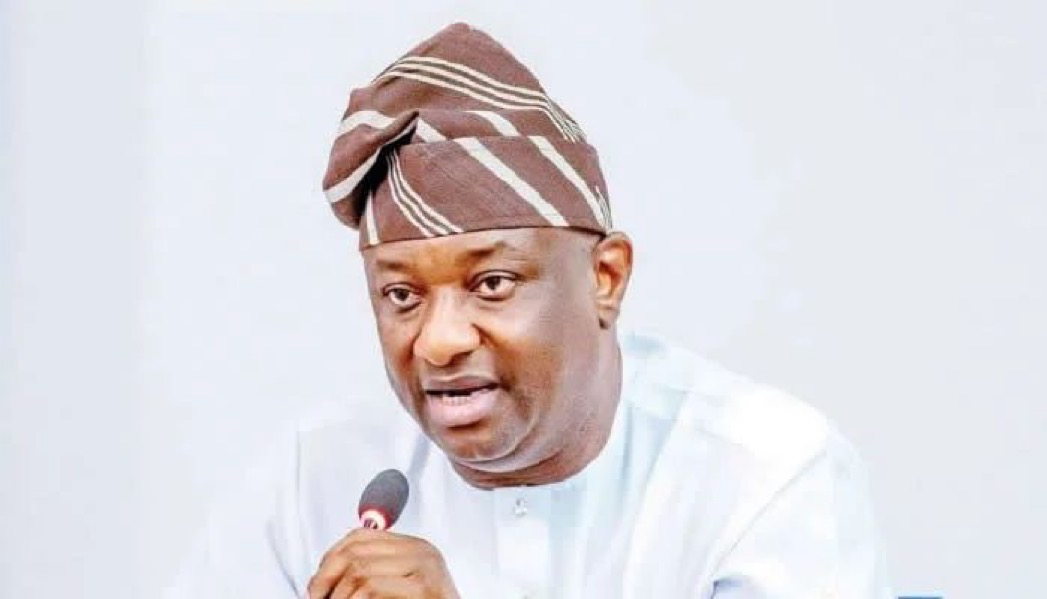
Minister of Aviation and Aerospace Development Festus Keyamo on Saturday gave Senator Seriake Dickson, national leader of the opposition Nigeria Democratic Congress (NDC), 48 hours to state whether the party endorses Nigeria’s former national anthem, escalating a political dispute over national symbols.
The ultimatum followed a town-hall meeting in Oregun district in Lagos on Thursday, where attendees – including NDC presidential candidate Peter Obi, sang “Arise, O Compatriots,” the anthem used from 1978 until 2024, rather than the currently prescribed “Nigeria, We Hail Thee.”
In a post on X, Mr. Keyamo framed the episode as more than a symbolic misstep.
He argued that a national anthem embodies a country’s history, values and sovereignty, and warned that a group’s public adoption of a different anthem could amount to preparation for secession.
“If a group of people decide to defy it and sing something different from what others are singing as prescribed by law, that group is preparing grounds to break away from the country,” Keyamo wrote.
He said that if the party’s leader endorsed the action, the NDC would “officially” become a secessionist movement.
Keyamo, who described Dickson as a former classmate and friend, demanded that the senator clarify the NDC’s position within two days. “The world is waiting,” he wrote.
Funso Doherty, the NDC’s Lagos governorship candidate, sought to defuse the controversy, describing the singing as a spontaneous response in an emotional atmosphere.
He said the current anthem had also been performed at the event and emphasized that Nigeria has only one officially recognized anthem.
The dispute comes after President Bola Tinubu signed the National Anthem Act in May 2024, restoring “Nigeria, We Hail Thee”—the anthem in use from independence in 1960 until 1978—and replacing “Arise, O
Compatriots.”
The change was passed rapidly by the National Assembly and drew criticism from Nigerians who questioned the timing and public consultation.
Keyamo sharpened his criticism in a Friday radio interview, accusing Mr. Obi and other NDC figures of disrespecting national symbols, the law and the presidency.
He suggested the episode could damage the party’s standing with moderate voters.
But the Minister acknowledged that the law does not prescribe a specific penalty for singing the former anthem.
“There’s no penalty that is prescribed by law,” he said, adding that an act becomes criminal only when a penalty is attached.
The confrontation turns a largely ceremonial dispute into a test of the NDC’s political identity, and of how far Nigeria’s governing coalition will press its case that national symbols are inseparable from national loyalty.
