

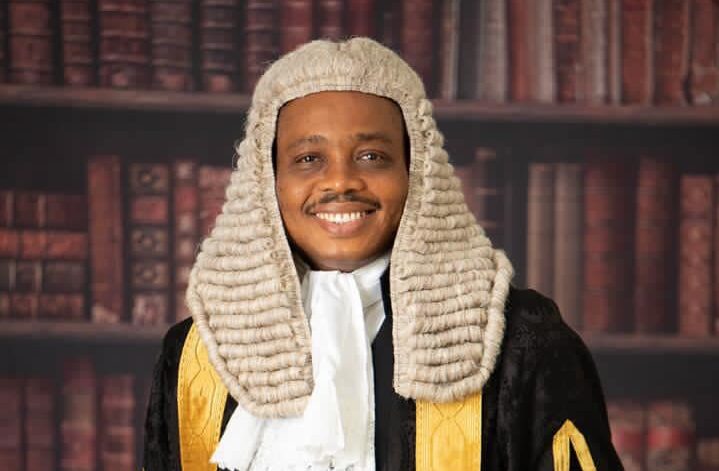
The immediate past President of Nigeria Bar Association (NBA) Mazi Afam Osigwe, has charged judges, operatives of the Economic and Financial Crimes Commission (EFCC) and lawyers to take collective responsibility for the persistent delays in the prosecution of financial crime cases in the country.
Osigwe, a Senior Advocate of Nigeria said that persistent delays in major economic-crime cases reflect a shared failure of responsibility across the criminal-justice system.
He spoke at a capacity-building workshop organized by the EFCC and the National Judicial Institute ( NJI), where judges and prosecutors examined how Nigeria can pursue financial crimes in an increasingly digital environment.
“Nigeria’s legal framework is substantially adequate,” Osigwe said, according to remarks reported at the event.
The difficulty, he argued, lies in implementation: provisions designed to speed trials are too often ignored, while procedural practices prolong cases that should move more quickly.
Osigwe directed criticism at all three pillars of the process.
Prosecutors, he said, sometimes grant administrative bail to suspects during investigations, then oppose bail when the same suspects appear in court—an inconsistency that can add months to proceedings.
Judges, meanwhile, may impose bail conditions so stringent that they become another source of delay.
He also urged courts to enforce more vigorously the Administration of Criminal Justice Act of 2015, which was intended to promote day-to-day trials and curb unnecessary adjournments.
In practice, he said, those objectives are frequently defeated by routine postponements and weak case management.
The remarks come as the government has pressed the judiciary to close procedural gaps that politically exposed individuals and organized criminal networks can exploit to slow corruption cases.
President Bola Tinubu, addressing the same workshop through Vice President Kashim Shettima, called on judicial officers to scrutinize prosecution strategies and outdated precedents that enable delay.
Osigwe’s prescription began before a case reached the courtroom.
Prosecuting agencies, he said, should complete investigations before filing charges, because repeated amendments force courts to re-read charges to defendants and consume scarce judicial time.
He also supported greater use of video recordings when confessional statements are obtained, arguing that such recordings could help courts resolve disputes over how statements were made, reduce lengthy “trial-within-trial” proceedings and better protect defendants’ rights.
For lawyers, he called for firmer judicial responses to abusive procedural tactics—including reliance on obsolete legal arguments—and for disciplinary referrals where counsel engage in misconduct.
Accountability at the bar, he suggested, would deter conduct that turns complex cases into prolonged legal contests.
On whether Nigeria should create dedicated courts for major financial-crime cases, the former NBA President sided with Justice James Omotosho of the Federal High Court in Abuja: train and designate specialized judges rather than build an entirely new court system.
Creating new courts, he warned, could bring bureaucratic and institutional costs.
A more practical route would be to strengthen existing courts, improve efficiency and give judges deeper expertise in financial crime, criminal procedure, digital evidence and emerging areas of law.
While supporting continuing judicial education, Osigwe proposed flexible and virtual programs, along with a structured certification system, so judges can build skills without leaving pending cases unattended
Osigwe’s argument aligns with concerns raised by the EFCC chairman, who has identified procedural delays, frivolous adjournments and frequent changes of counsel as obstacles to prosecuting complex financial-crime cases.
However, his central point was broader: Nigeria does not need merely new institutions or louder anti-corruption rhetoric.
It needs judges willing to manage cases firmly, prosecutors prepared to investigate thoroughly before charging, and lawyers held accountable when procedure becomes a weapon, he said.
“Responsibility does not rest with the judiciary alone,” he said, urging stakeholders to move beyond reform discussions and put existing laws into practice.
