


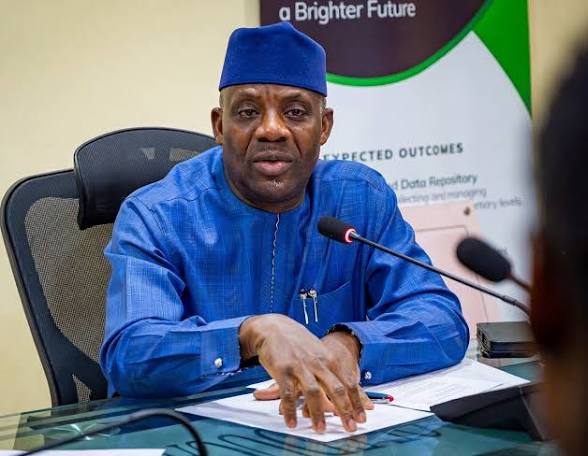


The Minister of Education Olatunji Alausa has inaugurated a technical working group to fast-track the establishment of an Armed Forces College of Medicine and Health Sciences.
In a statement by the Special Adviser on Media and Communications to the Minister Ikharo Attah, the move is part of the Federal Government’s broader drive to build a dedicated pipeline of health professionals for the country’s military.
Alausa said the college, approved by the federal government earlier this year, is intended to end the long-standing reliance of the armed services on civilian universities for doctors, nurses and specialized rehabilitation professionals.
He said the initiative is a strategic investment in national security and in the welfare of personnel who “risk their lives daily to defend the nation.”
“We cannot continue to leave the brave men and women who defend our nation without a sustainable system for training the healthcare professionals they require,” Alausa said at the inauguration in Abuja.
He asked the working group to prioritize programmes—such as occupational therapy, prosthetics and orthotics, and speech therapy—that address combat-related injuries and rehabilitation.
The interministerial committee includes senior representatives from the education and defence ministries, the National Universities Commission, professional councils for medicine, nursing and midwifery, the Nigerian Defence Academy and the Joint Admissions and Matriculation Board.
The group is charged with designing curricula that integrate academic and military training, securing accreditation and arranging admissions in time for the 2026 academic session.
Brigadier General Dr. Idris Babatunde Solebo, director-general of the Defence Health Implementation Programme and chairman of the working group, said organisers are modelling the college on the Uniformed Services University of the Health Sciences in the United States, where medical cadets receive combined military and clinical training from admission through graduation.
Dr. Solebo said the college will be sited near the 68 Nigerian Army Reference Hospital in Lagos, where existing facilities could allow a rapid start.
He and other officials flagged shortages of military medical personnel as a key driver of the initiative.
The announcement comes amid an expansion of medical and nursing education under President Bola Tinubu’s administration.
Alausa noted that annual admissions into medicine and dentistry have risen to about 10,405 from roughly 5,000 before the current government, and said the target is to reach 20,000 within two years through accreditation of more medical colleges.
He added that nursing enrolment has climbed to nearly 120,000 from about 28,000, a gain he attributed in part to standards maintained by the Nursing and Midwifery Council of Nigeria.
Alausa thanked Defence Ministry officials for their support and said the technical working group’s work would determine whether the timetable can be met.
NewsQuest gathered that the National Universities Commission has been directed to fast-track resource verification and accreditation, and that the Joint Admissions and Matriculation Board was asked to list the new college on its admissions portal to allow the intake of pioneer military medical cadets in 2026.