







The Federal Government on Tuesday said it is working closely with transport, energy and environment commissioners across the 36 states and the Federal Capital Territory (FCT) to expand compressed natural gas (CNG) and electric-vehicle transport, as President Bola Tinubu pushes for a meaningful reduction in commuter fares.
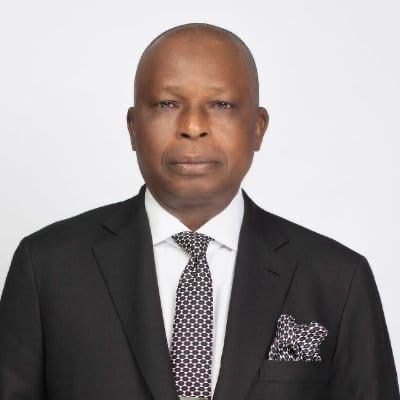
The initiative is intended to ensure that savings from lower-cost alternative fuels reach passengers, not only transport operators, the Executive Chairman of the Presidential Compressed Natural Gas Initiative (PCNGi), Barrister Ismael Ahmed, said in New York.
Ahmed is in the United States as part of Nigeria’s delegation participating in the 81st session of the United Nations General Assembly (UNGA).
He told NewsQuest that “the President and the Governors met on the 27th of August and made a commitment to see that there are lower fares, or that the benefits of CNG and electric mobility cascade down to the passengers”.
The government’s drive comes as households contend with higher transport costs following the removal of petrol subsidies and other economic reforms.
The Tinubu administration has positioned CNG as a cheaper alternative to petrol and diesel for commercial transport operators, provided vehicle conversions, gas supply and refuelling infrastructure can be expanded quickly enough.
The PCNGi Executive Chairman said state governments have demonstrated what he described as a serious commitment to alternative-fuel vehicles and lower fares for students, senior citizens and civil servants.
He said Kaduna, Borno, Lagos and Oyo states have begun deploying alternative-fuel vehicles in parts of their transport systems.
According to Ahmed, the Federal Government now wants the benefits to spread beyond selected groups and early-adopting states to the broader commuting public.
“We have started seeing reduction, but we want it to be more permeated across the country,” he said.
He stressed that President Tinubu has directed that transport fares begin declining from October 1, adding that the government has seen early signs of reductions and expects them to become more pronounced in October and November.
“This thing is not about target. The President said he wants to start seeing transport fares come down by the first of October. We have already started seeing it come down … through to November. God willing, we are going to see a drastic drawdown,” he said.
The durability of any fare reduction will depend on the pace at which Nigeria builds a reliable CNG distribution network.
Commercial operators have cited a shortage of refuelling sites, the cost of converting vehicles and uncertainty over consistent gas supplies as obstacles to wider adoption.
However, the PCNGi chairman said the Federal Government has ordered about 1,000 CNG refuelling stations through the Midstream and Downstream Gas Infrastructure Fund, administered under the Nigerian Midstream and Downstream Petroleum Regulatory Authority.
An initial order for 500 stations was placed earlier this year, he said, followed by a second order for another 500 in August.
The stations are expected to be delivered in phases, with an initial batch of about 75 due between mid-October and the end of the month.
Nigeria currently has about 90 operational gas-refuelling stations, according to Ahmed.
The proposed rollout would significantly expand access if the new facilities are installed, connected to gas supply and brought into operation on schedule.
“States are eager to take up these stations once they come into their states, so that they will be able to use these vehicles to cut down transportation,” he said.
The PCNGi Executive Chairman also spoke about his meetings with investors in the alternative-fuel mobility sector, including companies involved in CNG conversion, vehicle assembly, refuelling infrastructure, financing and electric-vehicle deployment.
Nigeria’s population and vehicle market offer a substantial commercial opportunity, he said, though investors are seeking assurances that the programme will rest on a durable business framework rather than temporary policy support.
“We are discussing with people throughout the value chain of alternative-fuel mobility,” he said.
“Nigeria is 200 million people strong. The market is there. The demand is there. Nigeria has roughly 12 million vehicles and will need private investment to build a viable CNG and electric-mobility ecosystem,” he said.
“Investors want to come in, so they want to hear from us directly: What does Nigeria have for them?” Ahmed added.
The PCNGi boss noted that “ultimately, it is about the sustainability of it, not just a flash in the pan”.
For the Tinubu administration, the programme will test whether lower-cost, gas-powered transport can translate into a visible economic benefit for commuters.