

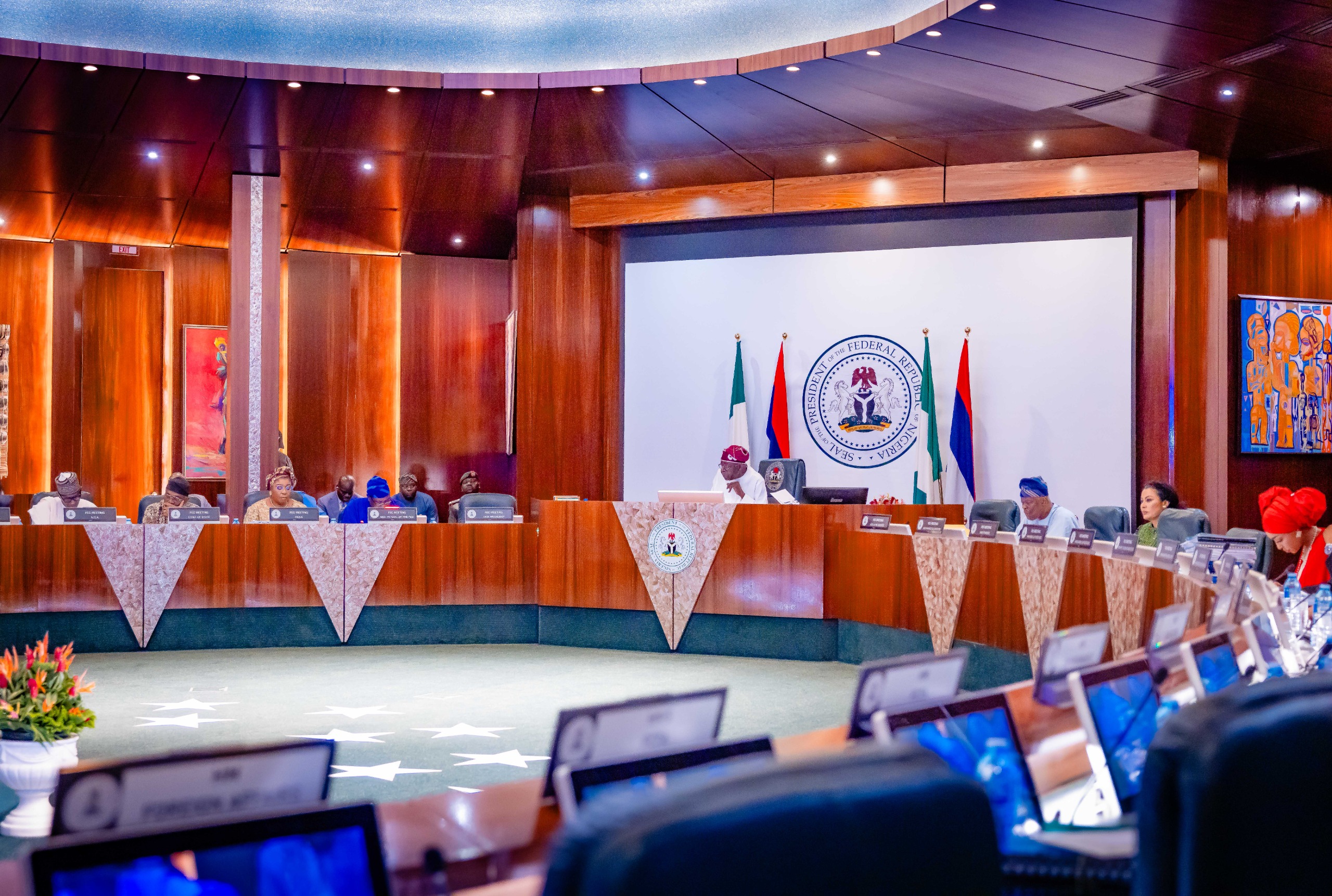
The Federal Executive Council (FEC) on Wednesday approved a N45.8 billion ($30 million) disease-surveillance system for five international airports to strengthen Nigeria’s defence against Ebola.
The decision, announced after a council meeting chaired by President Bola Tinubu, pair an effort to contain the risk of imported infectious disease with measures to relieve liquidity pressures that have constrained gas supply to generating companies and weakened electricity delivery.
The biosecurity project will be delivered through a 20-year public-private concession awarded to BioHealth Consortium.
The private partner is to design, finance, build, operate and maintain the facilities, while the federal government retains policy and regulatory oversight; the assets will revert to the state when the concession ends.
The system will be installed at international airports in Lagos, Abuja, Kano, Port Harcourt and Enugu—gateways that handle more than 18 million passengers annually.
It will include aircraft wastewater monitoring, air and surface sampling, cargo and baggage screening, rapid-diagnostic laboratories and a national operations center intended to integrate real-time data from health, customs, immigration and food-and-drug authorities.
Minister of Health Ali Pate said the investment reflects lessons from Covid-19 and Nigeria’s recent imported Ebola case, which occurred as an outbreak continued in the Democratic Republic of Congo.
The patient has recovered, but officials are monitoring contacts for 21 days – Ebola’s maximum incubation period—and paying 100,000 naira to quarantined contacts to encourage compliance.
FEC also gave approval to shore up the nation’s epileptic electricity industry by settling N1.2 trillion of the N2.3 trillion it owes power-sector operators.
Minister of Power Joseph Tegbe said the 1.2 trillion naira payment is intended to ease the sector’s cash shortages, improve gas supply to generation companies and stabilize the grid.
The remaining N1.1 trillion of debt underscores the scale of the financial strain that has long hampered Africa’s most populous country’s electricity market.
The council also approved three transmission projects: an upgrade of the Katampe substation serving north-central Nigeria; three 300-megavolt-ampere transformers for the Lagos-area Egbin substation; and reconstruction of a 35.6-kilometer Shagamu line from single- to double-circuit configuration.
According to the Minister the measures are part of a plan to lift transmission capacity from roughly 5,000 megawatts to more than 19,000 megawatts, above the more than 13,000 megawatts of available generation capacity.
Government has also begun a nationwide technical audit of power infrastructure, divided the country into three planning zones and started clearing more than 300 containers of stranded electricity equipment at ports. Construction has started on a new National Control Center in Osogbo to replace a facility built 64 years ago.
The Power Minister announced that 14 federal Universities now have solar mini-grids of one to five megawatts, with 11 more funded through TETFund, while five teaching hospitals have received completed solar projects.
The initiatives are intended to reduce reliance on the national grid and keep essential public services running during outages.
