

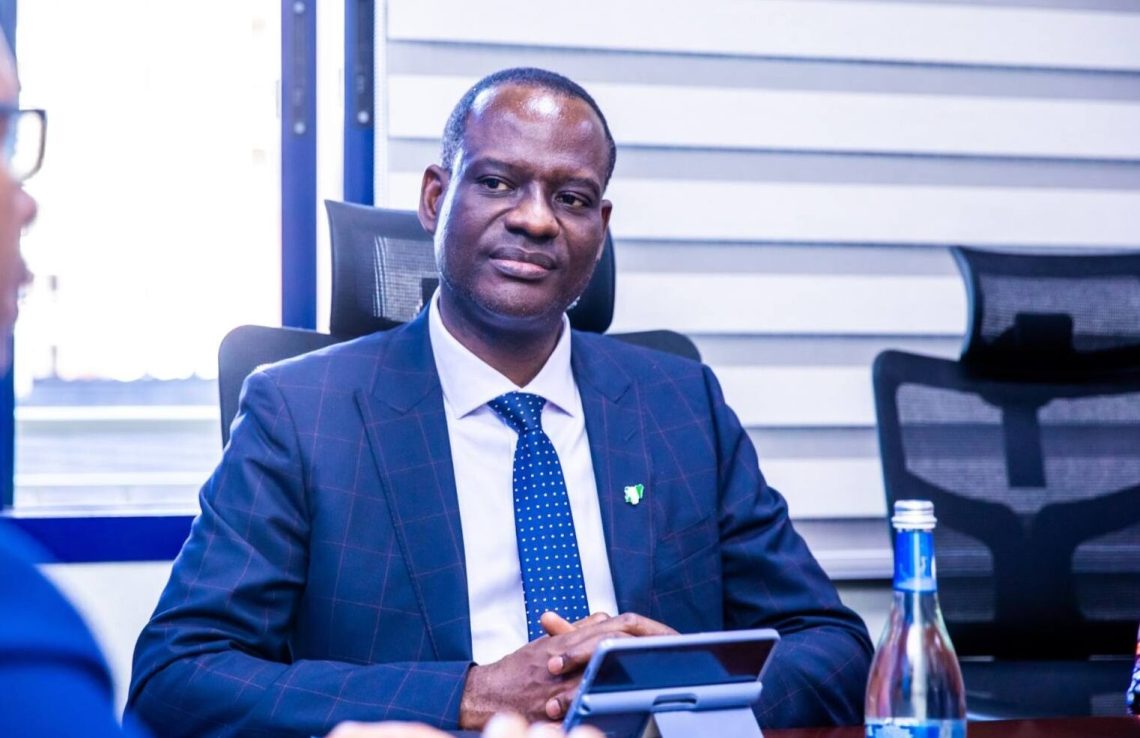
Minister of Finance and Coordinating Minister of the Economy, Taiwo Oyedele, has said the $21.7 billion borrowing plan is targeted at driving economic growth and infrastructure development, stressing that the funds are being channelled into projects with long-term benefits for the country.
Speaking to reporters after a Federal Executive Council (FEC) meeting chaired by President Bola Tinubu on Wednesday, Oyedele said the borrowing request, submitted to the National Assembly, should be judged by the roads, railways and other assets it would create—and by their contribution to long-term growth.
“This is investment, not borrowing,” he told reporters.
The proposal, which combines $20.52 billion with euro-denominated facilities, is a five-year financing plan rather than an immediate drawdown, Oyedele said.
The minister also said it would fund projects across transportation, security, health care, agriculture, energy, digital infrastructure, education and social welfare.
About $10.6 billion is earmarked for transportation, including the Sokoto–Badagry and Lagos–Calabar coastal highways and the Kano–Kaduna railway corridor.
The government is negotiating with multilateral lenders, bilateral partners and other financiers to support the projects.
Roughly $7.9 billion would come from multilateral and bilateral development institutions, led by a $5 billion World Bank facility carrying an average interest rate of about 2.1 percent.
Some social-development facilities would carry rates near 2 percent, according to the minister.
Oyedele said the administration is prioritizing concessional financing to keep repayment terms more sustainable than those attached to conventional commercial debt.
He added that about $3.3 billion is designated for state-government projects and $1.45 billion for the Federal Capital Territory.
The minister also reiterated the government’s goal of bringing inflation into single digits by the end of 2027, or earlier.
The headline inflation eased to 14.63 percent in September, down from 15.39 percent in August and 20.98 percent a year earlier, according to the National Bureau of Statistics.
Food inflation, however, remains elevated at 19.59 percent, underscoring the pressure on households even as broader price growth slows.
Oyedele said the council agreed to intensify measures targeting food costs while maintaining investment in infrastructure and job creation.
Oyedele pointed to improving macroeconomic indicators as evidence that the administration’s reforms are taking hold.
Foreign-exchange reserves have risen above $55 billion, their highest level in 18 years, while net reserves have climbed to more than $45 billion from below $1 billion three years ago.
The economy expanded 4.43 percent year-on-year in the second quarter, up from 2.74 percent in May 2023, he said.
He said the tax-to-GDP ratio has risen from about 7 percent in 2023 to 12.5 percent by the end of 2025, while the share of revenue devoted to debt service has fallen from 97 percent to below 60 percent.
Defending the removal of petrol subsidies, Oyedele argued that decades of repeated price adjustments had failed to fix the structural flaws of the old regime, which strained public finances and crowded out spending on infrastructure and social services.
He said the government has expanded targeted assistance to cushion the adjustment: more than 10 million households have received cash transfers totaling over ₦600 billion, while the Nigerian Education Loan Fund (NELFUND) has disbursed ₦372.6 billion to more than 1.5 million students.
More than 800,000 small businesses have accessed subsidized credit at single-digit interest rates.
The minister also cited gains in the capital market, where valuation has grown from about ₦30 trillion to more than ₦160 trillion, and expressed confidence in the naira’s medium-term outlook, citing stronger reserves and improving fundamentals.
Still, the borrowing plan faces scrutiny.
Critics have questioned the clarity of project-level returns and the pace of debt accumulation, even as the government argues that the facilities’ concessional terms and infrastructure focus distinguish them from past borrowing.
