

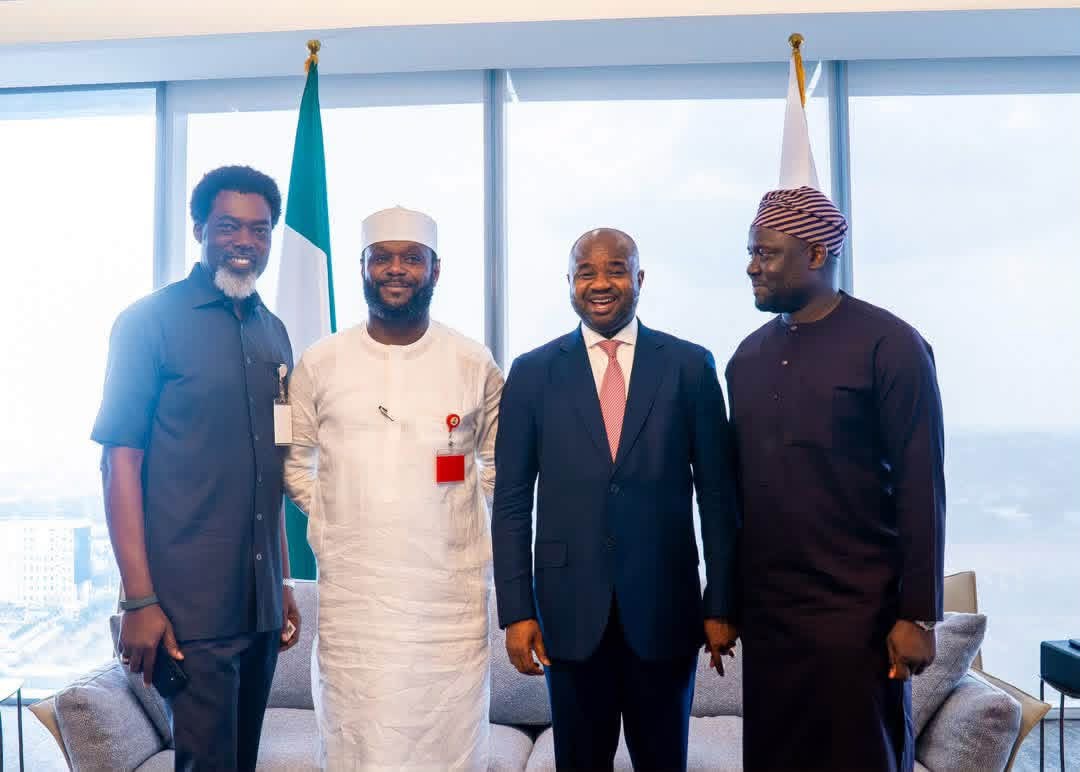
President Bola Tinubu’s son Seyi, has described the Nigeria Revenue Service (NRS) headquarters as both an architectural landmark and a symbol of the country’s effort to build a stronger fiscal foundation.
Seyi stated this during a visit to the agency’s new Abuja headquarters complex.
In a post on his official Facebook page, Seyi said the view from the tower offered a striking perspective of the Federal Capital Territory, including its greenery and landmarks such as the National Mosque.
“My visit to the Nigerian Revenue Service Headquarters in Abuja gave me the opportunity of a remarkable view of the nation’s capital from one of its towering landmarks,” he said.
“From its impressive height, the city unfolds in all its beauty, revealing the lush greenery, the iconic National Mosque and other notable landmarks that define the character and elegance of the Federal Capital Territory.”
He added: “It is a breathtaking perspective of Abuja, where architectural excellence meets the beauty of the city.”
The President’s son thanked the NRS Executive Chairman, Dr. Zacch Adedeji, for the reception extended to him during the visit.
Dr. Adedeji leads the revenue agency, whose headquarters on Kur Mohammed Avenue in the Central Business District was commissioned by President Tinubu in April.
NewsQuest reports that the 16-storey complex comprises three towers and can accommodate about 3,000 personnel.
Beyond the building’s design, Seyi described the NRS as central to Nigeria’s development agenda.
“Beyond its architectural appeal, the NRS plays a vital role in mobilising revenue to fund public infrastructure, strengthen essential services, support economic development and promote national growth,” he said.
He argued that effective tax administration, improved compliance and transparent revenue collection were essential to sustainable development and national prosperity.
“Through effective tax administration, improved compliance and transparent revenue collection, the Service contributes to building a stronger fiscal foundation for sustainable development and national prosperity,” he noted.
The visit comes as the NRS continues to position itself as the country’s reformed revenue institution following the transition from the former Federal Inland Revenue Service, a change intended to modernise tax administration and unify revenue collection.
