

The Northwest region Tuesday launched Africa’s first subnational climate marketplace, part of an effort to attract financing for flood control, drought resilience and renewable energy across seven States.
The inaugural North-West Climate Summit, held at the Presidential Villa in Abuja, is built around three pillars: a Climate Marketplace to match state and local government projects with financiers; a Climate Academy to train 10,000 young people; and a Climate Fund targeting about ₦20 billion – roughly $13 million—over the next four years.
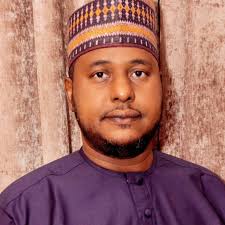
“This is the first time we’re having a climate summit, a climate marketplace that is regional, not only in Nigeria but in the whole of Africa,” Abdullahi Tanko Yakasai, Senior Special Assistant to President Bola Tinubu on Community Engagement for the Northwest told reporters in an interview.
Yakasai said the marketplace would allow states and local governments to list climate programmes on a shared platform, giving international development partners, financial institutions and domestic investors a direct view of investable projects.
“Local governments, states can go into that platform and put up what they do on climate change, so that international development partners, international financial institutions, and even the local ones can see what programs they are doing on climate,” he said.
“They will go there and see how they can partner and collaborate with the subnationals on climate change.”
The initiative is being implemented with the Northern Governors’ Forum, the North-West Governors’ Forum and the North-West Development Commission. It covers Kaduna, Kano, Jigawa, Katsina, Kebbi, Sokoto and Zamfara states.
The proposed Climate Fund is intended to finance responses to flooding, drought, desertification, migration and the region’s transition to renewable energy.
Presidential aide Yakasai said resources would be channelled through his office to address climate-related pressures affecting communities across the Northwest.
“We are looking at the region of ₦20 billion in the next four years,” he said.
“All these are aimed at easing the problems of climate, because this is what is bedevilling the whole world.”
According to him, the fund would seek grants, impact capital and carbon finance, with potential support for climate-resilient agriculture, water security and women-led green enterprises.
The Climate Academy is expected to train 10,000 young people across the region in climate resilience, climate action and related skills, an attempt to build local capacity for a green-economy agenda in a region where environmental stress has increasingly affected farming and livelihoods.
Yakasai said the summit’s discussions would inform Nigeria’s engagement at the forthcoming United Nations climate summit, as the region seeks to convert local vulnerabilities into bankable investment opportunities.
“Anything that has to do with climate challenge, we focus on it and see how we can help in alleviating those challenges,” he said.
