

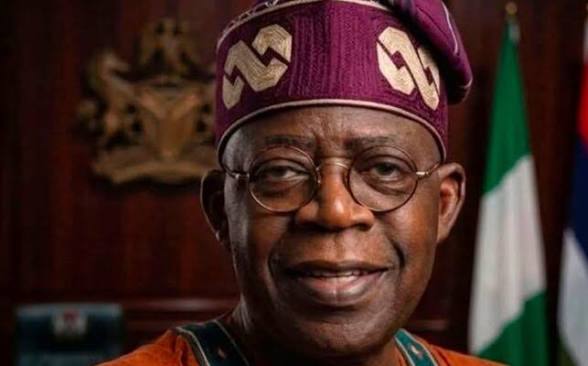
President Bola Tinubu on Monday rejected calls to reinstate the nation’s costly fuel subsidy, invoking the biblical story of Moses to describe the policy reversal as a retreat from hard-won economic reform.
“You cannot ask Moses to go back to Egypt,” Tinubu told members of the City Boy Movement at the Presidential Villa, Abuja, a political support group.
“We will campaign with ideas and original thoughts and deep thinking to move this country forward.”
President Tinubu’s abrupt removal of petrol subsidies on his inauguration day in May 2023 ended decades of government support that had kept fuel prices artificially low.
According to President Tinubu, Nigeria could no longer afford the subsidy, warning that continued payments would push the country toward bankruptcy.
“Nigeria will go bankrupt. You have nothing left to pay subsidy,” he said.
The President’s language was deliberately biblical. Drawing on accounts of Moses – known as Musa in Islam – leading the Israelites out of Egypt, he cast the subsidy’s removal as an irreversible crossing rather than a policy experiment.
“When Moses – Musa left Egypt, they faced the challenge and the Red Sea parted and gave way. Never will we go back to Egypt,” the President stressed.
The subsidy remains a potent issue ahead of future elections and President Tinubu acknowledged that political opponents have promised to restore it, a pledge that resonates with many Nigerians grappling with higher prices for fuel, food and transportation.
President Tinubu’s position has severally been reinforced by government officials including the Finance Minister Taiwo Oyedele, who warned earlier this month that reinstating the subsidy could push petrol prices to at least 2,000 naira a litre and weaken the naira to about 3,000 naira per dollar within months.
Oyedele argued that renewed subsidy spending would strain public revenue and deepen pressure on the economy.
Other government officials have also sought to distinguish recent interventions by the state oil company, Nigerian National Petroleum Company Ltd., to cushion pump prices from a formal return to subsidy.
The government insists those measures do not amount to a reversal of the 2023 reform.
For Tinubu, the argument is as much political as fiscal: having led Nigeria across what he views as an economic Rubicon, he shows little appetite for leading it back.
