

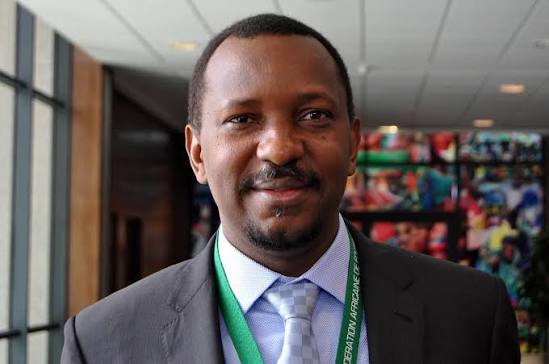
Chairman of the National Sports Commission, Shehu Dikko on Wednesday said Nigeria is seeking American investment and technology partnerships to modernize the country’s sports infrastructure, commercialize stadium assets and expand pathways for young athletes.
Dikko disclosed this to journalists following meetings on the sidelines of the United Nations General Assembly (UNGA) in New York.
He said investors interest was particularly strong at the third US – Nigeria Council for Investment event, where he delivered a keynote address on opportunities in Nigeria’s sports and creative economy.
“The theme of the event this year is about the advancement of sports and the creative economy. That is a sector in Nigeria that needs huge development,” Dikko told reporters.
He said the response from investors, technology companies and members of the public exceeded expectations, with several participants requesting detailed discussions on potential investments in sports ventures and related infrastructure.
“Everybody wants to discuss something – one particular investment or wants to know more about how they can key into sports, especially people in the technology industry,” Dikko said.
The Sports Commission Chairman added that “It is quite refreshing for us, and it shows we are doing something.”
The comments further indicate the federal government’s attempt to position sports not only as a social and cultural activity, but also as an investable industry capable of creating jobs, generating revenue and supporting the country’s broader creative-economy agenda.
According to Dikko, some participants expressed surprise at what they described as the scale of reforms and opportunities emerging in the sector under President Bola Tinubu’s administration.
“Most of the commentators were like, ‘Wow, we didn’t know this much is happening within this sector,’” he said.
“They gave credit to the president for the kind of support in the sports sector and the fact that we are opening so many channels.”
NewsQuest reports that Nigeria, Africa’s most populous country, has a large pool of athletic talent and a passionate following for football, basketball and track and field. But its sports industry has long been constrained by poorly maintained facilities, governance disputes, limited commercial structures and weak links between grassroots development and professional competition.
Dikko said the government plans to direct significant resources toward rehabilitating sports facilities, with the intention of eventually placing their management in private hands.
“We are planning to invest huge amounts of resources to refurbish and revamp sports infrastructure in Nigeria,” he said.
“The idea is that, after that revamping by government, we should hand it over to the private sector, who can manage it, commercialize it and make it a valuable asset that will generate money.”
He pointed to the US sports industry as a model, saying American venues derive income throughout the year from entertainment, commercial activity and other uses beyond match days.
“All their sporting arenas, all their stadiums, are money-making ventures,” he said.
“They are not just hosting sporting events. Twenty-four hours, they are working, creating money.”
The Nigerian delegation is seeking partners capable of bringing technology, operational expertise and capital into the sector, Dikko added.
Potential areas include stadium operations, sports data and technology, football and basketball clubs, academies, athlete development and scholarship opportunities for Nigerian students.
“We are looking at how we can use technology within the sports sector and how we can get people involved in the management of our sporting infrastructure,” he said.
He said the government also wants to develop clearer routes for talented Nigerian athletes to combine sport with education, including through scholarship opportunities at US universities.
Investors could participate across “football, basketball, clubs, academies and what have you,” Dikko said, while helping create “a pathway for intelligent and committed sportsmen” to pursue education and athletic development abroad.
