

By Adérónke Atoyebi
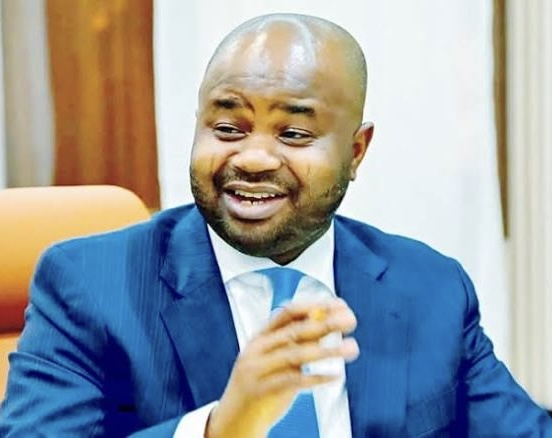
The recent appearance of the Executive Chairman of the Nigeria Revenue Service, Dr Zacch Adedeji, on Channels Television’s Politics Today offered Nigerians something that is still relatively uncommon in the country’s economic debate: a senior public official attempting to explain government policy through numbers rather than slogans.
For more than an hour, Adedeji discussed taxation, revenue mobilisation, subsidy removal, inflation, exchange rates, economic growth and the wider reforms of the Bola Tinubu administration. He defended the government’s economic choices and sought to explain why the new tax regime should be viewed as an attempt to redesign Nigeria’s revenue architecture rather than simply raise taxes.
That conversation was useful. But it should not end the debate. If anything, Adedeji’s appearance raises a more important question: are Nigeria’s revenue reforms producing a stronger and fairer fiscal system, or are they merely improving the government’s ability to collect money from an economy in which households and businesses are already under considerable pressure?
That is the question on which the administration, and the NRS under Adedeji, should ultimately be judged.
There is little doubt that Nigeria’s revenue position has improved. The NRS reported that it collected N28.23tn in 2025, exceeding its N25.2tn target.
Non-oil taxes accounted for N21.46tn, while the agency said oil-tax receipts fell 5.2 per cent below target. For 2026, the broader revenue target has been placed at N40.7tn following changes that transfer petroleum revenues, mineral royalties and other revenues into the NRS framework.
Those numbers are significant. But revenue growth by itself is not evidence of a successful tax system.
Nigeria has historically struggled with a very narrow tax base. OECD data show that Nigeria’s tax-to-GDP ratio was only 8.2 per cent in 2023, compared with an average of 16.1 per cent for the 38 African countries covered by its Revenue Statistics in Africa report.
The challenge, therefore, is not simply to collect more money. It is to build a system in which more economic activity becomes formal, compliance becomes easier, tax evasion becomes harder, multiple taxation is reduced, and taxpayers can see a credible connection between what they contribute and the public services they receive.
This is where Adedeji’s formulation that Nigeria should “tax prosperity, not poverty” deserves closer examination.
It is an attractive principle. But a principle is only as meaningful as the policies and institutions that give effect to it.
If taxation is genuinely about prosperity, then the revenue authorities must be careful not to create a system in which businesses spend more time responding to tax demands than investing, hiring workers and expanding production.
Small businesses, in particular, cannot be treated simply as convenient sources of additional revenue. They are also employers, producers and potential future taxpayers.
The new tax framework has attempted to address some of these concerns. The reforms were designed to simplify the tax system, reduce multiple taxation and improve compliance. The government has also presented the new architecture as a move towards greater efficiency and transparency.
But implementation will determine whether those promises survive contact with reality.
Nigeria has never suffered from a shortage of tax laws alone. The country’s deeper problems include weak enforcement capacity, informality, poor coordination among government agencies, inadequate taxpayer information, distrust of public institutions and the tendency of different levels of government to impose overlapping charges.
Technology can help address some of these problems. Digital tax administration, electronic invoicing and better information-sharing can reduce opportunities for leakage and make compliance easier. But technology cannot substitute for institutional accountability.
The NRS should therefore be judged not only by how much revenue it collects, but also by how efficiently it collects it, how many disputes arise, how quickly legitimate complaints are resolved and whether taxpayers experience greater certainty about their obligations. There is another issue that deserves more attention: what happens to the additional revenue after it is collected?
This is perhaps the most important question in Nigeria’s current fiscal debate.
The government can improve revenue mobilisation, but if additional resources are absorbed by recurrent expenditure, debt servicing, inefficient spending or poorly targeted interventions, the average Nigerian may see little difference.
The World Bank has acknowledged improvements in Nigeria’s fiscal position and revenue mobilisation but has also warned that these gains have yet to translate sufficiently into improved living standards. It has highlighted persistent poverty, food insecurity, high food prices and the need for more effective public spending and social protection.
That distinction matters. A government can celebrate rising revenue while households continue to struggle with food, transport, housing, healthcare and education costs. Both realities can exist simultaneously.
The same caution applies to the removal of the petrol subsidy, which Adedeji defended during the television interview.
There is a strong fiscal argument for ending an expensive and distortionary subsidy regime. The World Bank itself had argued that subsidy removal could create substantial fiscal savings and help restore fiscal space. But it also warned that the reform could push vulnerable households into poverty unless accompanied by effective social protection.
Consequently, the appropriate question is no longer whether subsidy removal saved the government money.
It is whether the fiscal savings have been translated into measurable improvements in public services, infrastructure, social protection and economic opportunities.
That is where the administration’s economic narrative requires more scrutiny.
It is understandable for officials to compare the country’s present position with the conditions inherited in 2023. But historical comparison cannot become a substitute for current performance. Nigerians are entitled to ask what has improved in their own lives, not merely what has improved on a government balance sheet.
This is also why Adedeji’s role should be assessed institutionally rather than personally.
The success of Nigeria’s revenue reforms cannot depend on whether one chairman is articulate on television, technically competent at defending government policy. A durable revenue system must survive changes in political leadership and agency heads. It must be embedded in law, technology, professional standards, transparent procedures and institutions capable of resisting political interference.
That is the real test of the Nigeria Revenue Service.
Adedeji’s tenure provides an opportunity to move the conversation in that direction. The reported increase in revenue collections suggests that the administration has made progress in mobilisation. The consolidation of the tax framework and the transition from the Federal Inland Revenue Service to the Nigeria Revenue Service also offer an opportunity to rethink how revenue administration works across the federation.
But progress should not be confused with completion.
The NRS now has to demonstrate that higher collections can coexist with a broader tax base, lower compliance costs, stronger taxpayer rights, greater transparency and improved confidence in the tax system.
It must also demonstrate that revenue mobilisation is contributing to economic expansion rather than simply extracting more from existing taxpayers.
For President Tinubu, the political challenge is even broader. Revenue reform cannot be separated from expenditure reform. Asking Nigerians and businesses to pay more requires government to demonstrate that public money is being used responsibly.
The social contract cannot be one-sided.
Citizens must comply with legitimate taxes. Government must, in turn, provide credible public services, enforce fiscal discipline and account for how the money is spent.
That is ultimately the standard by which Adedeji and the Tinubu administration should be judged. At present, that is the direction the duo are tilting towards for the greater good of every Nigerian.
The television interview was therefore important, not because it proved that every government policy has been correct, and certainly not because it settled the debate about Nigeria’s economic reforms. Its value lies in the fact that it provided an opportunity to interrogate the thinking behind those reforms.
The next stage should be less about defending the reforms and more about measuring them.
How much has the tax base expanded? How much has compliance improved? How much has tax evasion declined? How much does it cost businesses to comply? How many Nigerians and enterprises previously outside the tax net have been brought into it? And, most importantly, what measurable improvements in public welfare can be traced to the additional revenue?
Nigeria needs a revenue system capable of financing development without suffocating enterprise. It needs taxpayers who understand their obligations and believe the system is fair. And it needs a government capable of showing citizens that every additional naira mobilised is being converted into public value.
Adedeji has an opportunity to help build such a system. The revenue numbers provide a basis for cautious optimism, but they are not the final verdict.
The final verdict will come when Nigerians can look beyond government revenue reports and see the benefits in their businesses, their jobs, their communities and their daily lives.
These positive measures are already manifesting, and the new tax regime under President Tinubu and Adedeji is at present on the right path to perfection.
Atoyebi is a 2014 Laureate of the Wole Soyinka Investigative Journalism Award, 2016 finalist for the CNN African Journalist Award, and Technical Adviser on Broadcast Media to the Executive Chairman, Nigeria Revenue Service.
