

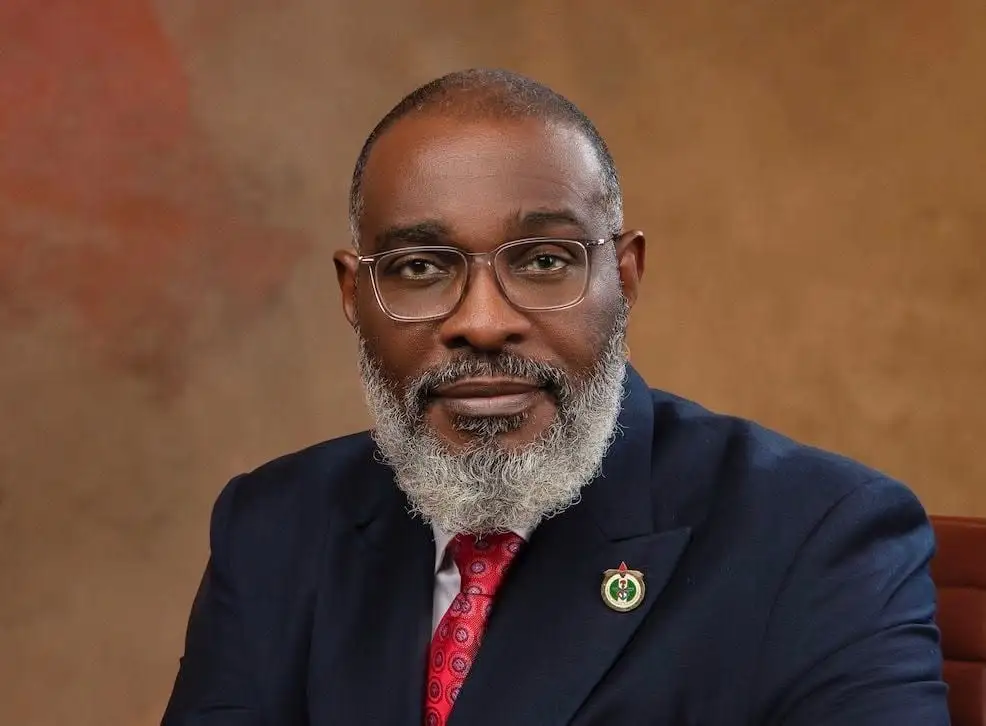
President Bola Tinubu’s newly appointed Homeland-Security Adviser has laid out four priority reforms aimed at tightening the country’s security architecture, signaling the government’s drive to pair military operations with technology and better inter-agency coordination.
Adeyinka Famadewa, a retired Major General appointed in May this year, presented the measures after his first formal meeting with heads and representatives of key Ministries, Departments, and Agencies (MDAs) at the Office of the Secretary to the Government of the Federation.
Among attendees included senior officials from Nigerian Customs Service, Nigeria Correctional Service, the Federal Road Safety Corps, the Nigerian Financial Intelligence Unit and the Office for Strategic Preparedness and Resilience, along with military and intelligence representatives.
“The President is committed to a secure, resilient and technology-driven homeland security ecosystem,” Famadewa said, according in a statement.
He described the four priorities as practical, implementable steps intended to improve situational awareness, reduce anonymity that aids criminal networks and speed crisis response.
The four initiatives are: a Unified Surveillance Programme to consolidate monitoring and improve nationwide situational awareness through upgraded technology, strengthened identity management to reduce the anonymity that extremist and organized-crime networks exploit online and across communications systems, as well as tighter border security achieved through better inter-agency coordination, technology deployment and intelligence-led operations to curb cross-border crime.
The priority initiatives also include enhanced early-warning, crisis-reporting and rapid-response mechanisms to enable quicker detection of threats and coordinated action.
General Famadewa emphasized that his office is meant to complement, not supplant, existing security agencies and called for sustained intelligence sharing and coordinated action.
He also praised the Armed Forces and other agencies for recent efforts to restore peace in parts of the country and stressed the role of non-kinetic measures—such as governance and social resilience—in long-term security.
Officials at the meeting agreed to set up coordination mechanisms, hold regular stakeholder engagements and draft implementation frameworks intended to turn the priorities into measurable outcomes.
The move comes amid mounting concern that gaps in the nation’s digital governance are being exploited by extremist groups and criminal networks.
Reports have often highlighted how encrypted messaging platforms, weak identity systems, multiple or fraudulent SIM registrations and fragmented government databases have hampered law enforcement and allowed coordinators to organize attacks, recruit and launder funds.
NewsQuest gathered that interoperable digital platforms, stronger identity management and integrated data systems would bolster intelligence-led policing and early-warning efforts.
Famadewa’s agenda mirrors those recommendations, but experts caution that translating plans into results will require funding, legal reforms, robust privacy safeguards and sustained political commitment.
