

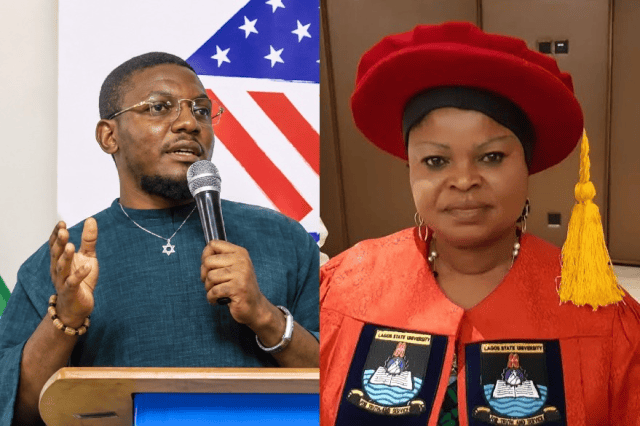
The Nigerian Guild of Editors on Sunday demanded the immediate release on bail of Daniel Ojukwu, an investigative journalist with the Foundation for Investigative Journalism, who has been remanded at the Kuje Correctional Centre in Abuja.
Ojukwu was arraigned before the Federal High Court in Abuja on 12 counts of alleged cyberstalking and criminal defamation and pleaded not guilty.
Justice Joyce Abdulmalik ordered his remand pending a bail hearing scheduled for December 1.
The charges stem from investigative reports published by FIJ in 2023 and 2024 concerning public expenditure by the Office of the Senior Special Assistant to the President on Sustainable Development Goals.
In a statement signed by NGE President Eze Anaba and General Secretary Onuoha Ukeh, the guild said it was alarmed that a journalist could face criminal prosecution and imprisonment for reporting on matters of public interest.
The editors argued that scrutiny of public spending is not cyberstalking and that demands for accountability from public officials do not amount to defamation.
They said public officeholders must accept that their management of public resources is subject to legitimate journalistic investigation.
“Investigative journalism is not a crime,” the guild said.
“Asking questions about public expenditure is not cyberstalking. Demanding accountability from public officials is not defamation”, it also said.
The NGE also called for a review of the allegations against Fisayo Soyombo, FIJ’s founder, who is named as the second defendant in the case.
The police allege that Ojukwu and Soyombo conspired to commit cyberstalking and criminal defamation through reports concerning former presidential aide Adejoke Orelope-Adefulire.
The cybercrime counts carry a maximum penalty of 10 years’ imprisonment or a fine of 25 million naira, while the criminal-defamation counts carry a maximum sentence of two years, according to the Committee to Protect Journalists.
The guild warned that deploying criminal laws to resolve disputes arising from investigative reporting could weaken accountability, undermine democratic institutions and discourage journalists from examining allegations involving public
The case has drawn criticism from media and civil-society groups, including the Nigeria Union of Journalists, the Committee to Protect Journalists and the Socio-Economic Rights and Accountability Project, which have called for Ojukwu’s release and the withdrawal of the charges.
The NGE urged law-enforcement agencies to demonstrate a firm commitment to media freedom and to investigate allegations of misuse of public funds through transparent and accountable processes, rather than focusing criminal proceedings on journalists who raise them.
