

By Anule Emmanuel
Young people fuel innovation, growth and stability worldwide. In Nigeria, where those aged 18 to 29 make up a quarter of the population, their inclusion could unlock economic potential—or exacerbate unemployment and unrest if ignored.
Education, skills training and governance roles form the pillars of effective youth strategies. “Sustainable development hinges on youth well-being,” says Zahrah Rizwan, programme coordinator for youth engagement at Sri Lanka’s Youth Climate Action Network. “Nations must prioritize their issues to sustain economies.”
Next Monday, the Federal Government and Lagos State will launch a dialogue on youth leadership in Abuja. Titled “Scaling Excellence: Youth Leadership as Strategic Infrastructure for National Transformation,” the event targets to convert rhetoric into policy.
READ ALSO: US Trump ready to ‘unleash hell’ if Iran does not accept defeat
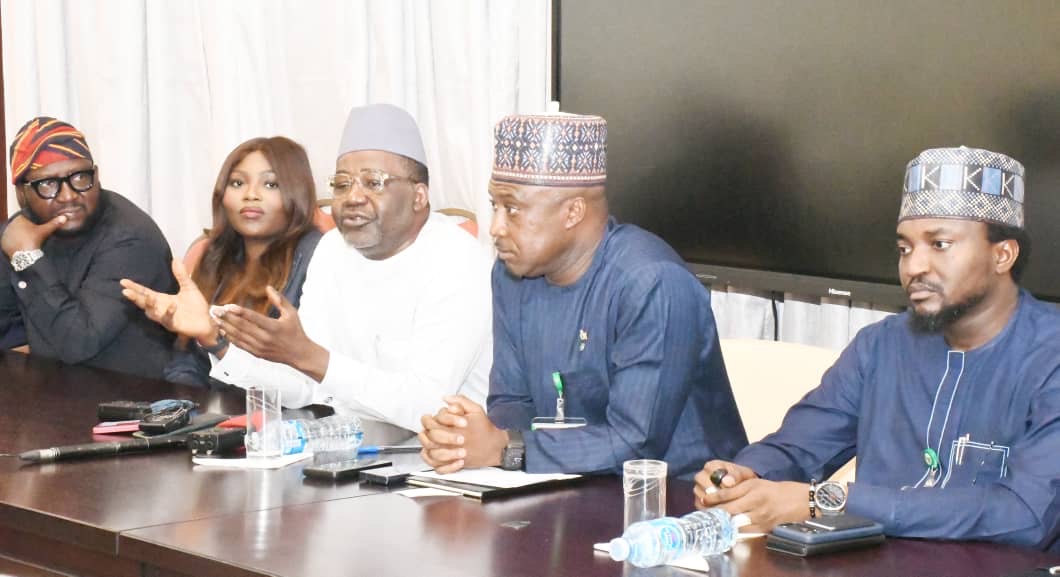
At the Presidential Villa on Friday, Deputy Chief of Staff Senator Ibrahim Hassan Hadejia met representatives from Lagos’s Lateef Jakande Leadership Academy, a key partner in the preparations for the high-level event.
According to Senator Hadejia, the President Bola Tinubu’s administration views youth as core infrastructure for Nigeria’s renewal, pledging steps to position them as future policymakers.
Some quotes from President Tinubu himself, provide a clearer context regarding the government’s commitment in this regard… “From the early days of this administration, I have made a firm decision; the Nigerian youth will not stand on the margins of our national development. This commitment is not political; it is personal.
“The youths, I have a message for our young people. You are the future and the greatest assets of this blessed country. You must continue to dream big, innovate, and conquer more territories in your various fields,” the President said at different fora.
Monday’s dialogue, Senator Hadejia said, will map paths to expand youth development through training, mentorship, exposure and accountability, powered by public-private partnerships. “Inclusion opens doors,” he added, “but responsibility demands preparation for high-stakes roles.”
The Federal Ministry of Youth Development has always led towards these efforts, emphasizing education, employment, entrepreneurship, and social inclusion, on the the country’s large youth population, aged between 18-29.
The reformed Ministry, under President Tinubu administration recently released a 2-Year Strategic Roadmap aligned with the national “Renewed Hope” agenda, targeting skills development, job creation, youth governance participation, and partnerships with private sectors for sustainable impact.
Some of the challenges faced by Nigerian youth obviously revolve around severe economic and social hurdles that limit their potential and drive widespread frustration. Others cut across social and security issues including crime, poverty, and poor infrastructure that plague daily life, with youth feeling vulnerable to violence, kidnappings, and trauma from constant negative news.
It is disturbing that although, youth often actively join political rallies and vote, yet they hold few leadership roles due to elite dominance and patronage politics. Efforts like the “Not Too Young to Run” law have aimed to lower age barriers for elective offices, but structural challenges persist.
For several Nigerian Youths, comprehensive strategies like a renewed National Youth Employment Action Plan, infrastructure investments (power, transport), industrialization, fiscal discipline, scholarships with job guarantees, and equity-focused interventions for rural, female, and disadvantaged groups could form a short-term solution to improve the present situation.
Reports indicate that the Nigerian Education Loan Fund (NELFUND), which provides loans to students regardless of political affiliation, expanding higher education access, the Three Million Technical Talent (3MTT), currently equipping youth with digital and vocational skills for global job markets, and a programmes like iDICE and Nigeria Youth Investment Fund, and which offer grants for tech and creative entrepreneurs – is fast making significant impact under the President Tinubu administration.
Aside the fact that President Tinubu appointed young Nigerians into ministerial roles early in his cabinate, fulfilling a promise for greater youth representation in governance – stakeholders see the coming dialogue as a chance to press for more — including a proposal from the Ministry of Youth Development in August 2024 for a bill mandating at least 30 percent representation for those under 40 across government tiers, from cabinets to appointments.
Participants at the forth-coming Abuja dialogue must therefore, never fail to galvanize the different contributions and opinions. If the gathering harnesses diverse views, it could mark a shift from rhetoric to reckoning.
