

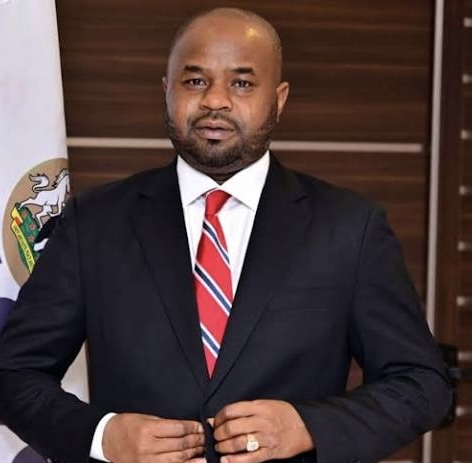
Newly empowered Nigeria Revenue Service (NRS) has set its sights on collecting 40.7trillion naira in 2026, buoyed by tax reforms that have swept petroleum royalties and mineral revenues into its coffers.
NRS Executive Chairman Zacch Adedeji announced the target when he appeared before the House of Representatives Committee on appropriation and other members of the President Bola Tinubu’s economic team.

Adedeji revealed that the NRS exceeded its 2025 revenue target of ₦25.2 trillion, posting ₦28.23 trillion in collections — ₦3 trillion above projection.
The figure he said represents a 12% increase with non-oil taxes being the major driver of growth, generating ₦21.46 trillion — ₦3.4 trillion above expectations.
Oil tax revenue, however, fell short of target by 5.2%.
The NRS compared to 2024, recorded an additional ₦6.5 trillion in 2025, marking a 30.3% increase largely powered by non-oil receipts.
For the 2026 fiscal year, the NRS is projecting ₦32.14 trillion in revenue — ₦3.85 trillion higher than 2025 collections.
The forecast is anchored on expected growth in oil production from 1.7 million barrels per day to 1.8 million barrels per day, alongside gains from ongoing tax reforms.
Meanwhile, lawmakers during the session expressed concerns over what they described as zero capital performance in the 2025 budget.
The Minister of Finance and Coordinating Minister of the Economy, Wale Edun, however defended the administration’s fiscal strategy.
The Minister said the previous reliance on Ways and Means financing — which rose to about ₦30 trillion — and subsidy under-recovery arrangements by the Nigerian National Petroleum Company Limited were unsustainable.
Edun explained that President Tinubu halted unchecked borrowing to stabilise the economy, though it created short-term funding gaps.
Minister of Budget and National Planning, Atiku Bagudu on his part, disclosed that an agreement had been reached with the National Assembly to roll over 70% of the 2025 capital allocation into 2026 to improve funding performance.
The Chairman of the House Committee on Appropriations, Abubakar Bichi, said lawmakers required further clarification on revenue projections to guide deliberations on the 2026 appropriation bill.
With 2025’s successes in the bag, attention now shifts to whether the bold 2026 revenue ambitions can be sustained amid economic reforms and fiscal restructuring.
