

By Anule Emmanuel
Nigeria and Barbados, backed by the African Export-Import Bank, have advanced plans to establish an intravenous-fluids manufacturing plant worth $32million in Barbados and deepen Africa-Caribbean industrial ties.
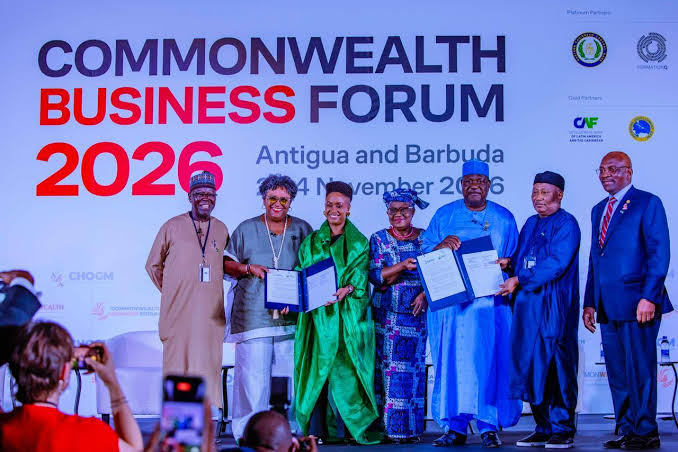
The plan for the proposed pharmaceutical project was concluded during the Commonwealth Heads of Government Meeting by officials of the two countries.
A statement by the participating organisations on Sunday said the proposed facility, a joint venture between Barbados Pharmaceutical Inc. and Nigeria’s AMA Medical Manufacturing, would initially produce as many as 12 million units of IV fluids annually, with room to expand.
The statement said additional pharmaceutical products could follow, subject to technical, commercial and regulatory review.
According to the statement, the initiative is part of a broader effort to reduce the Caribbean’s reliance on imported essential medical products and build regional manufacturing capacity.
It also reflects a growing push by African and Caribbean governments to turn political affinity into trade, investment and industrial cooperation.
During CHOGM 2026, BPI and AMA signed a memorandum of understanding, while AMA and Afreximbank signed a project-preparation-facility term sheet.
The agreements are intended to begin a financing package that could eventually include senior debt, working capital and risk-bearing instruments.
Afreximbank’s initial role would be to fund the technical, commercial and financial work needed to determine whether the project is viable, structure its financing and prepare it for investment.
Production is targeted to begin in 2029, although financing, regulatory approvals and construction arrangements remain unresolved.
The project is being championed by the governments of Barbados and Nigeria, BPI, AMA and Afreximbank.
The World Trade Organization has offered initial support, framing it as a potential model for diversifying production of essential medical products through South-South and triangular partnerships.
Barbadian Prime Minister Mia Amor Mottley cast the venture as a test of whether small states can build durable productive capacity through international partnerships.
“Barbados may be a small island state, but our ambitions for our people and our region are not small,” Ms. Mottley said.
“This partnership represents the determination of African and Caribbean nations to build productive capacity, strengthen our health security and create opportunities that will endure for generations.”
The Secretary to the Government of the Federation (SGF) George Akume, said the project would pair Nigerian manufacturing expertise with Caribbean investment opportunities.
He described it as a practical step toward expanding healthcare production, trade, technology exchange and skills development between the two regions.
WTO Director-General Ngozi Okonjo-Iweala said the Covid-19 pandemic exposed the dangers of concentrating production of essential medical goods in a small number of countries. She said the Barbados project showed how trade and investment could broaden supply chains while creating industrial capacity.
NewsQuest reports that IV fluids are a basic component of hospital care, making the proposed plant strategically significant for a region that depends heavily on imported medical supplies. AMA would bring manufacturing experience, while BPI is seeking to develop Barbados as a base for pharmaceutical production serving regional and international markets.
The project builds on an existing commercial relationship. AMA shipped its first IV fluids consignment to Barbados in March 2026, with further shipments planned for Antigua and Barbuda, the British Virgin Islands and St. Lucia.
Barbados is also seeking to develop a broader medical-products ecosystem. In June, it enacted legislation to create the Barbados Medical Products Authority, though implementation of the new regulatory framework is still under way.
The venture now enters a preparation phase involving feasibility work, financing negotiations and regulatory approvals. Officials said the CHOGM agreements advance implementation, but do not yet guarantee that the plant will be built.
Our correspondent gathered that for Afreximbank, the project extends a relationship with the Caribbean that gained momentum during the pandemic, when the bank worked with African and Caribbean partners to improve access to vaccines.
Senior Executive Vice President Denys Denya said the bank intends to provide a comprehensive financing solution, from early project preparation through senior debt and risk-bearing instruments.
“This project carries that ambition forward,” Mr. Denya said.
“Nigerian manufacturing expertise and investment in Barbados can help the Caribbean build local production of essential medicines, strengthen health sovereignty, transfer technology and create skilled jobs.”
