

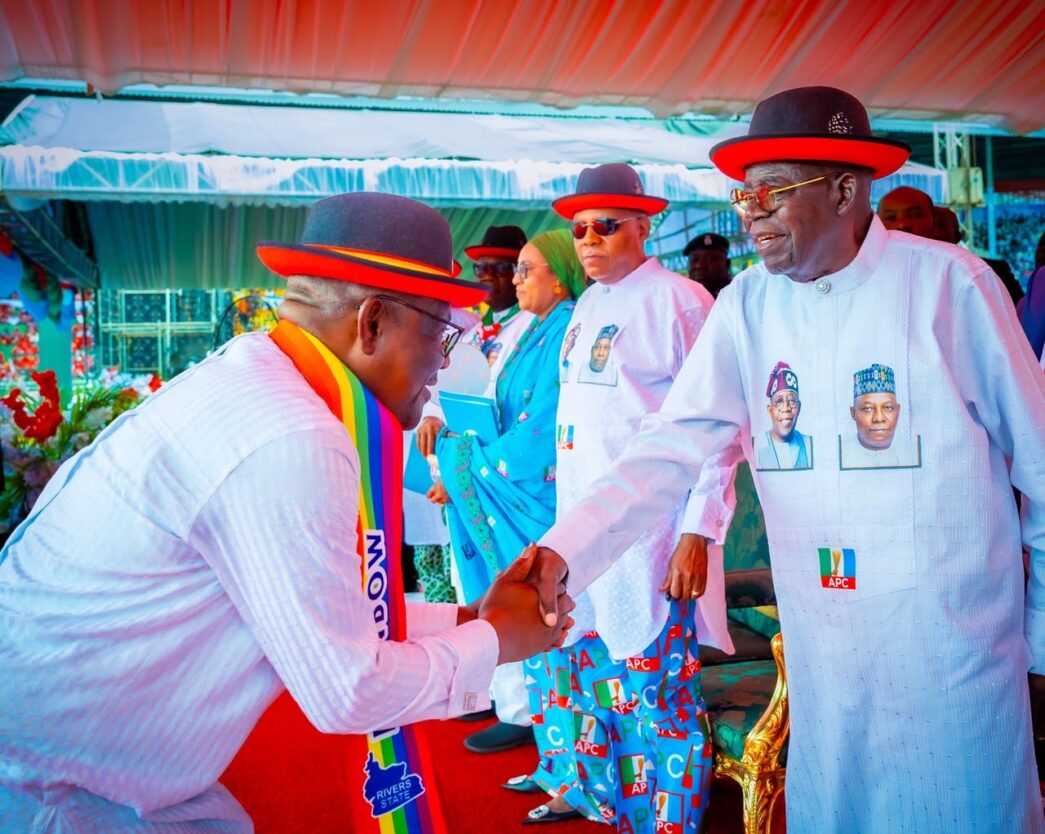
Minister of the Federal Capital Territory (FCT) Nyesom Wike has rejected accusations that his pledge to reward councillors who deliver their wards for President Bola Tinubu amounts to vote-buying.
The Minister, while comparing the offer to performance bonuses for athletes, challenged critics and opposition of his, and those of President Tinubu to distinguish inducement from motivation.
“I told the people of Kwali through their councillors: Look, I want to challenge you,” Minister Wike said.
“You say you want to vote for Tinubu. That’s okay. Go and vote for Tinubu in your ward. If you win, I will give so-so amount. They say I am buying votes. Which vote did I buy?”
Wike made the original pledge during a Rainbow Coalition stakeholders’ meeting in Kwali Area Council, promising N10 million to each councillor whose ward delivers for President Tinubu and the All Progressives Congress (APC) in the 2027 election.
He urged councillors to mobilize community leaders, youth groups and local associations.
The Minister said the payment would be a prize for political organization, not cash handed to voters at polling units.
“I didn’t tell them, ‘Take this money and go and buy votes,’” Minister Wike said.
“I said, ‘Go and work. Show commitment. Demonstrate that you really mean what you are talking about. When you win, come, and we are going to reward you.’”
Wike invoked a personal example to make the case. “My son said he is writing an exam. I said, okay, make first class and get one Range Rover. Did I do exam malpractice?” Wike asked.
“I have never seen a thing like this.”
The analogy echoed his defense of incentives in sports.
“Nigeria wants to play Senegal, and I said: Nigeria, if you score one goal, I will give you $50,000. If you win, $300,000, to motivate them to play well and win,” he said.
“Did I go to rig the match? Haba, haba, haba, haba.”
The pledge has drawn criticism from opponents and election-rights advocates, who argue that conditioning a large payment on a ward’s electoral outcome risks blurring the line between grassroots mobilization and improper inducement.
Minister Wike and allies have maintained that the money is payable only after an election and is intended to reward organization rather than purchase individual votes.
NewsQuest reports that Minister Wike appeared unbowed by the controversy.
“Those agents in the media houses, you will get more angry,” he said.
“I will continue to annoy you, and there is more pressure that will come.”
Wike said the arrangement reflected a broader effort by the Rainbow Coalition to secure support for President Tinubu’s re-election across the Federal Capital Territory.
He told Kwali stakeholders that the coalition had resolved to mobilize support nationwide, with councillors serving as the link between national campaigns and local communities.
The offer could total hundreds of millions of naira if councillors across the FCT’s six area councils meet the target.
Reports put the number of elected councillors in Abuja at roughly 62, although the Minister’s announcement did not specify the funding source or the precise criteria for determining whether a ward had been “delivered.”
