






Vice President Kashim Shettima has urged Nigerians in the United States of America to direct their capital, expertise and professional networks toward the country’s economic overhaul, positing the diaspora as a key source of investment and technical capacity for President Bola Tinubu’s reform programme.
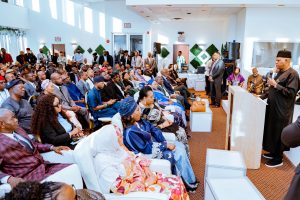
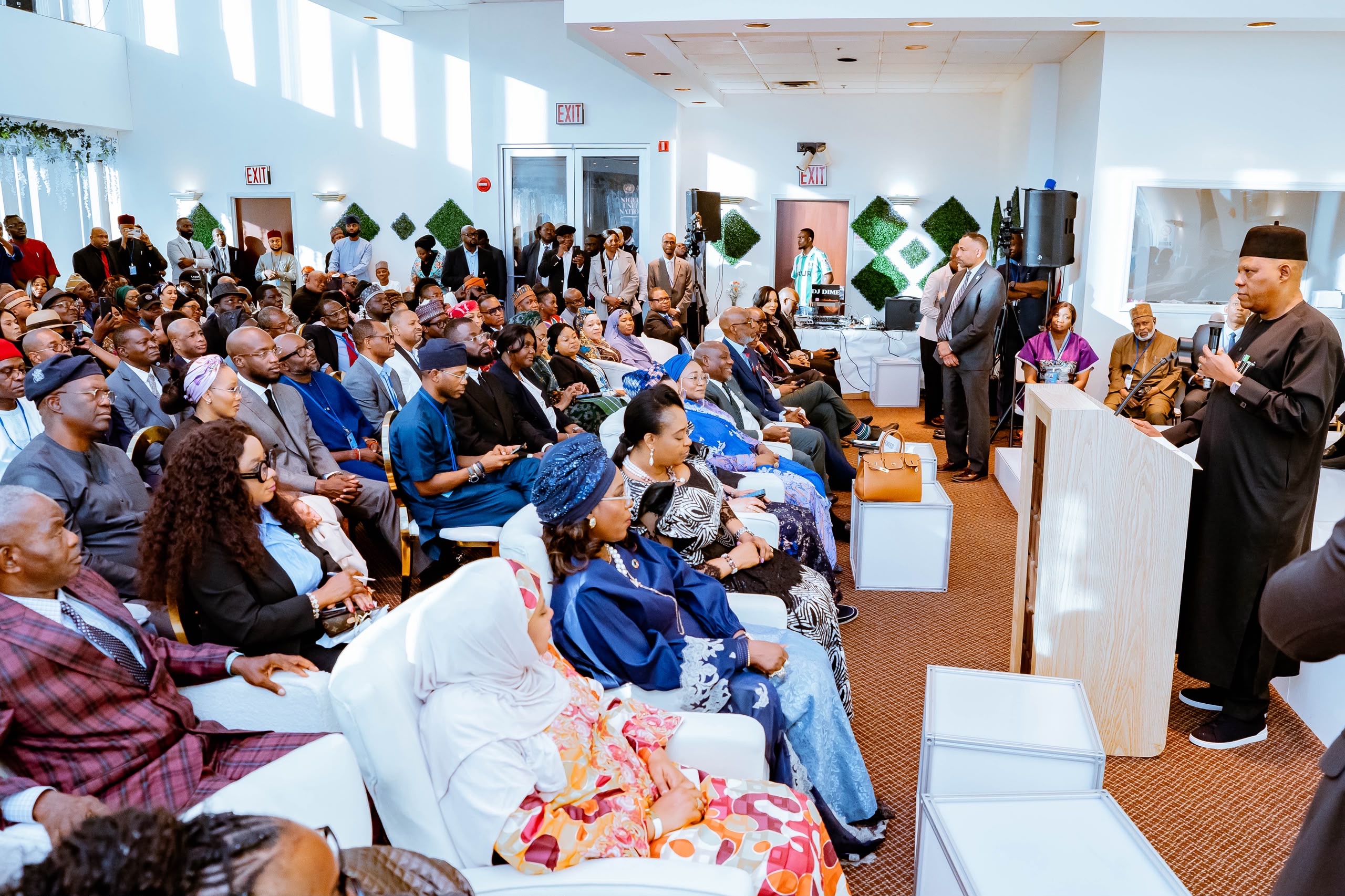
Speaking at Nigeria House in New York on Wednesday. Shettima said the administration was seeking to rebuild confidence in sectors including health care, education, agriculture, science and technology, and said the country’s overseas professionals could help accelerate that effort.
“The Nigerian diaspora remains one of our greatest assets,” Vice President Shettima said.
He urged attendees to look beyond unfavorable narratives about the country and participate in what he described as a renewed push for growth.
NewsQuest reports that President Tinubu’s government has pursued some of Nigeria’s most consequential economic changes in decades since taking office in May 2023, including ending a costly gasoline-subsidy regime and loosening controls over the naira.
The policies have drawn support from international lenders and investors but have also contributed to a sharp rise in prices and pressure on household incomes.
Vice President Shettima said the administration had opted to confront inherited economic weaknesses rather than assign blame to previous governments.
He cited an expansion in foreign-exchange reserves to more than $55 billion and economic growth of 4.45% in the most recent quarter as evidence that the measures were gaining traction.
The Vice President sought to reassure diaspora investors concerned about currency instability, saying improvements in foreign reserves and efforts to stabilize the exchange rate would help protect remittances and investment inflows.
Nigeria is positioning itself as an important beneficiary of Africa’s industrial expansion, Shettima said, pointing to the Dangote Refinery as a sign of growing domestic investment capacity.
The refinery, owned by billionaire Aliko Dangote, is expected to reduce Nigeria’s longstanding dependence on imported petroleum products once it reaches full operating capacity.
Vice President Shettima also highlighted the Nigeria Education Loan Fund, saying it had disbursed 125 billion naira – about $80 million at recent official exchange rates, to more than 1.29 million tertiary-level students.
He acknowledged continuing security concerns but said the government was expanding its response to emerging threats.
Shettima called on Nigerians abroad to support national cohesion, arguing that the country’s shared interests outweighed its ethnic, religious and regional divisions.
The gathering was attended by Borno State Gov. Babagana Zulum; Kwara State Governor Abdulrahman AbdulRazaq; Rivers State Gov. Siminalayi Fubara; Zamfara State Gov. Dauda Lawal; and Senate Leader Opeyemi Bamidele.
Other members of the federal delegation included Foreign Affairs Minister Bianca Odumegwu-Ojukwu; Education Minister Tunji Alausa; Solid Minerals Development Minister Dele Alake; Minister of State for Budget and Economic Planning Doris Uzoka-Anite; and Nigeria’s ambassador to the U.S., Kayode Are.


