









The Federal Government on Thursday formally launched the OneSCD Partnership, a global initiative aimed at narrowing the vast disparity in diagnosis, treatment and survival for people living with sickle-cell disease, particularly in low- and middle-income countries.
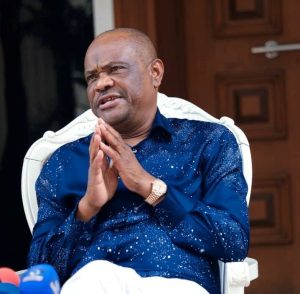
Minister of State for Health and Social Welfare Dr. Izaiq Adekunle Salako told reporters in New York that the initiative brings together Nigeria, Uganda, India, Jamaica and St. Kitts and Nevis with the World Health Organization, UNICEF, Africa CDC, St. Jude Children’s Research Hospital and the World Coalition on Sickle Cell Disease.
Nigeria, which has the world’s largest sickle-cell burden, said the partnership would seek to ensure that patients in poorer and remote communities can obtain the same standard of care and medical technologies available in wealthier countries, the Minister noted.
“The outcome of that launch is basically to bring every stakeholder together and to ensure that the treatment or the access that is available for a person living with sickle cell in a place like the US, for example, is also available for a person living with sickle cell in the remotest parts of the world,” Dr. Salako said.
According to him, the formal launch took place at the United Nations House in New York, with representatives of the WHO, UNICEF, St. Jude Children’s Research Hospital and partner countries participating.
NewsQuest reports that ‘sickle-cell disease’ is an inherited blood disorder that can cause severe pain, anemia, infections, organ damage and early death. It affects nearly eight million people globally, according to figures cited by the Federal Government, with more than 75 percent living in sub-Saharan Africa.
Many affected children die before age five from complications that can be prevented or managed with timely diagnosis and care.
Nigeria records an estimated 150,000 to 180,000 births involving sickle-cell disease each year, making the condition a major public-health concern and a priority within the government’s child-survival, maternal-health, primary-care and universal-health-coverage programmes.
Dr. Salako said OneSCD would focus on expanding newborn screening, improving diagnostic capacity, ensuring access to medicines such as hydroxyurea when clinically appropriate, strengthening health-worker training and improving supply chains for essential drugs and tests.
“Ensure that we do newborn screening. Ensure that drugs that sickle cell patients needs are available,” he said.
“Ensure that technologies that are being used in the developed world are also made available to developing parts of the world.”
The Federal Government has established a national sickle-cell programme within the Federal Ministry of Health and Social Welfare, supported by a National Sickle Cell Disease Steering Committee and national guidance for prevention, control and clinical management, Dr. Salako said.
The country is pursuing an integrated care pathway that includes screening newborns and children under five, confirming diagnoses, enrolling affected children in treatment and retaining them in long-term care.
Pilot projects in Lagos, Kano and the Federal Capital Territory are testing ways to expand newborn screening through maternity facilities, immunisation services, paediatric care and primary-health-care centres.
Under President Bola Tinubu, the government has also established and equipped six centres of excellence with high-performance liquid chromatography machines, which are used for specialised diagnosis of blood disorders, the Minister said.
President Tinubu’s administration is seeking to make diagnostics and medicines more affordable, improve referral networks and incorporate sickle-cell indicators into national health-information systems.
The government is also pursuing financing through health insurance, public funding and public-private partnerships to reduce the financial burden on families.
Our correspondent gathered that despite the heavy concentration of sickle-cell cases in Africa, India and the Middle East, the global response has long been hampered by inadequate investment, fragmented programmes and weak access to proven interventions.
“This is why OneSCD matters: to provide a global mechanism that connects political leadership, technical expertise, lived experience and financing behind country-led action,” he said.
The Minister said Nigeria would use its role as a champion country to expand early diagnosis and comprehensive care at primary, secondary and tertiary facilities; improve data, targets and financing; place patients and their families at the centre of programme design; and share its implementation experience internationally.
Dr. Salako urged multilateral agencies, development partners, philanthropies, researchers and private-sector organisations to coordinate their efforts and support nationally led programmes rather than isolated pilot projects.
“The launch of OneSCD is moving SCD from a neglected disease to the front burner,” he said. “It must be more than a ceremonial moment.”
He added that the partnership should be judged by whether it produces coordinated action, stronger accountability and measurable improvements in survival and quality of life.
“Let this launch be for coordinated action, mutual accountability and measurable progress – so that a child’s place of birth no longer determines whether that child survives and thrives with sickle cell disease,” Dr. Salako said.


