








The United States launched a fresh series of strikes against Iranian military targets aimed at safeguarding commercial traffic through the Strait of Hormuz, prompting Tehran to retaliate with missile and drone assaults on neighboring states that host U.S. forces, officials said.
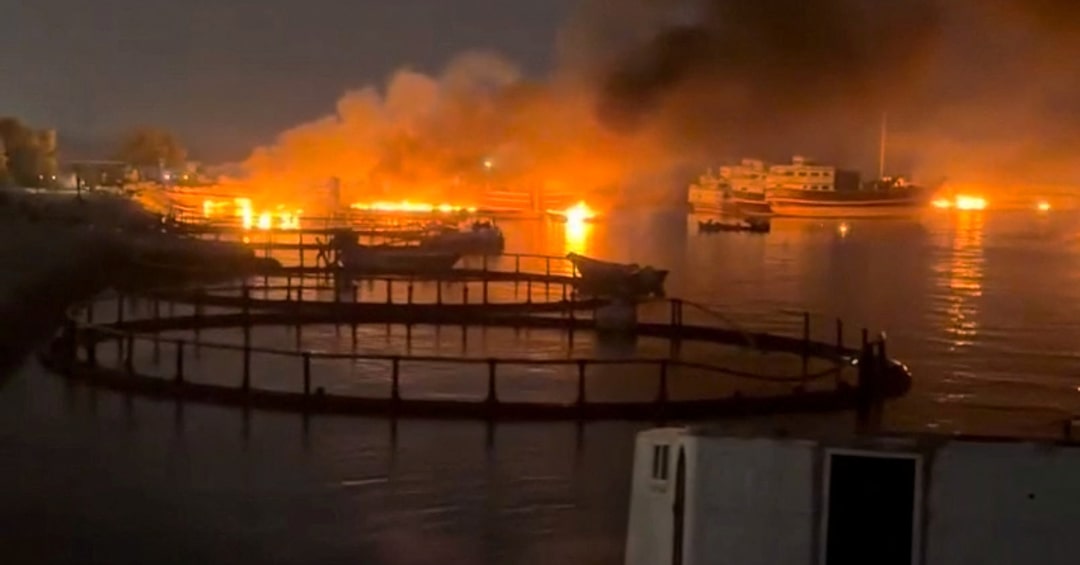
U.S. Central Command said the latest operations sought to “weaken Iran’s ability to threaten commercial shipping” after three cargo vessels transiting the strategic chokepoint were attacked on Tuesday.
Washington blamed Tehran for that incident, though Iran has not formally claimed responsibility.
“The United States is holding Iran accountable for recent unjustified aggression against commercial shipping and civilian crews freely navigating a vital international waterway,” CENTCOM said in a post on X, the social platform formerly known as Twitter.
The strikes rattled cities along Iran’s southern coastline and caused power outages in some areas, according to local reports. A U.S. official, speaking on condition of anonymity, said Wednesday’s strikes were expected to be more extensive than actions taken a day earlier.
Iran responded by striking Kuwait and Bahrain with missiles and drones in a second consecutive day of attacks, state and regional officials said.
Both countries host U.S. military personnel. Kuwait’s Defence Ministry said its air-defence systems were intercepting incoming threats.
Qatar briefly raised its security alert level before saying conditions had stabilised.
President Donald Trump defended the strikes on his social-media platform, saying the action was retribution for the shipping attacks and warning that further incidents would bring harsher responses.
“This is in retribution for yesterday’s bombing of ships by Iran. If it happens again, it will get much worse!” he wrote.
Analysts say the Strait of Hormuz—long a critical artery for global oil shipments—has become a lever in Tehran’s broader diplomatic posture. Iran’s chief negotiator, Mohammad Baqer Qalibaf, warned on X that Tehran would continue to answer any military action.
“If you strike, you will be struck back,” he wrote, adding that the waterway would be reopened only under Iranian arrangements, not by U.S. military pressure.
The exchange of strikes has dimmed hopes that a memorandum of understanding signed on June 17 could be the foundation of a lasting cease-fire in the conflict that erupted after U.S.-Israeli strikes on Iran on Feb. 28.
Speaking in Turkey before a NATO summit, Mr. Trump said the interim truce was effectively over, calling Iran “dishonourable” and questioning whether any deal could be trusted.
The escalation heightens risks to commercial shipping and to regional stability at a moment when global energy markets remain sensitive to disruptions in Persian Gulf supply routes.


