





By Anule Emmanuel
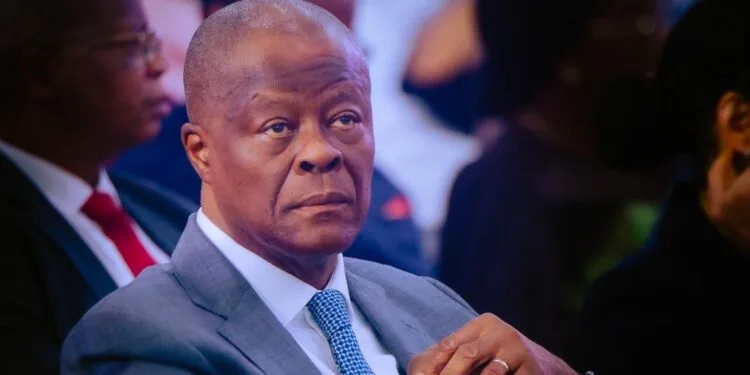
The Minister of Finance and Coordinating Minister of the Economy Wale Edun is using the International Monetary Fund’s (IMF) spring meetings in Washington (USA), to highlight the Federal Government’s policy and fiscal reforms under President Bola Tinubu, which are reshaping the country’s economic trajectory for the better.
Minister Edun, chairing the group of 24 developing nations, said at a news conference on the sidelines of the IMF meetings that the Federal Government is pressing forward with aggressive and bold economic reforms amid surging global volatility to protect the economy and its most vulnerable citizens. The 2026 spring meeting holds from April 13th to 18th 2026.
Top on the actions by the government since President Tinubu assumed office in 2023, is subsidy removal on petroleum products and foreign exchange stabilization — all serving as key to capturing windfalls from elevated global oil prices.
Minister Edun is convinced that these crucial steps have unlocked higher government revenues, transforming external shocks into fiscal gains rather than crises.
The Minister’s optimism tracks recent data from Dr. Zacch Adedeji, Executive Chairman of the Nigeria Revenue Service (NRS), who confirms that total revenue for the federation surged from N6.8 trillion in 2023 to N28.7 trillion by 2025. Federation Account Allocation Committee distributions, meanwhile, jumped from N711 billion to N3.6 trillion by September 2025—a more than 400% increase—freeing up funds for federal and state projects, according to NRS Chief Executive.
Yet, Minister Edun in Washington cautioned, fresh global disruptions, including energy market swings unrelated to Nigeria’s policies, warning that they now seem to erode these hard-won advances.
Oil exporters like Nigeria still face soaring costs for food, gas, and fertilizers, fueling inflation across both producers and importers. Debt servicing, he added, devours more resources than aid or investments, squeezing funds for growth.
The Finance Minister notes that Central banks in developing countries such as Nigeria must tread a “balancing act,” avoiding premature rate hikes that could sabotage reforms while not delaying action against inflation.
It appears that Nigeria exemplifies this discipline. By floating the naira and slashing inefficient subsidies, the country preserved structural progress instead of reverting to failed blanket handouts – according to Minister Edun.
Rather than broad reversals, Minister Edun also advocated fiscal buffers and pinpointed aid for the poor—Nigeria’s preferred path amid the energy crunch and geopolitical strains.
Short-term interventions protect households battered by price spikes without undermining long-term fixes.
Minister Edun interestingly has also called for multilateral firepower: concessional loans, extra liquidity, and risk tools to slash borrowing costs crippling development.
Domestically, Nigeria eyes Artificial Intelligence (AI), to sharpen tax collection and financial oversight, bolstering revenues strained by debt.
Under President Tinubu, these measures signal Nigeria’s determination to weather shocks without backsliding—positioning the country as a resilience model for emerging markets.