




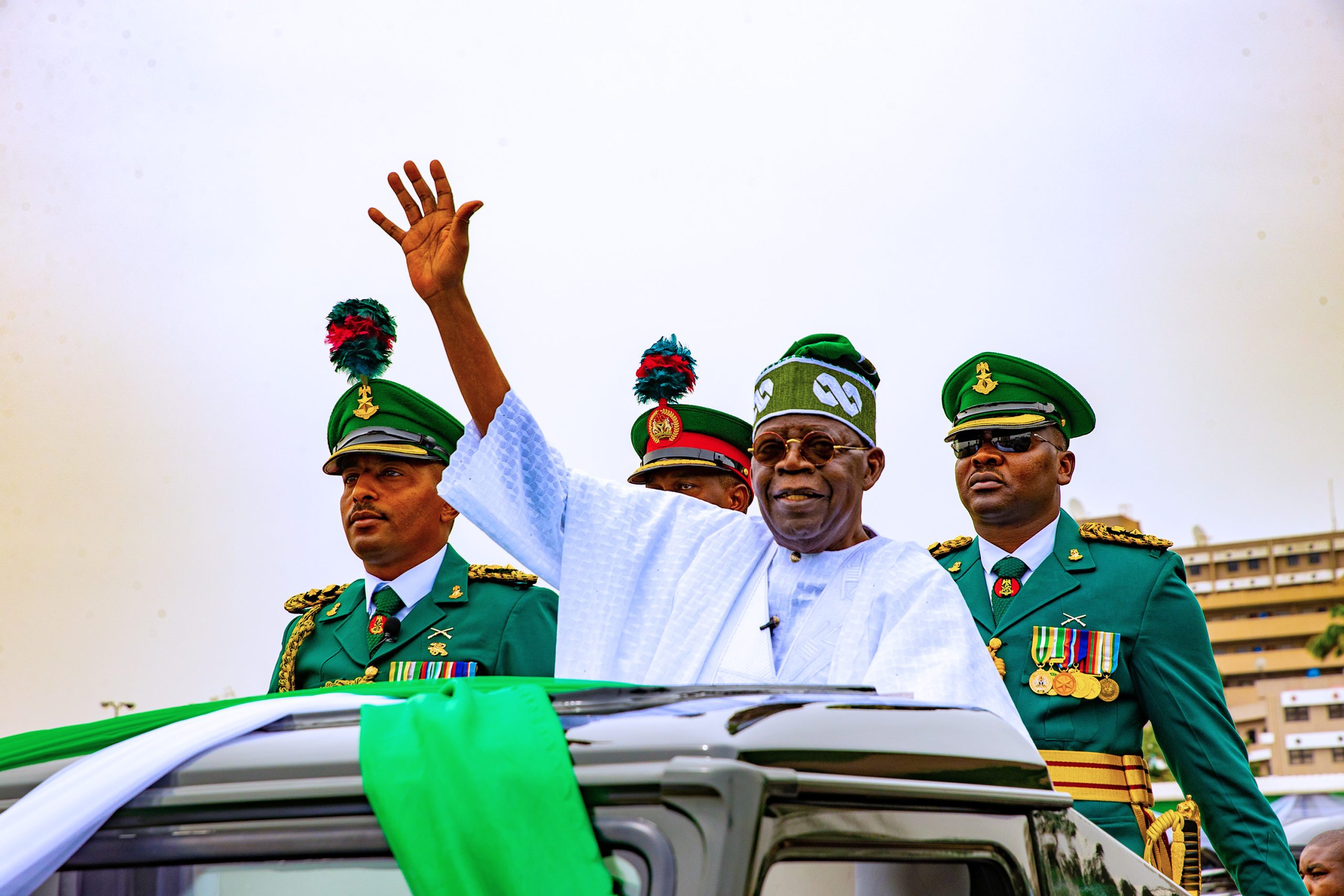


President Bola Tinubu on Friday said that “Nigeria has stabilised and is moving forward,” three years after his tenure in office having been confronted by collapsing oil prices, fiscal strain and persistent insecurity.
The President presented a portrait of economic recovery and renewed investor confidence even as many Nigerians continue to decry the initial pains of his government’s reforms.


In a statement marking the administration’s third anniversary, President Tinubu described his government’s tenure as a choice between short-term comfort and long-term recovery, arguing that painful measures taken early in the term have steadied public finances, attracted foreign capital and kick‑started large infrastructure projects.
“Difficult but necessary decisions had to be taken to stabilise the economy and prevent a deeper national crisis,” the President said.
The President repeated figures that have become central to his economic narrative.
He said Nigeria at the height of its subsidy regime spent as much as ₦18.4 billion daily on petrol subsidies, and the government has quantified losses from foreign-exchange distortions and rent-seeking at more than ₦8 trillion over three years.
According to him, those outlays and distortions left the country with “fewer resources to invest in roads, healthcare, education, housing, and critical infrastructure,” making reform unavoidable.
President Tinubu touted a string of achievements he says demonstrate the payoff from those reforms: a stock market rally that took the All-Share Index from roughly 53,000 and market capitalization of about ₦30 trillion in 2023 to a record All-Share Index of 250,000 and market capitalization of ₦160 trillion this year; an influx of international oil-industry investment, including near-completion of the $5 billion NLNG Train 7 project; and an expanded domestic refining and gas-utilization push intended to reduce imports.
“Our economy is now more competitive and better positioned for sustainable growth than it was in 2023,” the President said.
He said “Public finances are improving. States and local governments have greater resources to invest in their people. Investor confidence is growing.”
Tinubu described an ambitious infrastructure agenda that includes more than 2,700 kilometres of highways under construction or rehabilitation—the Lagos-Calabar Coastal Highway, the Sokoto-Badagry Super Highway and the Abuja-Kaduna-Zaria-Kano corridor among them—and an array of rail-modernization projects.
The President said the administration’s Renewed Hope Housing Programme and other housing efforts are delivering more than 10,000 units across 14 states and the Federal Capital Territory, generating “over 300,000 jobs.”
On social policy, President Tinubu highlighted expanded financing for students—over 1.5 million beneficiaries of the Nigerian Education Loan Fund with more than ₦282 billion disbursed—and agricultural programs that have supported farmers with inputs, mechanization and better access to finance and markets.
He said thousands of primary-care centers are being revitalised and that health-insurance coverage is expanding for vulnerable Nigerians.
Acknowledging the painful effects of policy shifts, President Tinubu said the measures “came with sacrifice” and contributed to a rising cost of living that has strained families, businesses and jobseekers.
“I remain deeply conscious of those sacrifices,” he said, adding: “Your sacrifice has not been in vain.”
President Tinubu also said the Armed Forces and security agencies had intensified operations against terrorists, bandits and criminal networks, and he pledged sustained investment in intelligence, surveillance and logistics.
“While challenges remain, many communities and highways are becoming safer and more economically active,” he said, promising the government “will not relent until every Nigerian can live, work, travel, and dream in safety.”
The President used the anniversary address to press for national unity and patience, arguing the country had laid a “foundation for recovery” but still faced a lengthy task.
He urged Nigerians to “choose hope over despair, unity over division, and nation-building over narrow interests,” and he called on the international community and investors to maintain partnerships with Nigeria.
President Tinubu invoked Nigeria’s history of resilience and urged continued public support for the reforms.
“Nations rise when their people remain united in purpose, disciplined in effort, and hopeful about the future,” he said.
“Nigeria is passing through such a test. But I believe with all my heart that we shall emerge stronger, fairer, more united, and more prosperous than ever before,” President Tinubu added.


