

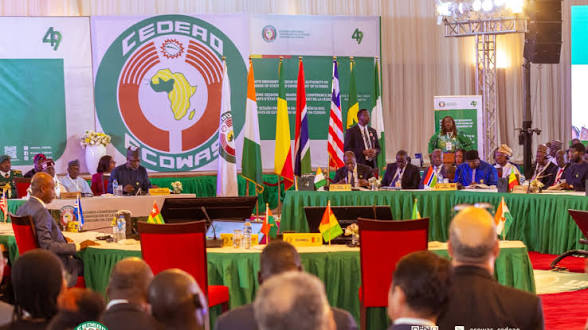
Stakeholders from the Economic Community of West African States (ECOWAS) Member States, the private sector, civil society and academia have demanded a transformation in the operations of the regional institution, insisting that regional integration must move beyond agreements and declarations to deliver measurable benefits for citizens.
The call was made during a stakeholder engagement in Abuja, and said that strengthening citizens’ participation in the affairs of the regional body was critical to addressing the subregion’s growing political, security and democratic challenges.
“An ECOWAS of the people” has become a central theme in discussions about the bloc’s future, said Dauda Garuba, director of the Centre for Democracy and Development.
He said the organization has shown resilience through military rule, democratic transitions and the current wave of democratic reversals, but that its challenges are not insurmountable if leaders embrace dialogue, peace and collective action.
Garuba said the establishment and strengthening of the ECOWAS Community of Civil Society Organizations, or ECOSOCC, provided for under the bloc’s 1993 Revised Treaty, should be treated as an urgent institutional priority rather than a distant goal.
Members of the West Africa Democracy Solidarity Network are advocating stronger backing for the proposed advisory body, which would allow citizens and civil-society groups to contribute to regional decision-making.
He said the change in ECOWAS leadership offers an opportunity to place the issue on the new administration’s agenda.
An earlier stakeholder meeting in August had already identified the need to advance the initiative, he added.
Aderemi Ajibewa, a former Director of p
Political Affairs at the ECOWAS Commission’s Department of Political Affairs, Peace and Security, said civic organizations have long helped draw attention to sensitive issues, including the Niger Delta crisis, the Casamance conflict and insecurity in the Sahel.
Ajibewa said such groups have the reach, credibility and operational capacity to engage communities on matters that governments and official institutions may find difficult to address directly.
With public trust in governments and regional bodies weakening, he said, civil society is increasingly important to rebuilding confidence between ECOWAS and ordinary West Africans.
He called for stronger advocacy to educate citizens about ECOWAS programs, including its free-movement protocol and other integration initiatives that remain unfamiliar to many people in the region.
Proper institutional coordination and a clear place for civil-society engagement within the ECOWAS Commission would help ensure the effort receives sufficient attention, he said.
Media engagement is also seen as critical.
Lukman Adekunle Adefolahan, an ECOWAS-West Africa advocate, said many Africans can readily associate the United Nations with the Sustainable Development Goals and the African Union with Agenda 2063, but public awareness of ECOWAS programs and long-term ambitions remains limited.
Many citizens encounter ECOWAS mainly through election-related interventions, Adefolahan said.
He urged civil-society advocates and journalists to expand public education, publish more reporting on the bloc’s activities and engage national governments and foreign ministries.
He also called for public-advocacy campaigns, including the use of postcards, to press regional leaders to institutionalize citizen participation in ECOWAS affairs.
