

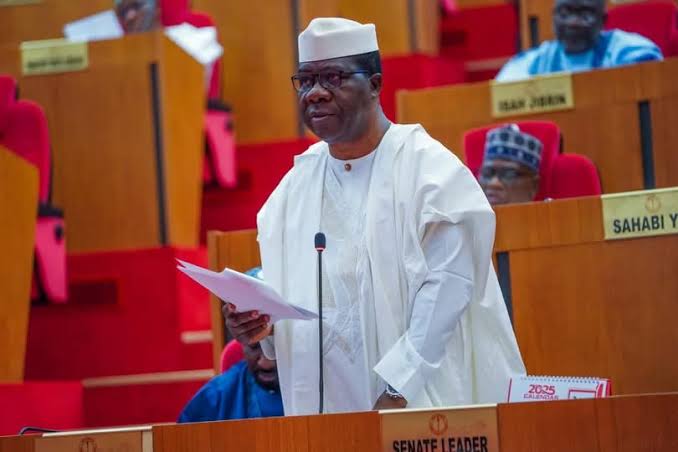
The Senate has moved to extend the national education funding scheme to Unity Colleges and military secondary schools across the country.
The proposed legislation would create state-level education boards and extend federal intervention programs to unity colleges and schools operated by the Armed Forces.
Lawmakers said the move is aimed at improving infrastructure, enhancing the quality of learning, and easing the financial burden on students and parents in federally owned schools.
The National Senior Secondary Education Commission (Amendment) Bill, 2026, sponsored by Senate Leader Opeyemi Bamidele of Ekiti Central, cleared a second reading on Tuesday and was referred to the Senate Committee on Education for further scrutiny and a public hearing.
The measure, Bamidele said, seeks to amend the 2023 law establishing the National Senior Secondary Education Commission (NSSEC) by strengthening its role in coordinating, financing and delivering senior secondary education.
Bamidele said its central proposal is to establish education boards in each of Nigeria’s 36 states and the Federal Capital Territory ( FCT), placing the implementation of intervention programs closer to schools and local communities.
As lawmakers confront chronic infrastructure gaps and uneven education standards across the country, he said the bill would also bring federal unity colleges and senior secondary schools operated by the Armed Forces within the commission’s intervention framework, addressing what sponsors describe as longstanding shortfalls in classrooms, laboratories and instructional materials.
Bamidele said the legislation was driven by persistent deficiencies in school infrastructure, teaching materials and laboratory facilities, as well as wide disparities in educational standards among states.
He argued that senior secondary education is critical to preparing young Nigerians for university, technical training and participation in the labor market.
However, he cautioned that legal changes alone would not improve outcomes.
Successful implementation, he said, would require transparent allocation criteria, clear operational guidelines, financial accountability and effective monitoring by the commission and relevant authorities.
Former Senate President Ahmad Lawan pressed the point further, criticizing some state governments for failing to pay the counterpart contributions required to access funds from the Universal Basic Education Commission ( UBEC).
That failure, Lawan said, has left available intervention resources untapped and constrained efforts to improve schools.
The bill’s progress was not without dissent as Senator Adams Oshiomhole objected that lawmakers were asked to debate the amendments without copies of the underlying legislation available for review, raising concerns about legislative transparency.
Despite the objection, the Senate approved the bill on a voice vote.
The committee is expected to report back within four weeks.
Separately, lawmakers urged the federal government and agencies, including the Ecological Project Office, to respond urgently to erosion threatening the Bogoro community in Bayelsa Central Senatorial District.
They also called on the National Emergency Management Agency (NEMA) to provide relief materials to residents affected by flooding and erosion.
The Senate also received a favorable report from its Foreign Affairs Committee on the ambassadorial nomination of Sani Ndanusa, clearing the nominee for further consideration.
