

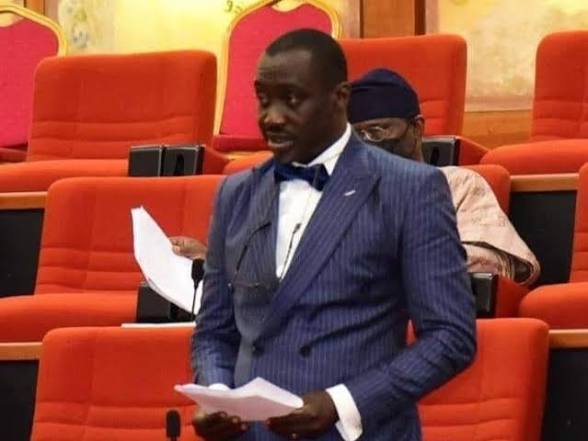
The Senate has opened an inquiry into liquefied petroleum gas exports, amid concerns that limited domestic supply is keeping cooking-gas prices high for households and undermining government efforts to ease living costs.
The Senate Committee on Gas Resources, chaired by Senator Jarigbe Jarigbe, questioned gas-sector stakeholders on Thursday over domestic LPG availability, export volumes and revenue remittances.
The panel said it wants to determine why supply remains inadequate and identify measures to increase local availability.
“LPG has to be supplied to the domestic market for the good of the common man,” Jarigbe said, citing President Bola Tinubu’s Executive Order 9, signed in February, which seeks to improve oil-and-gas revenue remittances to the Federation Account.
The Nigeria Customs Service (NCS) told lawmakers that 190.8 metric tons of LPG were exported in 2024 and 32.8 metric tons in 2025, bringing cumulative exports over the two years to 223.699 metric tons.
The agency said it had no record of LPG exports at Escravos in 2026.
Customs Deputy Comptroller-General Caroline Kemen Niagwan said LPG exports require clearance certificates from the Federal Ministry of Industry, Trade and Investment, along with declarations through the agency’s automated system.
Approved export volumes stood at 400 metric tons for Nigerian National Petroleum Company (NNPC) and 386.4 metric tons for Chevron.
Senators said the export levels conflict with the goal of expanding domestic supply and lowering cooking-gas prices.
Jarigbe argued that producers could adjust the propane-butane blend to make more LPG suitable for local consumption rather than export.
“They give an excuse that the ratio of propane to butane is 80-20, and that’s what they export,” he said.
“But it’s a matter of blending,” he added.
A representative of the Nigerian Upstream Petroleum Regulatory Commission (NUPRC) said the offshore facility at the center of the discussion was originally designed to evacuate LPG for export under a joint venture involving the Federal Government, NNPC and Chevron.
The regulator said it has engaged the operator about redirecting some LPG to the domestic market.
Chevron issued a public request in 2024 inviting Nigerian LPG off-takers to discuss potential local-supply arrangements.
Senator Aniekan Bassey said the hearing gives lawmakers an opportunity to examine accountability, regulation and the management of petroleum resources.
He pledged support for legislative measures to promote transparency and strengthen institutional oversight.
The committee is expected to continue engagements with stakeholders next Tuesday as it seeks to address domestic supply gaps, improve export-revenue remittances and increase cooking-gas availability.
