
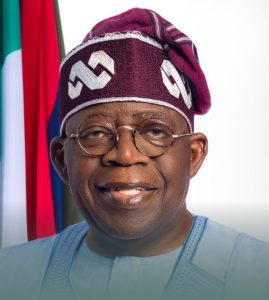


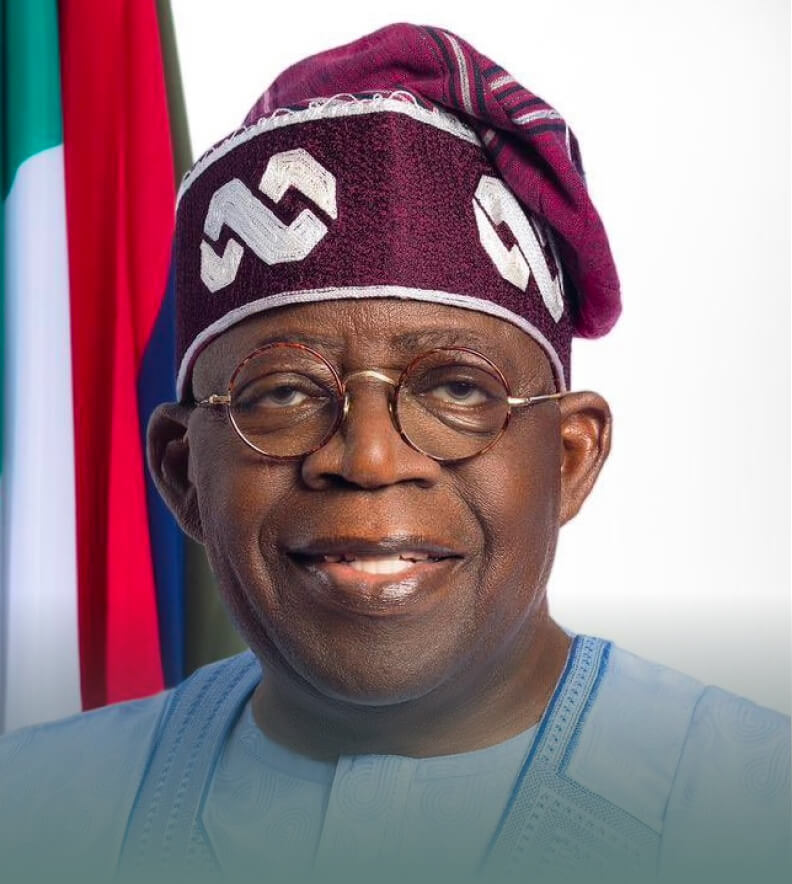


President Bola Tinubu has said reducing the cost of living is the central priority of his administration, pledging to lower the expense of producing and transporting goods and services across Africa’s most populous nation.
Tinubu made the remarks in an Independence Day address marking Nigeria’s 66th anniversary.
He said the country had endured war, military rule, economic crises, insecurity and political upheaval, yet remained resilient because of its people.
“Sixty-six years later, Almighty God has made it our responsibility to deliver that promise,” he said, referring to the founding vision of a united, prosperous and influential Nigeria.
The President defended the economic reforms introduced during his administration, saying they were necessary to correct distortions that had accumulated over decades.
Nigeria’s reforms, he said, had moved the country beyond the phase of economic repair and into a new era focused on shared prosperity.
“The age of reform has done its work. Now begins the age of prosperity,” Tinubu said.
He compared the reforms to cancer treatment, arguing that previous governments had relied on temporary relief rather than addressing the underlying problems.
“For too long, Nigeria’s leaders chose morphine while praying for a miracle that never came,” he said.
His administration, he added, had chosen to “excise the cancer” despite the economic pain involved.
Tinubu also rejected calls to restore what he described as the abusive use of fuel subsidies, saying Nigeria must resist pressure to abandon the reforms.
The President said Nigeria’s economic outlook had improved since the reforms began, citing growth of more than 4% in 2026, reduced oil theft, lower inflation from its peak, stronger foreign reserves and greater stability in the foreign-exchange market.
The President also said non-oil exports generated more than $6 billion in 2025, the country’s highest recorded revenue from the sector, and that foreign direct investment was rising.
“These are not idle claims,” Tinubu said, adding that international observers, multilateral institutions and the private sector had recognized the changes.
He said prosperity should not be measured solely by economic statistics but by whether Nigerians could afford food, transportation, education and healthcare.
The administration’s strategy, Tinubu said, would focus on increasing productivity and reducing the cost of moving goods from farms and factories to consumers.
The government plans to expand mechanized irrigation and dry-season farming, improve access to seeds and fertilizer, increase agricultural mechanization and invest in storage and transport infrastructure.
Roads, railways and ports, he said, were being built or completed to connect producers with markets.
“When a farmer produces more cheaply, when fewer crops are lost between the farm and the market, when a manufacturer spends less on electricity, when a truck reaches its destination faster, and when the business environment fosters fair competition, all those savings will ultimately find their way into the price of goods in the market,” he said.
The President also identified jobs and industrial expansion as key to harnessing Nigeria’s young population.
His government, he said plans to use the country’s gas resources to power industries, support the revival of factories, expand digital access, develop job-related skills and provide businesses with infrastructure and financing.
“I want to see more Nigerians making things,” he said.
“I want to see more Nigerian farms feeding our cities and supplying our factories,” he added.
Tinubu acknowledged that millions of Nigerians continue to struggle with food costs, school fees, medical bills and transportation expenses.
He said those difficulties predated his administration and reflected decades of low productivity, inadequate infrastructure, limited opportunity and weak support for vulnerable citizens.
“We cannot erase in four years what accumulated over generations, but we can change its course,” he said.
The government, he added, was expanding direct assistance to poor households and improving the National Social Register.
He also cited the Nigerian Education Loan Fund, which provides financing for students from low-income families, and CREDICORP, which offers consumer credit for vehicles, solar equipment, digital devices and other essential assets.
The President said his administration would continue working with state and local governments to strengthen primary healthcare, basic education and other public services.
He also said salaries and pensions had been paid on time and in full since 2023.
“These programmes are not substitutes for prosperity. They are a bridge to aid our nation’s citizens on their path towards it,” Tinubu said.
“Our objective is not to manage poverty more efficiently. We will defeat it,” the President declared.
He further acknowledged that the transformation would require time, fiscal discipline, sustained growth and millions of new productive jobs.
Still, he said Nigeria had corrected the direction of its economy and laid the foundation for lasting prosperity.
“We have passed through our own Red Sea,” he said, urging Nigerians not to return to the policies of the past.
“Our destination is in sight. Our foundations are strong. Our direction is clear. So let us go forward. No looking back”, he declared.