

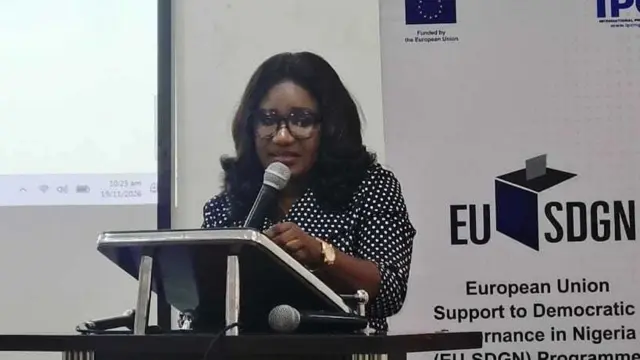
Journalists have been urged to make fact-checking and verification central to their coverage of the 2027 general elections, rather than treating them as optional additions to reporting.
The call was made by the International Press Centre (IPC) and the Nigeria Union of Journalists (NUJ) at an interface on democratic accountability journalism in Abuja, where speakers warned that sensationalism, unverified claims and AI-generated misinformation could undermine public trust, deepen divisions and threaten the credibility of the polls.
At the one-day forum under the European Union’s Support to Democratic Governance in Nigeria program, editors, publishers and representatives of the Nigeria Union of Journalists (NUJ) were told that election reporting must move beyond rallies, defections and campaign spectacle.
“Verification must come before speed,” said Grace Ike, Chairman of the NUJ’s Federal Capital Territory council.
“Accuracy must take precedence over sensationalism”, she said.
Ike said journalists should scrutinize candidates’ promises, policies and governing records rather than simply chronicle political events.
She called for reporting focused on issues affecting voters, including security, unemployment, health care, education, infrastructure and the rising cost of living.
Elections, she said, should be treated as a conversation about citizens’ needs, not merely a contest among parties and candidates.
IPC Executive Director, Lanre Arogundade, represented at the event by Melody Akinjiyan urged newsrooms to monitor public officials, examine political commitments and adopt reporting that is balanced, inclusive and sensitive to the risk of inflaming tensions.
Unverified claims and inflammatory rhetoric, he warned, could weaken democratic institutions at a moment when public confidence in elections is already fragile.
Speakers at the forum identified misinformation, disinformation, hate speech and coordinated online manipulation as major threats to credible elections.
Ahmad Aluko, a researcher and information-disorder analyst, said fact-checking is essential to preventing rumors from escalating into violence.
Publishing unverified material, he said, risks damaging the credibility of individual journalists and media organizations.
Participants were urged to establish the authenticity of claims before dissemination, particularly as social media accelerates the spread of false or manipulated content during campaign periods.
Sarah Gambo, a lecturer at the University of Abuja, presented research on citizens’ electoral priorities.
She identified food security, transportation, unemployment, youth empowerment, poverty alleviation, social welfare, access to credit, freedom of expression, restructuring, technology and inclusion as issues requiring sustained coverage.
Gambo also called on journalists to document barriers to participation, including difficulties with voter registration, vote-buying, intimidation and electoral violence.
She highlighted the needs of persons with disabilities, particularly access to polling units and meaningful participation in the electoral process.
Journalists’ safety emerged as a recurring concern.
One participant described an incident in which an election official was allegedly pressured to alter results and later threatened.
Speakers advised reporters covering volatile electoral situations to remain vigilant, exercise caution and avoid unnecessary confrontations.
The forum closed with a commitment from participants to pursue factual, balanced and issue-based reporting; amplify citizens’ concerns; and hold political actors accountable in the run-up to the 2027 elections.
