

The Federal Government has disclosed plans to roll over all unfinished 2026 capital projects into the 2027 fiscal year, as part of new measures to ensure completion and prevent abandoned projects across Ministries, Departments and Agencies.
It added that it is a move aimed at ending the long-standing practice of implementing several national budgets at once and restoring credibility to public spending plans.
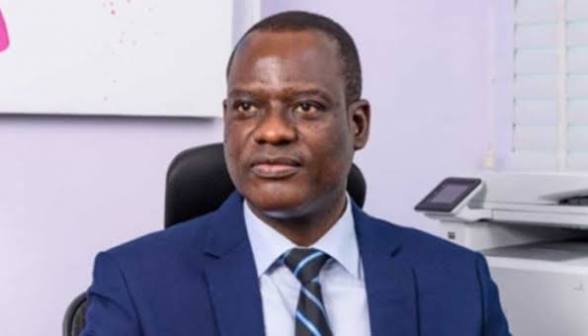
Minister of Finance Taiwo Oyedele announced the shift during the launch of the World Bank’s October 2026 Nigeria Development Update, acknowledging that repeated extensions of capital budgets and overly optimistic revenue forecasts had undermined fiscal discipline.
“Whatever is left of 2026, we’re transferring into 2027, not running two budgets,” Oyedele said.
“We acknowledge that we can budget better. We shouldn’t be running multiple budgets at the same time.”
The decision follows legislative approval earlier this year to extend the capital component of the 2025 budget through December 31, 2026, the fourth such extension, giving ministries, departments and agencies more time to complete projects approved under the 2025 Appropriation Act.
Oyedele said the government is working with the Ministry of Budget and Economic Planning and the Budget Office of the Federation to introduce a more realistic budgeting framework starting in 2027, with revenue and expenditure projections anchored in actual fiscal performance rather than assumptions carried forward from prior years.
Officials intend to clear outstanding obligations from the 2024 budget and address lingering commitments under the 2025 and 2026 budgets before adopting the streamlined approach, he added.
World Bank officials used the event to press for stronger budget credibility, public investment management and expenditure controls across the federal and state governments.
Mathew Verghis, the World Bank’s Country Director for Nigeria, said macroeconomic reforms had substantially increased revenues available to governments but that improved fiscal resources must translate into better development outcomes.
“Priorities in this regard will include strengthening budget credibility, improving cash and commitment controls, strengthening public investment management,” Verghis said.
He noted that while nearly all states now publish annual budgets, quarterly implementation reports, audited financial statements and debt information, higher revenues haven’t produced proportionate improvements across all sectors.
Most states have increased spending on transport infrastructure and reduced domestic debt, while expenditure on education, healthcare and social protection has grown more slowly, he said.
Fiseha Haile, the World Bank’s Lead Economist for Nigeria, said the country’s consolidated fiscal position strengthened in the first half of 2026, supported by increased revenues and stronger federation transfers.
The federal government’s fiscal deficit declined to 4% of gross domestic product in the first half of 2026 from 5% a year earlier, while the aggregate fiscal surplus recorded by states rose to 0.9% of GDP from 0.7%, he said.
Gross federation revenues rose 69% between 2023 and 2025, with net distributed revenues up about 60%, Haile, however, warned that spending pressures could intensify in the second half of 2026 because of accelerated project implementation and election-related activities.
“Nigeria’s consolidated fiscal position, including both the federal government but also aggregate state fiscal position, has strengthened in the first half of 2026, but spending pressures, I expect, will pick up in the second half due to faster execution of projects, but also election and development-related spending,” he said.
Lamido Yuguda, Deputy Governor of the Central Bank of Nigeria in charge of financial system stability, said fiscal and monetary authorities must work together to sustain economic stability as inflation remains a major challenge despite improvements in monetary conditions and the foreign-exchange market.
“We are data-dependent,” Yuguda said, adding that the central bank would maintain the discipline needed to bring inflation toward single digits.
He noted that stronger foreign-exchange reserves and improved market liquidity had boosted confidence in Nigeria’s economy, but stressed that structural problems affecting food production, security and infrastructure required government intervention beyond monetary policy.
Katsina State Governor Dikko Radda said increased government revenues should be directed toward projects that reduce the cost of living and improve access to essential services, arguing that infrastructure and social investments should complement one another rather than compete for limited public resources.
His administration, he said, has prioritized education, healthcare, energy and infrastructure, including the construction of about 170 schools and the development of 268 functional primary healthcare facilities.
The state has paid more than 50 billion naira in outstanding gratuities over two years and introduced reforms to improve revenue collection, using technology, the Treasury Single Account and digital land administration to strengthen internally generated revenue, Radda said.
Tayo Aduloju, Chief Executive of the Nigerian Economic Summit Group, said Nigeria needs to move beyond macroeconomic stabilization toward reforms that translate improved government finances into jobs, productivity and higher household incomes.
“Nigeria needs at scale $2.3tn to upgrade its national and subnational infrastructure to world-class,” Aduloju said, urging governments to develop commercially viable projects capable of attracting private investment rather than relying exclusively on budgetary allocations.
He estimated that Nigeria would need to create about four million jobs annually between now and 2030 to achieve substantial poverty reduction.
“Are we creating jobs? Yes. Are we creating the jobs required to lift more people out of poverty at scale? No, not yet,” he said.
Aduloju identified high borrowing costs, insecurity, expensive energy and inadequate transport infrastructure as obstacles to private-sector expansion, calling for greater policy consistency and collaboration among governments, financial institutions and businesses.
On the timeline for presenting the 2027 Appropriation Bill to the National Assembly, the finance Minister said the government intended to submit the proposal before the start of the new fiscal year but could not guarantee the legislative timetable.
He assured Nigerians that the changes would become evident in the preparation and implementation of the 2027 budget.
“What I’m saying to the Nigerian people is that you will see the difference from next year,” the finance minister said.
