






The Federal Government is shifting its economic focus from implementing painful reforms to turning early signs of stability into jobs, higher incomes and broader opportunities, Secretary to the Government of the Federation George Akume said.
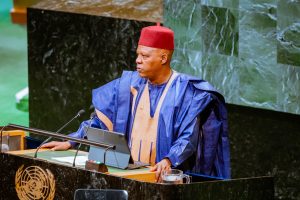
Akume, speaking in Abuja as he unveiled plans for Nigeria’s 66th Independence Anniversary, said the next phase of President Bola Tinubu’s economic program would be judged by its impact on households and communities.
“The task before us today, as leaders and citizens, is consolidation,” Akume said.
“We must ensure that the gains from reform translate into better opportunities for ordinary Nigerians.”
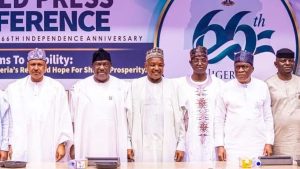
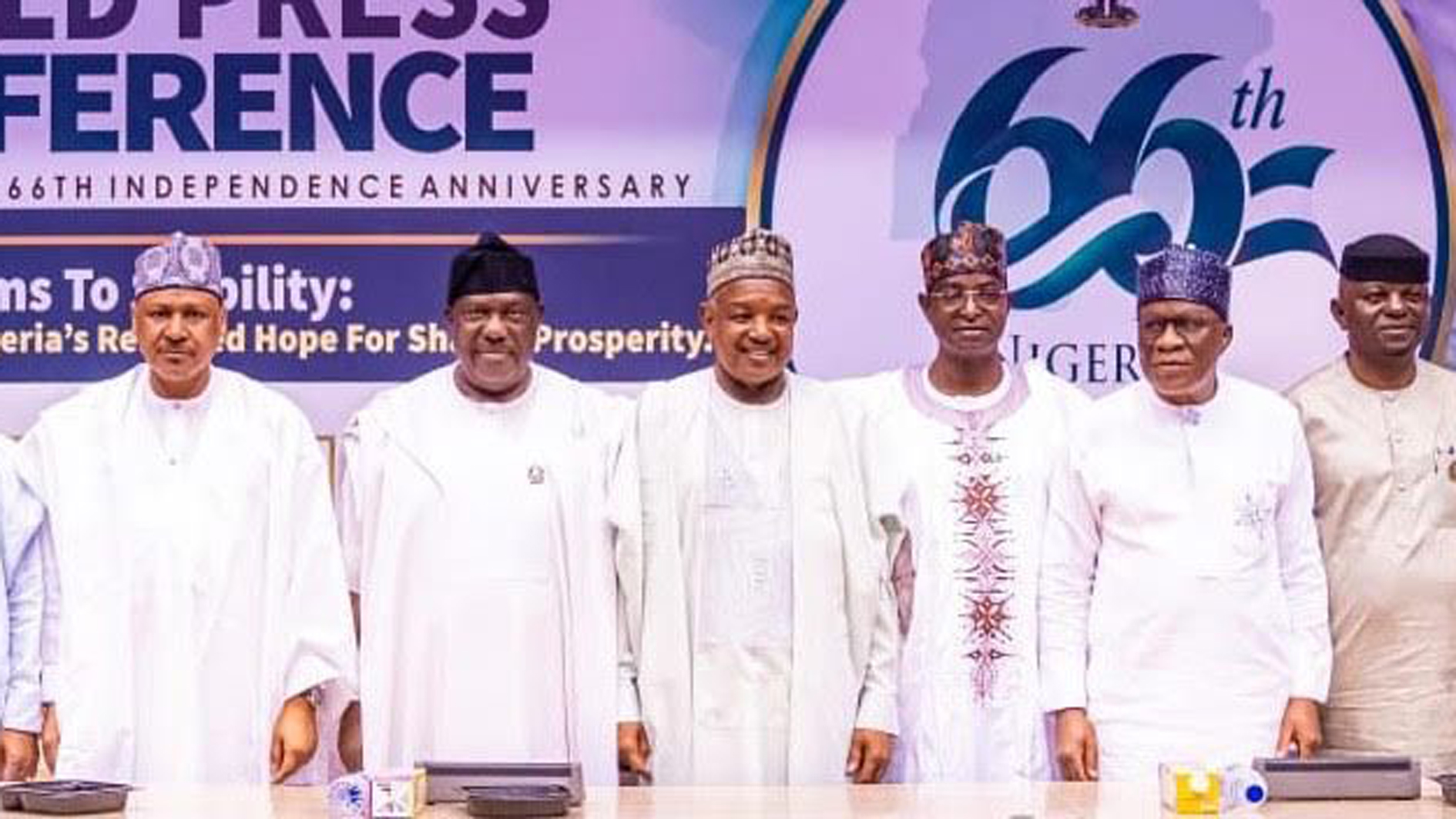
The anniversary theme “From Reforms to Stability: Consolidating Nigeria’s Renewed Hope for Shared Prosperity”, reflects the government’s effort to move beyond the removal of the fuel subsidy and the unification of the foreign-exchange market, reforms introduced to restore fiscal balance, attract investment and lay the foundation for longer-term growth.
The government’s agenda faces a difficult test.
Nigeria’s economy grew 4.43% from a year earlier in the second quarter of 2026, according to the National Bureau of Statistics.
However, households continue to contend with high living costs and pressure on disposable incomes, including renewed increases in petrol prices, he said.
Akume said economic reform would not be sufficient unless its benefits reached households.
Nigeria continues to face widespread poverty, insecurity, weak infrastructure and gaps in health care and education, he added.
The government plans to create more room for public investment through stronger revenue collection, improved financial management and higher non-oil revenues, Akume said.
The additional resources, he said, would be directed toward infrastructure and other sectors capable of expanding economic activity and creating jobs.
The SGF said priorities include roads, railways, airports, seaports, electricity generation and transmission, and digital connectivity.
The objective, Sen. Akume said, is to lower the cost of doing business, improve the movement of goods and people, connect farmers with markets and support industrial expansion.
The SGF said, the administration has also identified rail modernization, greater domestic refining capacity and investment in the power sector as central to its efforts to strengthen economic integration and industrial production.
In agriculture, the government is supporting farmers with improved seeds, fertilizer, irrigation, storage and processing facilities.
Akume said the National Agricultural Development Fund (NADF) and related programs were intended to increase production and promote agro-processing and local value addition.
“Agriculture must move beyond primary production,” he said, describing the sector as a potential source of jobs, investment and industrial growth.
Human-capital development is another pillar of the government’s consolidation strategy. Akume said the administration was expanding access to education and working to improve schools and teaching quality.
The Nigerian Education Loan Fund, known as NELFUND, has provided higher-education access to more than 1.5 million students, with more than ₦282 billion disbursed, according to previous government statements.
He said the goal was to ensure that financial hardship did not permanently prevent young Nigerians from pursuing education or improving their economic prospects.
Education, skills and access to finance would help Nigeria move from dependence on raw commodities toward higher-value economic activity, he said.
Security also remains essential to the government’s economic plans. He said the armed forces and other security agencies were intensifying operations against terrorism, banditry, kidnapping, oil theft and other crimes.
The government is improving intelligence gathering, modernizing equipment and strengthening coordination among the military, police, other security agencies and local communities, he said.
“Greater security would allow farmers to reach their fields and markets and enable communities to participate more fully in economic activity,” the SGF added.
He also highlighted the Renewed Hope Ward Development Program (RHWDP) which he said would support small-scale projects in agriculture, trade, mining and other sectors at the local level.
The consolidation strategy will be guided by the Renewed Hope National Development Plan for 2026-2030, which places productivity, economic diversification, human-capital development and resilience at the center of the government’s agenda.
“From reforms, we have built stability. From stability, let us now deepen growth and opportunity. And from growth, let us extend shared prosperity to every corner of Nigeria,” Akume said.
Minister of Information and National Orientation Mohammed Idris, who delivered the welcome address, said Nigeria was moving from reform and stabilization toward growth, production and shared prosperity.
Idris pointed to stronger gross domestic product growth, an improved external position, increased domestic refining capacity and higher investment and productive activity.
He, however, acknowledged that the government’s central challenge was converting those developments into improvements in everyday life.
“The next phase is to translate these gains into tangible improvements in the lives of Nigerians: more jobs, higher incomes, greater access to education and credit, lower costs and wider economic opportunities,” he said.
The government is pursuing those aims through investments in infrastructure, agriculture, education, consumer credit, digital skills, energy and enterprise, the Minister added.
He also said student loans, consumer-credit programs, major highway projects and reforms in agriculture, livestock, solid minerals, oil and gas are among the initiatives intended to increase production and local value addition.
Idris formally unveiled the program for the 66th Independence Anniversary. He said events will begin with a Juma’at service on Friday, September 25, followed by a church service on Sunday, September 27.
An Independence Day public lecture is scheduled for Wednesday, September 30, he added.
President Bola Tinubu is expected to deliver a nationwide broadcast on Thursday, October. 1, Nigeria’s Independence Day, the Minister said.
The government has said this year’s celebration will be low-key, with emphasis on reflecting on Nigeria’s progress, achievements and remaining challenges.
The anniversary theme places the government’s economic program under a new test: whether reforms that have helped restore macroeconomic stability can also deliver lower costs, more jobs, higher incomes and broader prosperity for Nigerians.


