






The Federal Government is reassessing how it plans for national security, shifting from a model driven by available military capabilities to one based on a clearer assessment of threats, the President’s Security Adviser said.
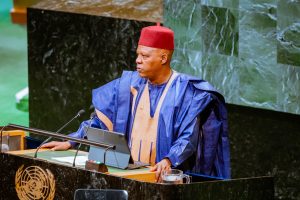
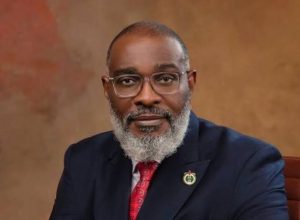
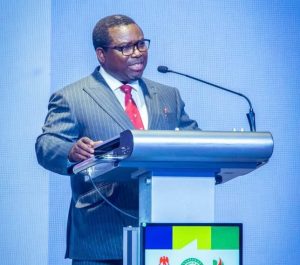
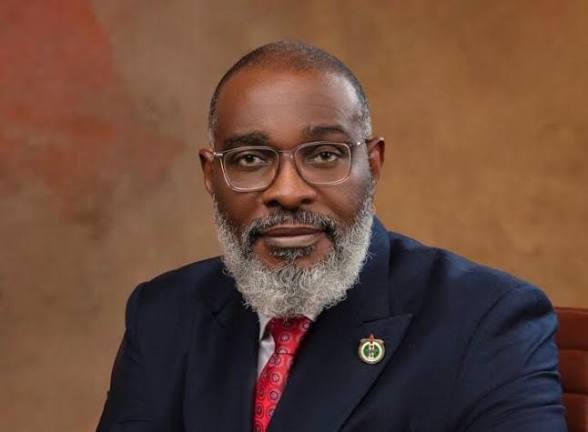
Major General Adeyinka Famadewa (rtd) told reporters on the sidelines of the United Nations General Assembly (UNGA) that the administration of President Bola Tinubu was taking pragmatic steps to make Nigeria a better country and guarantee the safety of every citizen.
Speaking after a Nigerian Ministry of Defence side event during the 81st session of the United Nations General Assembly (UNGA) in New York, United States,
General Famadewa described discussions as a worthwhile outcome, stressing that the country’s representation and participation had been sufficiently broad and robust.
The event was the titled “Confronting Nigeria’s Multidimensional Security Challenges: A Whole-of-Society and Partnership-Based Approach.”
He said the central objective was to ensure that every Nigerian could feel secure while creating conditions for national prosperity.
“The idea that we can come up with what we can do, practical steps to take to make Nigeria a better country – and that every Nigerian feels safe, so that, like our national anthem says, in plenty and peace Nigeria will be blessed,” he said.
The Presidential Adviser acknowledged that reforming a country’s security architecture would not be easy, but said the task was achievable.
“It is not always easy, and we must recognize that,” General Famadewa who is President Tinubu’s Special Adviser on Homeland Security said.
“But it is not impossible, and we are moving in the right direction.”
Nigeria has faced a widening array of security challenges, including insurgency, banditry, kidnapping, communal violence and threats to critical infrastructure.
General Famadewa said the country needed to discard approaches based primarily on institutional habits or sentiment and instead build its defense structure around identifiable risks.
“We are thinking again,” he said. “We are challenging the past assumptions about how we approach security. With what we are doing now, we are challenging everything we’ve done. We are looking at them again, and we are bringing out new methods of achieving the objective of ensuring that every Nigerian is safe and Nigeria prospers.”
The proposed approach, he said, would begin with a detailed understanding of threats, followed by an assessment of the resources and capabilities needed to contain them.
“We are moving from capability-driven to threat-driven,” General Famadewa said.
“Do we just go about and develop a defense based on our emotions, or are we developing a structure based on the threats?”
That requires officials to identify the country’s most pressing problems, determine what is needed to address them and measure the shortfall between those needs and existing capacity, he said.
“Let us have a proper understanding of the threats. Then look at what we need to mitigate these threats, and, of course, how do you now prioritize?”
General Famadewa said no country has unlimited resources for defense, particularly where military spending must compete with urgent social and economic needs.
“Defense is a very expensive venture, so you need to prioritize,” he said.
“What do we have? What is our problem first? What do we need to solve our problems? What do we have? And what are the gaps? What are the capability gaps?”
The question, he said, is ultimately one of difficult public choices.
“It’s always the question: You buy bread or you buy bullets?” General Famadewa said.
He noted that the review seeks to map those capability gaps and establish a five-year sequence for addressing them, while preserving a longer-term focus on local defense-industrial capacity.
“To solve this question is why we look at these capability gaps and try to prioritize over five years how to acquire them,” he said.
“Not forgetting the need to develop our internal capacity for defense production.”


