





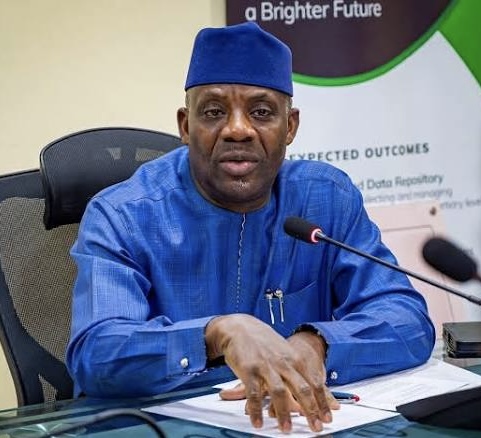


The Minister of Education Dr. Tunji Alausa on Saturday said that deepening investment in human capital and overhauling tertiary schools are central to President Bola Tinubu’s drive to expand the country’s economy to $1 trillion by 2030.
Dr. Alausa in a statement by his Special Adviser on Media and Communications said the Federal Government is repositioning the education sector to produce a globally competitive workforce capable of meeting domestic development needs and exporting skills abroad.
“We want to be the manpower supplier of the world,” the Minister said, adding that the administration aims to convert the country’s large youth population into an economic dividend.
NewsQuest reports that the Ministry of Education has prioritized expanding access to health-related professional programs to close long-running shortages in the sector,
According to Dr. Alausa annual nursing enrolments increased to 50,000 from about 20,000 when the current administration took office.
READ ALSO: ‘Tinubu’s support helping us to deliver in Benue’
He said places in medicine, pharmacy and dentistry have also been increased.
Those moves, the Minister predicted, will markedly reduce shortages of health professionals as newly trained graduates enter the workforce in coming years.
Minister Alausa credited President Tinubu’s leadership with restoring stability across tertiary institutions after years of disputes with academic and nonacademic staff.
He said the government has pursued negotiations built on “dialogue, trust and mutual respect,” and that President Tinubu delivered on an early pledge to pay half of withheld salaries arising from earlier industrial action.
The Minister said the administration also approved an almost 40 percent salary increase for workers in tertiary institutions, measures intended to improve welfare while remaining fiscally responsible.
He described the return of industrial peace as already producing results.
The Minister explained that Nigeria recently saw the number of Universities ranked by Times Higher Education rise from 21 to 24, with public institutions reclaiming top national positions, he noted.
On funding, Dr. Alausa defended the structure of the Nigerian Education Loan Fund (NELFUND), which he said was designed as a sustainable financing model to support generations of students.
“There is no value in introducing policies that cannot stand the test of time,” he said, describing sustainability as central to the administration’s philosophy.
The Minister also described education reforms as integral to President Tinubu’s Renewed Hope Agenda, saying they will remain a foundation for long-term economic growth and shared prosperity by equipping young Nigerians to compete in a changing global economy.


