







By Msugh Ityokura, Abuja
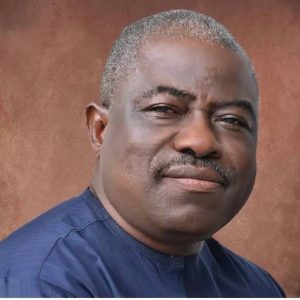
For ESV Godwin Ityoachimin, leadership, did not begin with politics, public office or the pursuit of elective power. It began much earlier, within the walls of the Command Secondary School, Jos, where a young student unexpectedly found himself entrusted with the responsibility of leading his peers.
Decades later, that experience remains a defining chapter in his understanding of leadership, governance and public service.
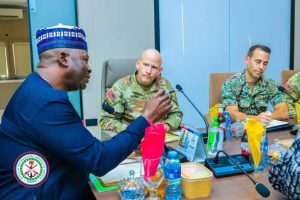
Speaking at the Command Secondary School, Jos, Pioneer Sets (1982–1986) Historic Reunion Colloquium in Jos, Plateau State, Ityoachimin reflected on how his years at the institution helped shape the values and outlook that have followed him through his professional and political journey.
His keynote address, titled “Leadership Forged in School: From Headboy to Governorship Contender,” provided an account of a leadership journey that began with an appointment he said he neither anticipated nor actively sought.
For him, becoming Headboy was more than a school responsibility. It was what he described as a “baptism of leadership” that awakened a consciousness that would later influence his approach to public affairs.
“I learnt very early in Command the lesson of effective leadership. I appreciate the fact that leadership in whichever context is meaningless if it is not effective,” he said.
The significance of that experience, according to Ityoachimin, was not simply the title attached to the position but the responsibility that came with it. Being entrusted with the affairs of fellow students exposed him early to the demands of leadership, accountability and the need to earn the confidence of others.
“One thing I can say for sure is that this became a baptism of leadership for me and the consciousness was awakened. This became a mark of leadership identity afterwards,” he recalled.
The Command Secondary School environment, he explained, went beyond conventional classroom education.
Its emphasis on discipline, public speaking, debating, competition and all-round development provided students with experiences that tested their confidence and prepared them to confront challenges outside the school environment.
For Ityoachimin, those experiences became part of the foundation upon which his subsequent career was built.
He identified confidence, versatility, resilience, perseverance and steadfastness as some of the qualities he acquired from his years at Command Jos.
These qualities, he suggested, became particularly important as he moved into professional life and eventually into the more demanding arena of politics, where public scrutiny, competing interests and difficult decisions are unavoidable.
His political journey included two attempts to contest the governorship of Benue State on the platform of the All Progressives Congress, APC.
The transition from school leadership to professional and political engagement, however, was not presented by Ityoachimin as a straight or flawless journey. Rather, he spoke about mistakes, personal limitations and the lessons that emerged from them.
He identified restlessness and impatience as among the leadership shortcomings that taught him important lessons, saying his experiences eventually helped him cultivate greater patience, tolerance and self-restraint.
“These gave me a lot of stability and greatly enhanced my growth,” he said.
That reflection provided perhaps one of the most important elements of his message to the alumni which is, leadership is not merely about occupying positions but about continuous personal development.
For Ityoachimin, the lessons of Command Jos remain relevant because leadership is ultimately measured by its impact rather than the status of the person occupying a position.
His message to the younger generation of alumni was therefore not simply to seek political office, but to accept responsibility and contribute to society wherever they find themselves.
He challenged the alumni to reject the idea that meaningful contribution to society must wait until one wins an election or secures a government appointment.
“Those who are there today are not our betters,” he said, urging the alumni to recognise their own capacity to provide leadership and make a difference.
The statement was also a call to a generation that has accumulated decades of professional experience to translate that experience into tangible contributions to society.
According to him, the training received at Command Secondary School gave its alumni the character and capacity to participate actively in addressing Nigeria’s challenges.
He warned against becoming passive observers of the country’s problems, insisting that the alumni had a responsibility to contribute to the kind of society they wanted future generations to inherit.
“Posterity will not forgive us if we choose to write the history of heroes. This should not be our portion,” he said.
The reunion itself provided an opportunity for the alumni to reflect on the passage of time and the enduring influence of their formative years.
For Ityoachimin, the gathering was not merely a nostalgic return to the past. It was also an opportunity to examine what the school had produced in its students and what those students had subsequently done with the values they acquired.
His own story formed part of that reflection.
From Headboy at Command Secondary School, Jos, to a professional career spanning land and housing development, public administration and professional practice, and later to participation in the contest for the governorship of Benue State, Ityoachimin’s journey illustrates the long arc through which early leadership experiences can influence later public engagement.
That contribution was formally recognised during the reunion when the CSSJ-Pioneers Awards and Recognition Committee selected him for the CSSJ-Pioneers Lifetime Achievement Award in the Civil and Public Administration category.
The award citation commended his record of public service, professional accomplishments and leadership, highlighting contributions to public administration, land and housing development, professional practice and national service.
The committee described his career as spanning more than three decades and said his commitment to ethical leadership and nation-building had brought honour to Command Secondary School, Jos.
For Ityoachimin, however, the greater significance of the recognition lay not simply in the award itself.
It represents a full circle: a former Headboy returning decades after leaving school to speak about leadership, this time before former classmates and generations of alumni who shared the same formative environment.
The journey from the school compound to the wider arena of governance has not been without challenges. But the central lesson from his story remains the enduring influence of formative experiences.
The boy who once found himself unexpectedly placed in a position of responsibility became an adult who would repeatedly confront questions of leadership, public service and governance.
And at the reunion in Jos, he returned to the source of that journey with a message that extended beyond his personal experience: that leadership is first learned through responsibility, strengthened by experience and ultimately validated by service.
For the Command Jos pioneers, the reunion was a celebration of shared history. For Ityoachimin, it was also a reminder that the true measure of the education received decades ago lies in what its beneficiaries choose to do with it.
The challenge, as he framed it, is no longer simply to remember the values that Command Jos taught them, but to deploy those values in the service of society before history passes judgment on their generation.