







By Anule Emmanuel, New York
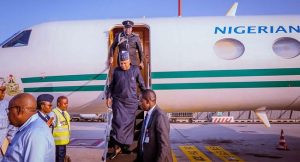
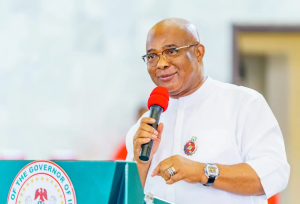
Benue State Governor Hyacinth Alia ended a week of meetings in New York alongside Vice-President Kashim Shettima, seeking to turn the State’s considerable agricultural promise into a more persuasive case for private investment, industrial revival and economic diversification.
Alia was among Governors, including AbdulRahman AbdulRazaq of Kwara State, Siminalayi Fubara of Rivers State and Dauda Lawal of Zamfara State, who joined Vice President Shettima when he delivered Nigeria’s official statement at the 81st session of the United Nations General Assembly (UNGA-81).
UNGA-81 brought together senior political figures at the close of a diplomatic week in which state governments, alongside the Federal Government, sought to court capital, development partners and commercial alliances beyond Nigeria’s borders.
For Governor Alia, the assignment was clear: Benue must cease to be known principally as a producer of raw farm commodities and instead become a place where crops are processed, industries are restored and young people can find work closer to home.
Governor Alia also held discussions with the Vice President focused on investment, security, industrialisation and the broader task of building an economy capable of attracting long-term partnerships. The Governor had earlier met foreign investors and business leaders, presenting Benue as a State with underused assets in agriculture, manufacturing, education and healthcare.
Speaking to journalists on the margins of the General Assembly, the Benue State Governor said New York had offered more than the usual diplomatic ceremony. Alia argued that it had created a viable pathway for Benue to pursue bilateral engagements and showcase its commercial potential to prospective investors and strategic partners.
“It is quite ideal to be here because it opens up a number of opportunities for us, and particularly for Benue State. We have been interacting with a number of people, and this opportunity creates some big ways for bilaterals for us,” the Governor said.
The Governor’s argument rests heavily on Benue’s agricultural endowment. The State has long been described as Nigeria’s ‘food basket’, producing yams, citrus, soybeans, sesame and a broad range of other crops. Yet the central economic weakness has been familiar: much of that output leaves the State unprocessed, limiting the value retained by farmers, communities and government.
Governor Alia’s administration is seeking to alter that equation by attracting investment into processing plants, medium-scale manufacturing and supply chains that could convert agricultural produce into higher-value goods.
Orange-processing facilities, juice and concentrate factories, and Taraku Mills – one of the State’s best-known industrial assets, were cited as examples of areas in which investors could find commercial opportunities.
The Governor said his administration had reopened and revived five industries.
“There are people who are very interested, who want to come, but they need to know the content we have,” Alia noted. That qualification goes to the heart of the challenge. Investors do not simply buy into potential; they require dependable power, transport links, land security, clear regulation, skilled labour, credible data and confidence that agreements will endure beyond political cycles.
Benue’s case may be strengthened by its land, crop base and central location, but it will ultimately be tested by whether the state can reduce the practical risks of doing business.
Governor Alia believes the economic reforms introduced by President Bola Tinubu have widened the space for subnational governments to attract capital and define more independent development strategies.
“Because of the new reforms Mr President has brought to bear on the Nigerian economy, we have gained a lot. Our state has gained so much, and so we need to take advantage of some opportunity like this,” he said.
The Governor’s comments reflect a wider argument being made by state governments: that economic restructuring, however difficult in the short term, can encourage states to look beyond federal allocations and compete more actively for investment. But the benefits will not be automatic. States hoping to secure private capital must demonstrate not only ambition but also project preparation, transparency and the capacity to implement.
Education and healthcare formed another part of the Governor’s outreach. Benue is seeking external partners for its newly established university, which Alia said should be financially and operationally independent rather than permanently dependent on public funding.
The establishment of the University of Agriculture, Science and Technology (UAST), Ihugh, is seen not merely as an academic milestone but as a potentially important step towards educational advancement, agricultural innovation, technological transformation and socioeconomic development in Benue State and Nigeria as a whole.
“An opportunity again like this presents us not just the window chance, but the big door, for us to see those who can come in and enable our university to stay independent,” Governor Alia told reporters in New York.
Alia said his administration is also seeking development partners and private-sector collaborators to improve health services, an area in which investment can carry both social and economic significance.
Better health infrastructure is not merely a welfare objective; it is increasingly viewed by investors as part of the foundation needed for a productive workforce and stable communities.
Governor Alia’s meetings with Vice-President Shettima and other global players on the margins of UNGA-81 also placed Benue’s ambitions within Nigeria’s broader diplomatic and economic agenda.
The Vice-President represented President Tinubu at the General Assembly, where Nigeria again pressed for a stronger African voice in global governance, including reform of the United Nations Security Council. The Benue Governor endorsed Nigeria’s campaign for a permanent seat, arguing that the country’s population, economic size and influence on the continent justified a more prominent role.
“Nigeria’s voice is quite big. We are one of the largest economies on the continent of Africa, and so it matters. Our larger numbers matter much, and then our growth. Our economy also matters,” Alia said.
For Benue, however, the more immediate measure of success will not be the symbolism of meetings in New York but what follows them: site visits, feasibility studies, signed agreements, functioning factories and jobs.
The Governor has put Benue’s case before investors and senior national government officials.
The next task is to ensure that the promise of Benue’s farms is translated into industry, and that the language of opportunity becomes an economic reality for the people.


